ZHEYI Group, founded in 2007, is a national high-tech enterprise specializing in the R&D and manufacturing of industrial piping systems. With production bases in Jiaxing and Wuhan, our group operates as a specialized, refined, and innovative SME with over 50 independent intellectual property rights. We have obtained the Production License of Special Equipment, ISO9001, ISO14001, and ISO45001 certifications. Our core expertise lies in the production of high-performance CPVC Flanged Ball Valves, which are widely utilized in chemical processing, semiconductor manufacturing, and nuclear power sectors. By integrating advanced tooling from Germany and America, ZHEYI Group ensures that every valve meets the specific mechanical and chemical resistance requirements of acid-alkali transport and ultra-pure water systems across Europe, America, and Southeast Asia.
Mechanical Properties and Thermal Stability of CPVC Resin Compounds
- 1. Chlorination Levels and Heat Deflection: The performance of a CPVC Flanged Ball Valves is determined by its chlorine content (typically 63% to 67%). This elevated chlorination allows the material to maintain structural integrity up to 93°C, compared to 60°C for standard UPVC.
- 2. Tensile Strength and Pressure Ratings: When assessing CPVC vs UPVC valve pressure ratings at high temperatures, CPVC maintains a higher hydrostatic design stress. At 82°C, a high-quality CPVC valve can still handle significant pressure, whereas UPVC would reach its elastic limit.
- 3. Chemical Resistance Matrix: The CPVC valve resistance to sodium hypochlorite and sulfuric acid makes it an engineered solution for industrial wastewater. Unlike metallic valves, CPVC is immune to electrochemical corrosion and pitting in saline or acidic environments.
Dimensional Harmonization: ANSI vs. DIN Flange Standards
- 1. Bolt Circle Diameter (BCD) Discrepancies: The most critical factor in identifying ANSI vs DIN CPVC flanged valves is the BCD. ANSI B16.5 Class 150 flanging uses inch-based spacing, while DIN EN 1092-1 (PN10/PN16) uses metric spacing. Even if the nominal pipe size is the same, the bolt holes will not align between different standards.
- 2. Face-to-Face Dimensions: When replacing an existing unit, verifying valve face-to-face length for export projects is mandatory. ANSI valves often follow longer patterns compared to the compact DIN standards, which can lead to piping gap issues during onsite installation.
- 3. Drilling Patterns and Bolt Hole Counts: A comparison of ANSI 150lb and DIN PN16 bolt patterns shows that for certain sizes, such as 2-inch (DN50), both have 4 holes, but for 3-inch (DN80), ANSI requires 4 holes while DIN requires 8. Using an incorrect standard results in catastrophic leakage at the flange gasket interface.
Structural Integrity and Sealing Configuration Standards
- 1. Seat Material and Torque Requirements: We utilize PTFE (Teflon) seats to ensure low friction and chemical inertness. How to reduce operating torque in CPVC ball valves involves precision machining of the ball sphere to a Ra surface finish of less than 0.8 micrometers, preventing seat wear.
- 2. Stem Seal Redundancy: Our valves feature dual O-ring stem seals (EPDM or FKM/Viton). The FKM vs EPDM seals for chemical processing valves choice depends on the fluid; FKM is required for petroleum-based fluids, while EPDM is preferred for steam and polar solvents.
- 3. Full Port vs. Standard Port Geometry: To minimize pressure drop (Delta P), we design full port CPVC flanged ball valves for industrial water treatment. This ensures the internal diameter of the ball matches the pipe ID, maximizing flow coefficient (Cv) values.
Technical Comparison of International Valve Standards
Before procurement, engineers must specify the governing standard to ensure compatibility with local infrastructure and safety regulations.
| Feature |
ANSI B16.5 (Schedule 80) |
DIN EN 1092-1 (PN10/16) |
| Measurement Unit |
Imperial (Inches) |
Metric (Millimeters) |
| Pressure Class |
150 psi / 235 psi |
PN10 / PN16 |
| Flange Thickness |
Heavier (ANSI Standard) |
Standardized (DIN Standard) |
| Standard Gasket Type |
Full Face / Ring Gasket |
Flat Gasket / O-ring Groove |
Quality Control and Compliance Verification
- 1. Hydrostatic Shell and Seat Testing: Following ISO 5208, every CPVC Flanged Ball Valves undergoes a shell test at 1.5x the rated pressure and a seat leak test at 1.1x the rated pressure to ensure zero leakage.
- 2. Independent Intellectual Property: With over 50 patents, ZHEYI Group utilizes a unique CPVC resin management system from Germany and America to ensure batch-to-batch consistency in material density and impact strength (ASTM D256).
- 3. Sanitary and Potable Water Licensing: Our drinking water safe CPVC valves for export have passed the Zhejiang provincial water-related products sanitary license, ensuring they do not leach heavy metals or VOCs into the fluid stream.
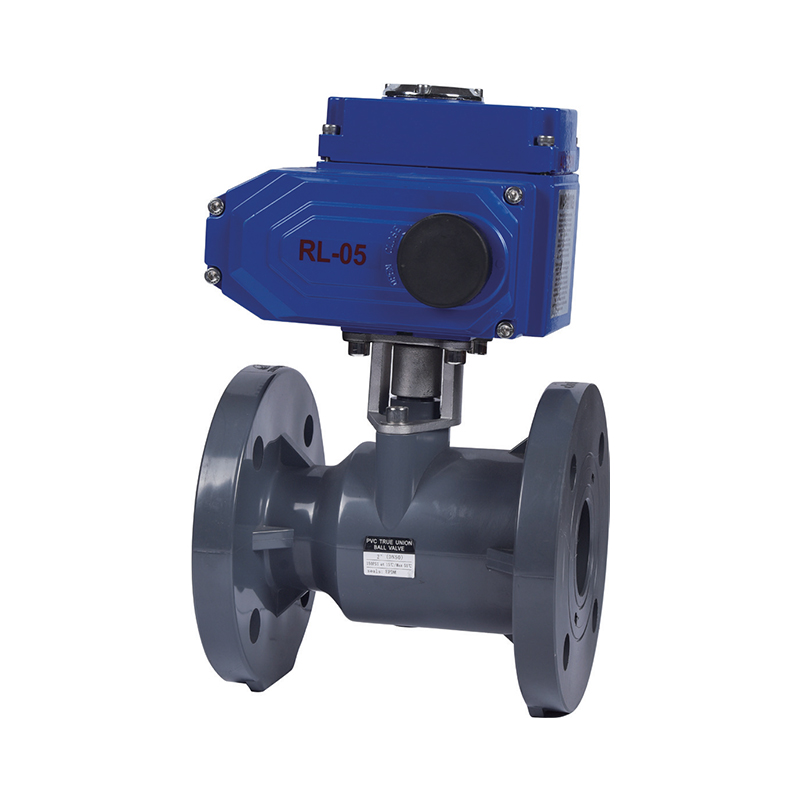
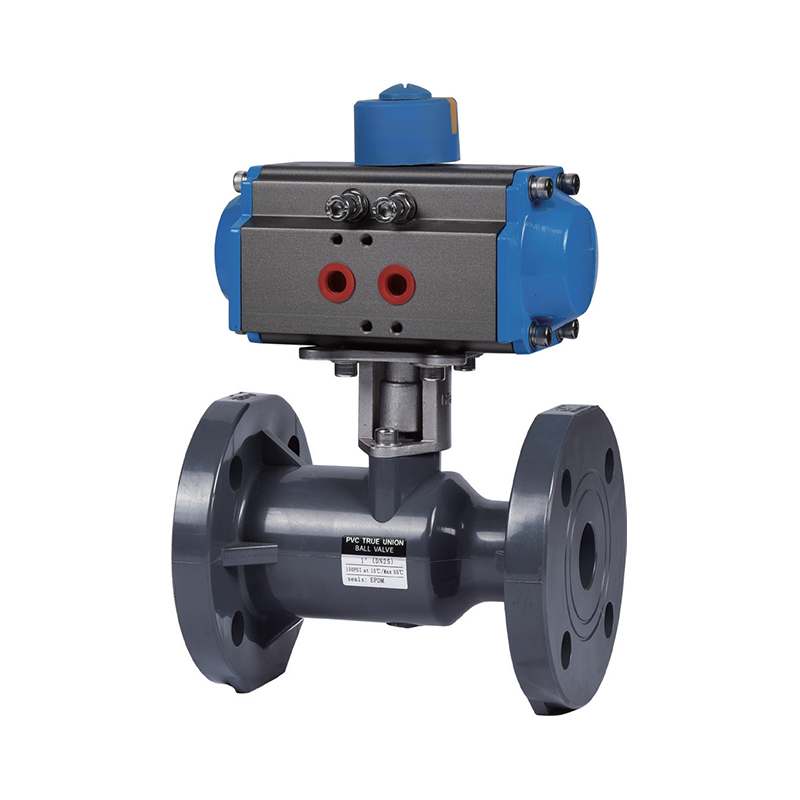
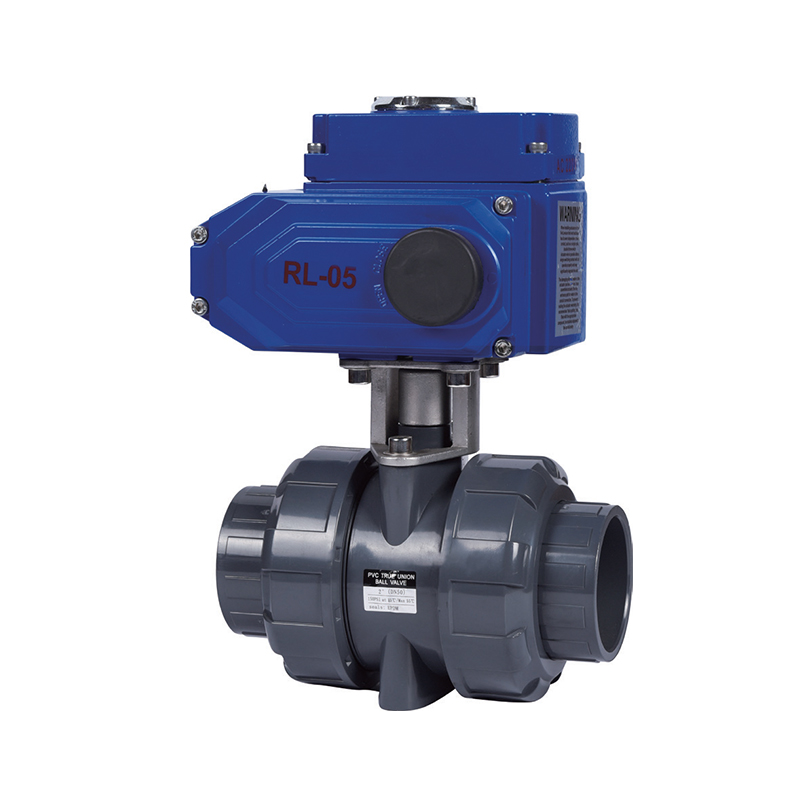
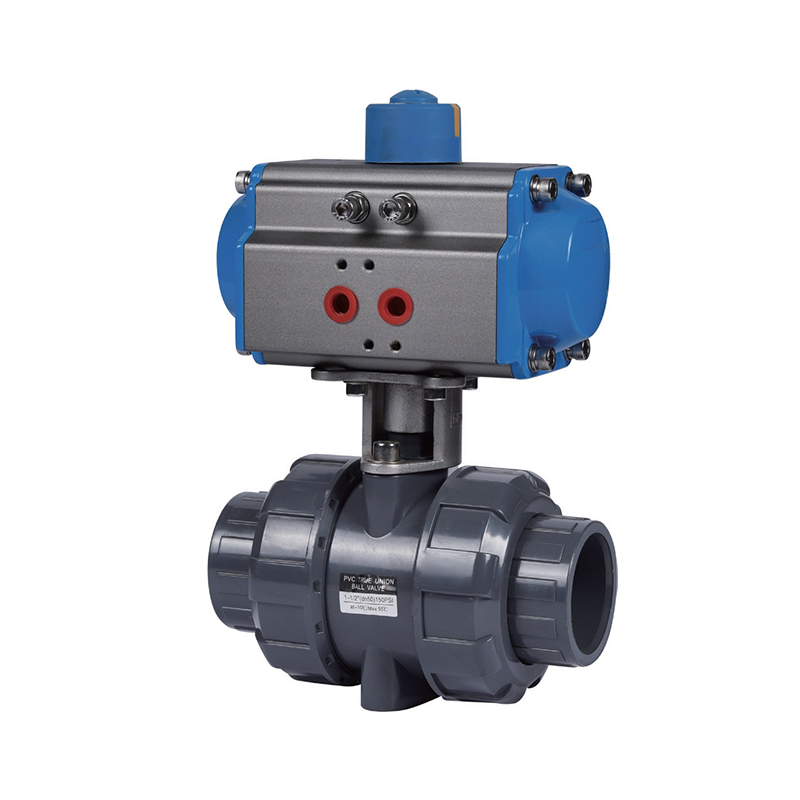
- 4. Actuation Compatibility: For automated systems, our valves are designed with ISO 5211 mounting pads. Mounting electric actuators on CPVC flanged valves requires precise alignment to prevent lateral stress on the valve stem, which can lead to fatigue cracks.
Hardcore Engineering FAQ
- Can I bolt an ANSI flange to a DIN flange using a conversion gasket? No. The bolt hole locations are different. You must use a standard-specific adapter or ensure the valve is ordered with the correct "Multi-standard" or specific drilling pattern.
- What is the maximum operating temperature for a CPVC valve under full pressure? While CPVC is rated to 93°C, the pressure rating must be derated. At 93°C, the working pressure is typically 25% of its rating at 23°C.
- Why is a true union design sometimes integrated with a flanged valve? It allows for the "drop-out" of the valve body for maintenance without cutting the pipe, while the flanges provide the robust connection required for high-pressure industrial lines.
- How does ZHEYI Group ensure the CPVC material is "Industrial Grade"? We verify the Cell Classification according to ASTM D1784. Industrial grade CPVC must meet Class 23447, which specifies higher impact and tensile requirements.
- Is CPVC suitable for compressed air systems? No. Like most thermoplastic valves, CPVC is not recommended for compressed gases due to the risk of brittle failure and fragmentation under pressure.
Technical References
- ASTM F441: Standard Specification for Chlorinated Poly(Vinyl Chloride) (CPVC) Plastic Pipe, Schedules 40 and 80.
- ISO 16135: Industrial valves — Ball valves of thermoplastics materials.
- DIN EN ISO 15493: Plastics piping systems for industrial applications — ABS, PVC-U and PVC-C.
 +86-15258772971
 dinys009@163.com

 English
 한국어
한국어 Español
 عربى
عربى