+86-15258772971
 dinys009@163.com

 English
 한국어
한국어 Español
 عربى
عربى


CPVC pipe is available in sizes ranging from 1/4 inch to 2 inches for residential/CTS (Copper Tube Size) and 1/4 inch to 24 inches for industrial/IPS (Iron Pipe Size) schedules. It can withstand continuous temperatures up to 200°F (93°C), making it suitable for hot water lines. While CPVC can be installed underground, it requires proper bedding, sleeving, and protection from soil chemicals to perform reliably.
What Sizes Does CPVC Pipe Come In?
CPVC pipe is manufactured under two separate sizing standards, and understanding which one you need is the first step before purchasing material. The two systems — CTS and IPS — have different outer diameters even when labeled the same nominal size, so they are not interchangeable.
CTS (Copper Tube Size) — Residential Plumbing
Most homeowners encounter CTS-based CPVC, which is designed to replace copper pipe in residential hot and cold water supply systems. The nominal size refers to the approximate inside diameter, matching copper pipe dimensions so the same fittings and tools apply.
| Nominal Size (in) | Outside Diameter (in) | Wall Thickness (SDR 11) | Max PSI @ 73°F | Common Use |
|---|---|---|---|---|
| 1/4 | 0.375 | 0.034 | 400 | Ice makers, appliance supply |
| 3/8 | 0.500 | 0.045 | 400 | Lavatory supply, ice makers |
| 1/2 | 0.625 | 0.057 | 400 | Branch lines, fixture supply |
| 3/4 | 0.875 | 0.080 | 400 | Main branch lines |
| 1 | 1.125 | 0.102 | 400 | Main supply, distribution |
| 1-1/4 | 1.375 | 0.125 | 400 | Main lines, light commercial |
| 1-1/2 | 1.625 | 0.148 | 400 | Main distribution lines |
| 2 | 2.125 | 0.193 | 400 | Commercial hot water mains |
All CTS CPVC pipe above is rated SDR 11 (Standard Dimension Ratio), meaning the wall thickness is always 1/11th of the outer diameter. This consistent ratio keeps the pressure rating uniform at 400 PSI at 73°F across all sizes — a key advantage over some other plastics that lose strength in larger diameters.
IPS (Iron Pipe Size) — Industrial and Commercial Applications
Industrial CPVC follows IPS sizing and is produced in Schedule 40 and Schedule 80 wall thicknesses. These are used in chemical processing, industrial fluid handling, and large commercial systems where higher pressures or aggressive chemicals are present.
| Nominal Size (in) | Schedule | Outside Diameter (in) | Max PSI @ 73°F |
|---|---|---|---|
| 1/4 – 2 | Schedule 40 | 0.540 – 2.375 | Up to 850 |
| 1/4 – 2 | Schedule 80 | 0.540 – 2.375 | Up to 1130 |
| 2-1/2 – 6 | Schedule 40 / 80 | 2.875 – 6.625 | 130 – 370 (size-dependent) |
| 8 – 12 | Schedule 40 | 8.625 – 12.750 | 80 – 130 |
| 14 – 24 | Schedule 40 | 14.000 – 24.000 | 60 – 80 |
Schedule 80 CPVC has a thicker wall than Schedule 40 of the same nominal size, giving it higher pressure ratings and better resistance to mechanical impact. For most residential hot water work, CTS Schedule SDR 11 is the correct choice; Schedule 80 IPS is typically reserved for industrial environments or threaded connections where extra wall thickness is required.
Key Size Selection Tips
- Match your existing pipe: If replacing copper, use CTS CPVC. If replacing steel or PVC in an industrial setting, use IPS CPVC with the same schedule.
- Do not mix CTS and IPS: A 1/2-inch CTS fitting will not fit onto a 1/2-inch IPS pipe — their outer diameters are different (0.625 in vs. 0.840 in).
- Check local codes: Some jurisdictions restrict CPVC to specific sizes or applications; always verify before installing pipe larger than 2 inches in residential plumbing.
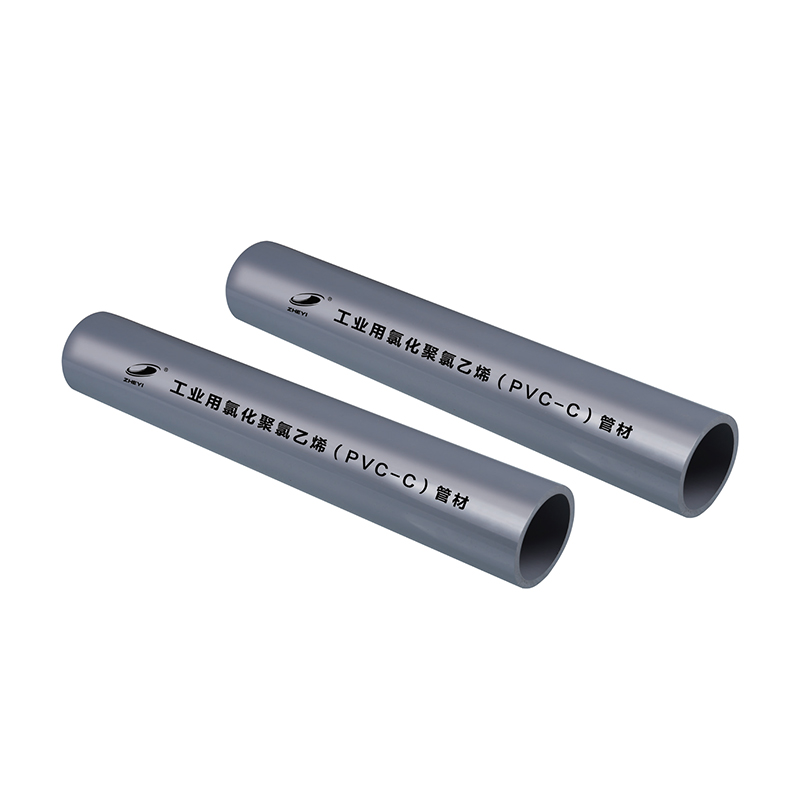
- Color coding: FlowGuard Gold and most residential CPVC is cream/tan colored; industrial CPVC (such as Corzan) is typically light gray.
Can CPVC Pipe Be Used Underground?
Yes — CPVC pipe is permitted for direct burial in most building codes, including the International Plumbing Code (IPC) and Uniform Plumbing Code (UPC), provided installation conditions are controlled. However, underground use is not as straightforward as installing it inside a wall, and cutting corners here leads to cracked pipe and failed joints years later.
Why Soil Conditions Matter Enormously
CPVC is vulnerable to a phenomenon called environmental stress cracking (ESC). Certain substances — including petroleum hydrocarbons, chlorinated solvents, ketones, and some plasticizers found in flexible conduit or foam insulation — can cause CPVC to crack under even moderate mechanical stress. Underground environments introduce unpredictable contact with:
- Contaminated soils near old fuel tanks or septic systems
- Certain fertilizers containing organic solvents
- Pesticide residues in agricultural areas
- Expansive clays that shift and apply lateral pressure on the pipe
Before burying CPVC, have a soil test done if you suspect contamination or if the area has a history of industrial or agricultural use.
Proper Underground Installation Requirements
| Requirement | Specification | Why It Matters |
|---|---|---|
| Bedding material | 6 inches of clean sand or fine gravel above and below pipe | Distributes load evenly; prevents point-stress cracking |
| Cover depth | Minimum 12 inches (residential); 18–24 inches in freeze zones | Protects from surface loads and freezing temperatures |
| Sleeving | Route through PVC conduit or sleeve where soil is suspect | Isolates CPVC from chemical contact in contaminated areas |
| Thrust blocking | Required at all changes of direction for lines over 2 inches | Prevents joint separation from water hammer or pressure surges |
| Backfill compaction | Hand-tamp first 12 inches; avoid heavy equipment directly over pipe | Prevents crushing; CPVC has less impact resistance than HDPE |
| Solvent cement cure time | 24 hours minimum at 60°F before pressurizing buried joints | Underground joints cannot be easily accessed for repairs |
Where CPVC Underground Performs Well
- Under concrete slabs (slab-on-grade construction): CPVC has been used for in-slab hot and cold water lines since the 1960s. Its resistance to chlorinated water is a significant advantage over copper, which can pit and fail in aggressive water conditions.
- Short exterior runs from the building foundation to a hose bib or exterior fixture, where burial depth is controlled and soil is known to be clean.
- Industrial buried lines carrying hot chemicals at temperatures above what PVC can handle, routed through protective conduit.
Where to Avoid Burying CPVC
- Under driveways or areas subject to heavy vehicle loads without proper concrete encasement
- In soils known to contain petroleum or solvent contamination
- In areas where the pipe may contact foam pipe insulation, EPDM gaskets, or rubber couplings directly — some of these materials leach chemicals that cause ESC
- Long underground supply runs where future access for repair would be extremely difficult; HDPE (PE-RT) or PEX-A may be more forgiving options in those cases
How Much Heat Can CPVC Pipe Handle?
This is the most important reason people choose CPVC over standard PVC. CPVC is rated for continuous service at 200°F (93°C) — a full 60°F higher than PVC's 140°F limit. This single difference determines whether a pipe can be used for hot water distribution or must be limited to cold water and drainage.
Temperature vs. Pressure: The Critical Relationship
CPVC pipe's pressure rating drops as temperature rises. A 1/2-inch CTS CPVC pipe rated at 400 PSI at 73°F does not maintain that rating at 180°F. Understanding the de-rating curve is essential for any hot water system design:
| Temperature | De-rating Factor | Effective PSI (400 PSI base) | Practical Meaning |
|---|---|---|---|
| 73°F (23°C) | 1.00 | 400 PSI | Full rated capacity |
| 100°F (38°C) | 0.90 | 360 PSI | Standard cold water supply |
| 120°F (49°C) | 0.75 | 300 PSI | Typical hot water heater output |
| 140°F (60°C) | 0.65 | 260 PSI | Max recommended for PVC; fine for CPVC |
| 160°F (71°C) | 0.50 | 200 PSI | Still safe; most residential systems never reach this |
| 180°F (82°C) | 0.40 | 160 PSI | Legionella prevention setpoint; CPVC handles it |
| 200°F (93°C) | 0.25 | 100 PSI | Maximum continuous service temperature |
In real residential systems, domestic water pressure typically runs between 40–80 PSI, and water heaters are usually set between 120°F and 140°F. At those conditions, CPVC operates well within its safe range — even after de-rating, the working pressure is 260–300 PSI, which provides a safety margin of 3x to 6x over actual system pressure.
What Happens Above 200°F?
Above 200°F (93°C), CPVC begins to soften and lose structural integrity. The pipe will not burst explosively the way a metal pipe might, but it will deform, sag between supports, and eventually fail at joints or fittings. Key points:
- At approximately 212°F (100°C), CPVC pipe begins to visibly distort under normal water pressure.
- At 250°F (121°C), the material approaches its Vicat softening point and will fail rapidly under pressure.
- CPVC has a flame spread index of 15–25 and will not sustain combustion on its own once the ignition source is removed, but it will deform in fire conditions long before it ignites.
- For steam systems or process lines consistently above 200°F, CPVC must be replaced with PVDF, stainless steel, or copper.
CPVC vs. Other Pipe Materials: Temperature Comparison
| Pipe Material | Max Continuous Temp | Hot Water Use? | Notes |
|---|---|---|---|
| PVC (Schedule 40/80) | 140°F (60°C) | No | Cold water and drainage only |
| CPVC | 200°F (93°C) | Yes | Industry standard for residential hot water |
| PEX-A | 200°F (93°C) | Yes | More flexible; different fitting system |
| PP-R (Polypropylene) | 203°F (95°C) | Yes | Heat-fusion joints; growing in US market |
| Copper (Type L) | 250°F+ (121°C+) | Yes | Higher cost; corrosion risk in aggressive water |
| PVDF (Kynar) | 280°F (138°C) | Yes | High-performance industrial; expensive |
Practical Temperature Guidelines for Installers
- Set your water heater to 120°F: The U.S. Department of Energy recommends 120°F for energy efficiency and scald prevention. At this temperature, CPVC operates at only 30% of its thermal limit.
- Legionella flushing at 140°F is safe for CPVC: Many facilities periodically flush systems at 140°F to eliminate Legionella bacteria. CPVC handles this without damage.
- Keep pipe away from heat sources: Install CPVC at least 6 inches from uninsulated flue pipes, heat-producing appliances, and recessed lighting canisters. Even ambient radiant heat can raise pipe temperature above design limits in confined spaces.
- Support spacing tightens at high temperatures: CPVC becomes slightly more flexible at elevated temperatures. At 180°F, reduce standard horizontal support spacing from 36 inches to 24 inches to prevent sagging between hangers.
CPVC Pipe: Advantages and Limitations at a Glance
| Factor | CPVC Performance |
|---|---|
| Hot water service | Excellent — rated to 200°F, handles typical residential and light commercial hot water without de-rating concerns |
| Cold water service | Excellent — 400 PSI rating at 73°F far exceeds residential supply pressures |
| Chlorinated water resistance | Excellent — more resistant than copper or PEX to chlorine and chloramines in municipal water |
| Chemical resistance | Good for acids and bases; poor with ketones, esters, and chlorinated solvents |
| Underground installation | Acceptable with proper bedding, depth, and sleeving in chemically suspect soils |
| UV resistance | Poor — must be painted or covered for any outdoor above-grade installation |
| Freeze resistance | Limited — CPVC can crack if frozen; must be insulated in cold climates |
| Fire performance | Better than PVC; does not sustain combustion but will soften and melt in a fire |
| Cost vs. copper | Significantly less expensive, both in material and installation labor |
Final Recommendations
For residential hot and cold water supply, 1/2-inch and 3/4-inch CTS CPVC covers the vast majority of applications. The 200°F temperature ceiling comfortably accommodates any residential water heater setting, and the 400 PSI base pressure rating provides substantial safety margin over typical 60–80 PSI municipal supply pressures.
For underground runs, invest the extra time to bed the pipe properly in sand, maintain code-required cover depths, and sleeve the pipe if soil quality is uncertain. Joints made underground must be given full cure time — at least 24 hours — before the trench is backfilled and the system is pressurized. The cost of getting this right the first time is always less than excavating to repair a failed joint.
For applications requiring temperatures consistently above 200°F — steam lines, autoclaves, high-temperature process piping — CPVC is not the right material. Move to copper, stainless steel, or PVDF for those scenarios and use CPVC where it genuinely excels: reliable, affordable, chemical-resistant hot water distribution.