In industrial fluid handling, selecting the correct material for valve construction is a critical engineering decision that dictates system longevity, safety, and operational costs. While stainless steel has long been the "default" for high-pressure systems, the chemical resistance of CPVC valves offers a superior technical advantage in highly corrosive acidic environments. ZHEYI Group, founded in 2007, is a national high-tech enterprise specializing in the R&D and manufacturing of CPVC and UPVC industrial pipelines. With bases in Jiaxing and Wuhan, we utilize advanced technology and raw materials from Germany and America to serve sectors such as semiconductors, lithium batteries, and chemical processing. This analysis provides an engineering-grade comparison of the CPVC Flanged Ball Valve against stainless steel (304/316) when exposed to aggressive mineral acids.
1. Corrosion Mechanisms: Ionization vs. Passivation
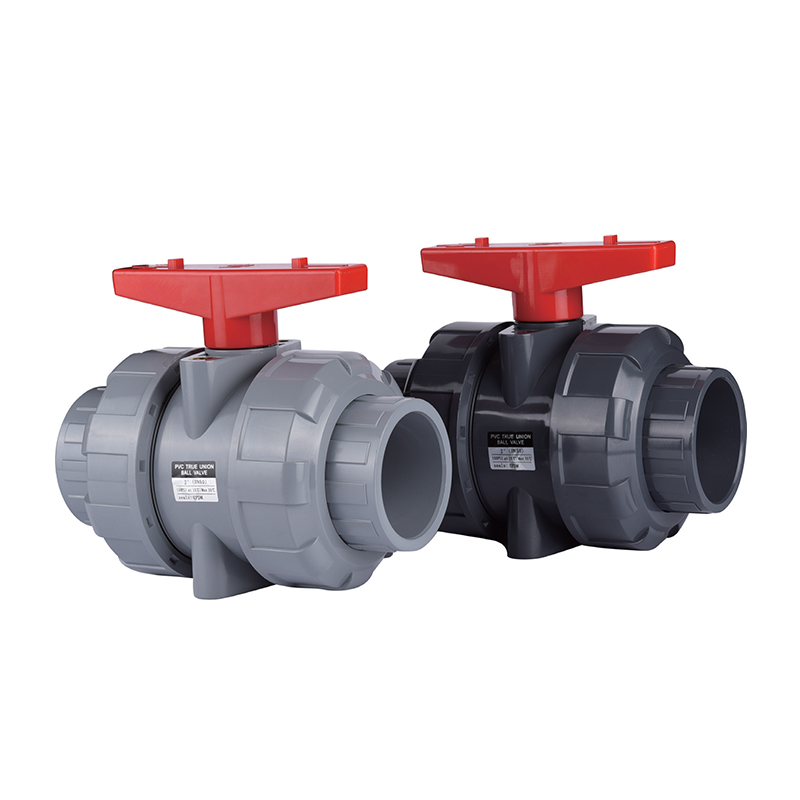
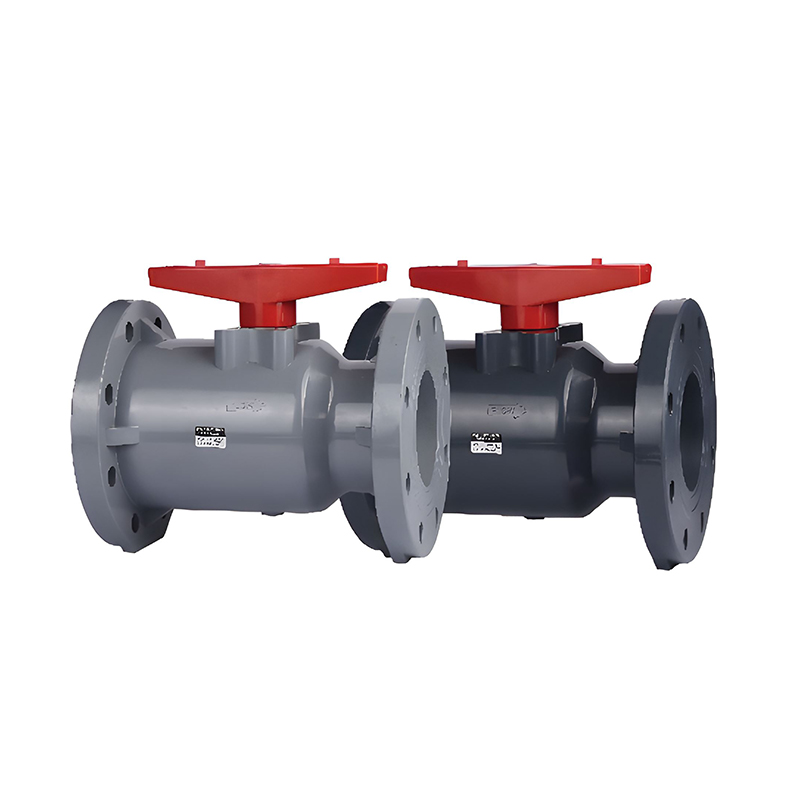
The fundamental difference between these materials lies in their reaction to acidic media. Stainless steel relies on a thin chromium oxide "passive layer" to prevent corrosion; however, in the presence of concentrated hydrochloric or sulfuric acid, this layer is stripped away, leading to pitting and stress corrosion cracking. Conversely, a CPVC Flanged Ball Valve is a non-metallic, inert polymer. Its high chlorine content provides a natural barrier against chemical attack, ensuring that the CPVC valve acid resistance remains stable even at temperatures up to 93°C. For engineers comparing CPVC vs stainless steel ball valves, it is essential to note that while steel eventually thins due to uniform corrosion, CPVC maintains its dimensional integrity. Understanding how to select CPVC flanged ball valves for chemicals involves evaluating the specific concentration of the acid and the flow velocity.
Chemical Stability Comparison
- Non-Conductive Nature: CPVC is immune to galvanic and electrolytic corrosion, which frequently plagues metallic valves in underground or salt-spray environments.
- Surface Energy: The smooth internal surface of a CPVC Flanged Ball Valve prevents scale buildup, which is common in stainless steel systems after the passive layer is compromised.
| Technical Metric |
316 Stainless Steel |
CPVC Flanged Ball Valve |
| Resistance to Hydrochloric Acid |
Poor (Rapid Pitting) |
Excellent (Inert) |
| Corrosion Rate |
Measurable (mm/year) |
Zero (Non-metallic) |
| Max Temperature for Acids |
Variable (Risk of SCC) |
Up to 93°C (200°F) |
| Surface Scaling |
High risk in acidic water |
Nearly Zero |
2. Mechanical Durability and Pressure Ratings
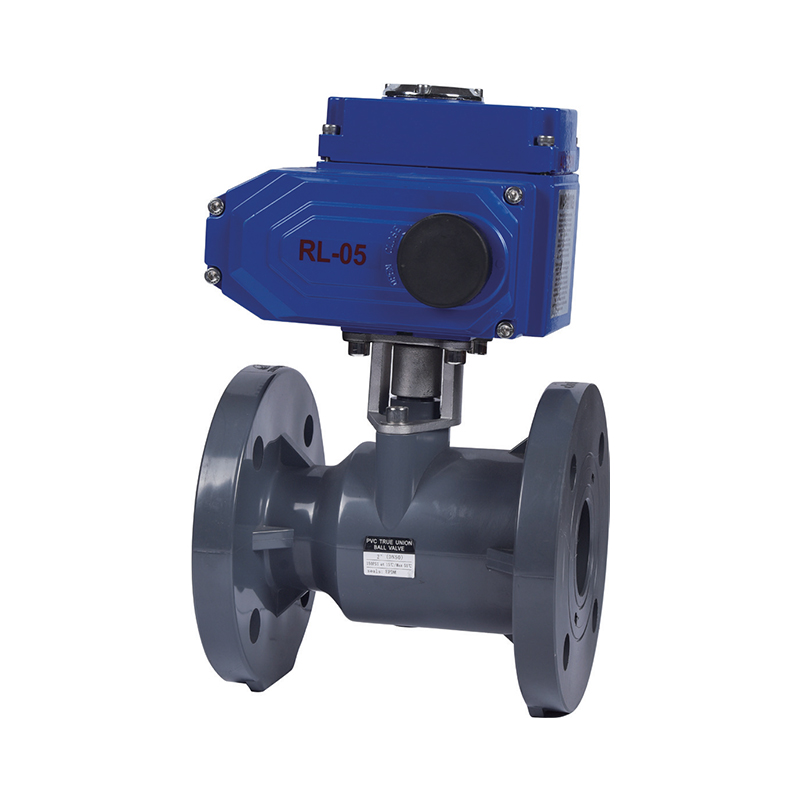
A common engineering concern is the CPVC flanged ball valve pressure rating compared to the structural rigidity of alloys. While stainless steel can handle much higher pressures, industrial CPVC flanged ball valve applications in chemical dosing and wastewater treatment usually operate within the PN10 to PN16 range, where CPVC performs exceptionally well. The CPVC flanged ball valve installation guide highlights that the flanged connection provides a robust seal that accommodates thermal expansion better than threaded joints. When considering the durability of CPVC ball valves in acidic water, the absence of localized corrosion at the flange-to-pipe interface gives CPVC a distinct lifecycle advantage over welded stainless steel joints, which often suffer from "intergranular corrosion" in heat-affected zones.
Structural Sequence of a CPVC Flanged Valve
- Molded Body: Injection-molded under high pressure for uniform density and zero internal stress.
- Full Port Design: Minimizes pressure drop and turbulence, reducing mechanical wear on the ball.
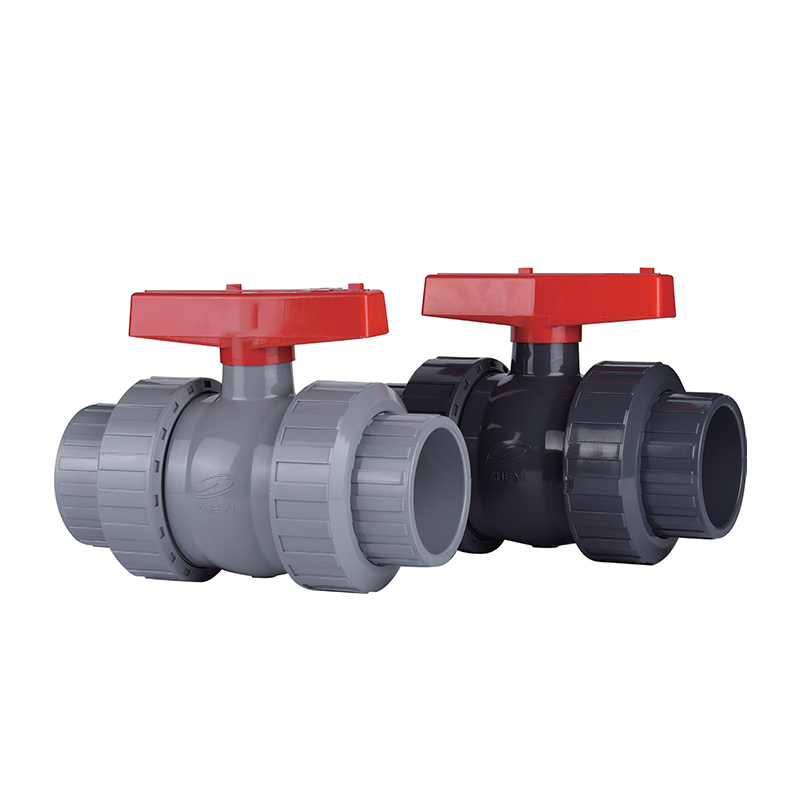
- Double Union/Flanged Ends: Allows for easy maintenance without cutting the pipeline, enhancing CPVC flanged ball valve maintenance tips.
| Mechanical Metric |
Stainless Steel (316L) |
CPVC Flanged Ball Valve |
| Weight |
High (Requires heavy support) |
Low (1/6th the weight of steel) |
| Installation Complexity |
High (Requires welding/threading) |
Simple (Solvent cement or Bolting) |
| Vibration Damping |
Low (Transmits noise) |
High (Absorbs system vibration) |
3. Total Cost of Ownership (TCO) in Corrosive Environments
Beyond material cost, engineers must analyze CPVC vs stainless steel ball valve cost over a 10-year period. Stainless steel valves in acidic service often require replacement every 2 to 4 years due to chemical degradation, whereas corrosion resistant CPVC flanged ball valves can last upwards of 20 years with minimal intervention. The benefits of using CPVC valves in chemical plants include not only the lower initial purchase price but also significantly reduced labor costs during installation and repair. As a national high-tech enterprise, ZHEYI Group ensures that our CPVC Flanged Ball Valve units adhere to ISO9001 and ISO14001 standards, providing a "win-win" solution for sustainable development and cost-efficiency.
Conclusion: The Benchmarking Choice
In acidic environments, the CPVC Flanged Ball Valve is not just an alternative to stainless steel; it is often the superior choice. Its immunity to ionic corrosion, combined with ease of installation and significant TCO savings, makes it the benchmark for non-metallic pressure pipelines. ZHEYI Group remains committed to excellence and integrity, ensuring that our industrial pipelines provide the safety and reliability required by the world's most demanding industries.
Frequently Asked Questions (FAQ)
1. What is the standard CPVC flanged ball valve pressure rating?
Most industrial-grade CPVC flanged ball valves are rated for 150 PSI (PN10) at ambient temperatures. It is vital to consult the temperature-pressure de-rating charts as temperatures approach the 93°C limit.
2. Is the chemical resistance of CPVC valves suitable for nitric acid?
Yes, CPVC shows excellent resistance to nitric acid in concentrations up to 70% at moderate temperatures, where stainless steel may experience accelerated oxidation.
3. What are the best CPVC flanged ball valve maintenance tips?
Regularly check the torque on flange bolts to ensure even sealing and operate the valve periodically to prevent "sticking" if the media contains suspended solids. CPVC valves are virtually maintenance-free regarding corrosion.
4. How to select CPVC flanged ball valves for chemicals like lithium electrolytes?
You must verify the compatibility of the O-ring material (typically FKM or EPDM) with the chemical, as the seal is often the first point of failure in a valve assembly.
5. Why are industrial CPVC flanged ball valve applications growing in the semiconductor industry?
Semiconductor processes require ultra-pure water and aggressive acids. CPVC is used because it does not leach metallic ions into the fluid, maintaining the high purity levels required for electronic-grade water.
Industry References
- ASTM F441: Standard Specification for Chlorinated Poly(Vinyl Chloride) (CPVC) Plastic Pipe, Schedules 40 and 80.
- ISO 16135: Industrial valves — Ball valves of thermoplastics materials.
- ZHEYI Group Technical Data Sheet: "Chemical Resistance Matrix for Thermoplastic Valves" (2025).
- ASME B16.5: Pipe Flanges and Flanged Fittings (Standard for Dimensional Compatibility).
 +86-15258772971
 dinys009@163.com

 English
 한국어
한국어 Español
 عربى
عربى