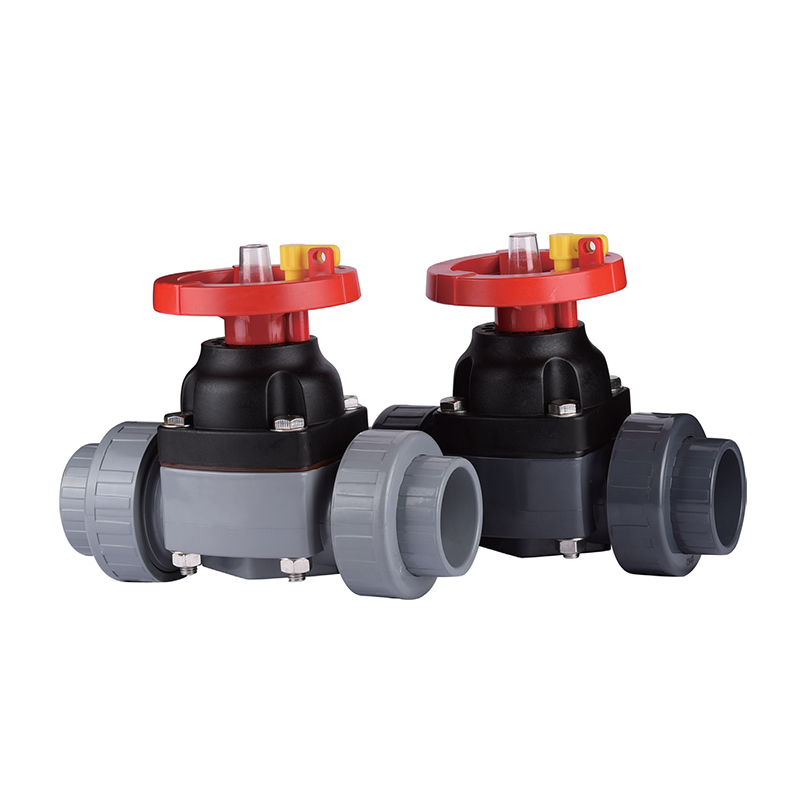
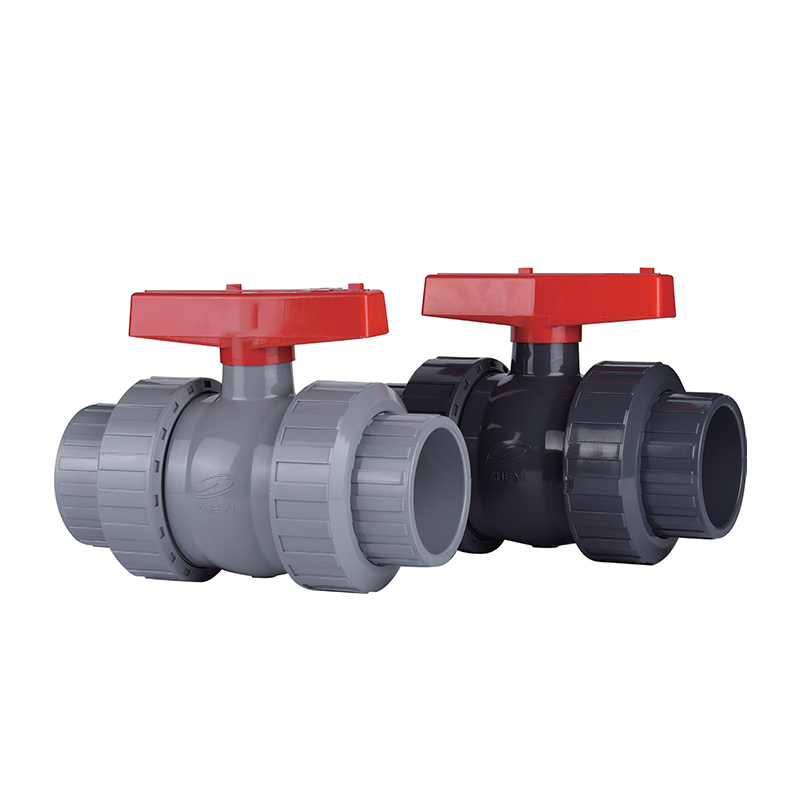
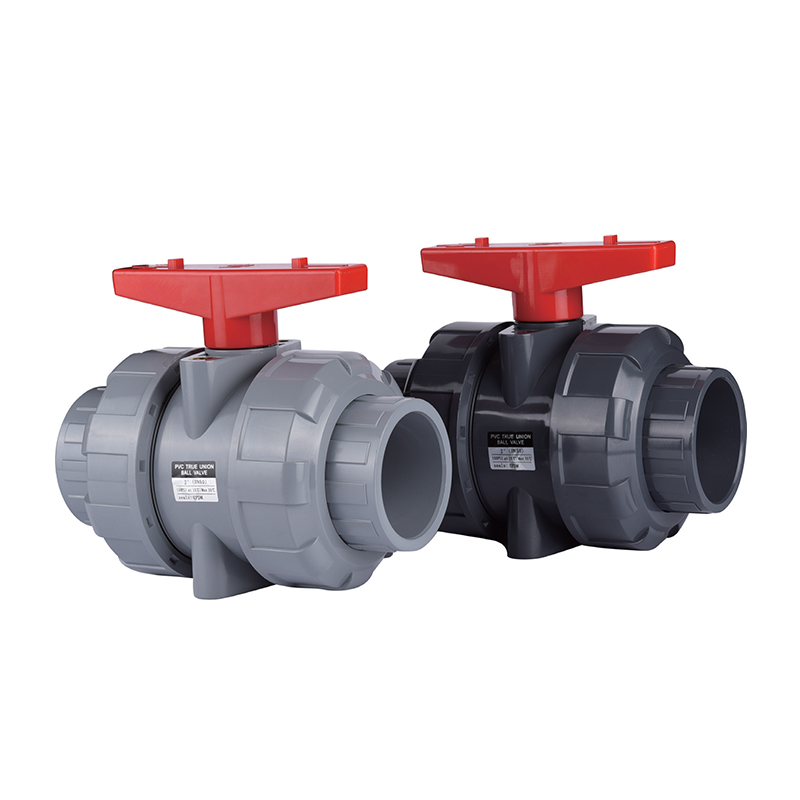
The **union ball valve UPVC** is a workhorse in industrial fluid conveyance, valued for its corrosion resistance and ease of maintenance provided by the union ends. However, unlike metallic valves, its mechanical strength, and consequently its maximum operating pressure, is highly sensitive to temperature. Engineers must understand and strictly apply the Derating factor for UPVC piping systems to prevent catastrophic failure, especially when temperatures rise above the standard 20°C reference point.
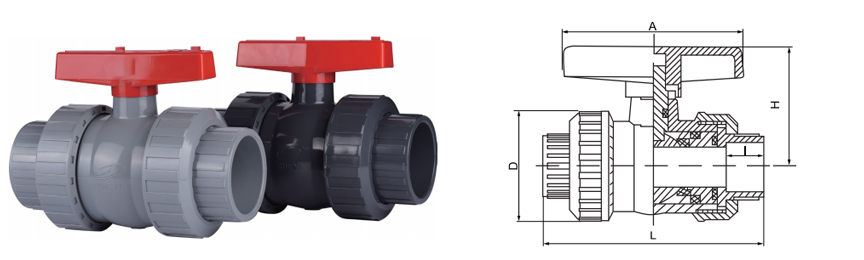
SCH8O/DIN UPVC/CPVC Ⅰ Ball Valve
The Plasticity Factor: Derating factor for UPVC piping systems
UPVC (Unplasticized Polyvinyl Chloride) is a thermoplastic material, meaning its mechanical properties degrade as temperature increases. This necessitates the use of a derating factor to adjust the maximum allowable working pressure (MAWP).
Thermal Expansion and Loss of Tensile Strength in UPVC
- **Softening Point:** As the temperature approaches the glass transition temperature ($T_g$) of UPVC (typically around 80°C to 85°C), the material softens, significantly reducing its hoop stress resistance and overall tensile strength.
- **Derating Mechanism:** The Derating factor for UPVC piping systems accounts for this thermal degradation. At the reference temperature of 20°C (or 68°F), the factor is 1.0. For every significant temperature increase above this point, the factor decreases, proportionally lowering the MAWP.
Quantifying Pressure Reduction: Standardized Derating Curve
The pressure reduction for a **union ball valve UPVC** is substantial as the operational temperature rises. For example, a valve rated PN10 (10 bar) at 20°C will see its rating drop significantly at 40°C.
Pressure Rating Reduction Table
| Temperature (°C) |
Derating Factor (Approximate) |
MAWP for PN10 Rated Valve (Bar) |
| 20 |
1.0 |
10.0 |
| 40 |
0.65 |
6.5 |
| 60 |
0.30 |
3.0 |
Standardization and Compliance: ISO 15493 standard for UPVC ball valves
To ensure global safety and interchangeability, the design and pressure ratings of plastic valves must conform to specific international standards.
Key Requirements of ISO 15493 standard for UPVC ball valves for Pressure-Temperature Rating
- **Standard Scope:** ISO 15493 is the foundational standard for industrial piping systems made from UPVC. It rigorously defines test methods and requirements for components, including pressure endurance and temperature limits.
- **Pressure Nominal (PN) Rating:** Compliance with ISO 15493 requires the valve to be rated based on its PN (Nominal Pressure) at the reference temperature of 20°C, ensuring the consistency of the listed **UPVC ball valve pressure rating vs temperature** data.
ASTM F1970: The North American Context
While the ISO 15493 standard for UPVC ball valves is widely accepted internationally, in North America, specifications often align with ASTM F1970, which provides comparable test methods for plastic ball valves. Compliance with either standard assures B2B purchasers of the product's engineering basis and predictable performance under specified conditions.
Operational Limits: Determining the Maximum working pressure for UPVC valves at 40C
Many industrial processes operate slightly above ambient temperature, making the 40°C operating condition a common benchmark that requires a direct calculation of the reduced MAWP.
Calculating Pressure at Elevated Temperatures (e.g., 40°C and 60°C)
- **40°C Calculation:** As shown in the derating table, a valve rated PN10 at 20°C will have a Maximum working pressure for UPVC valves at 40C of approximately 6.5 Bar (10 Bar * 0.65). Engineers must factor in safety margins beyond this calculated value.
- **60°C Limitation:** At 60°C, the pressure rating drops steeply (to roughly 30% of its initial rating). Operating a **union ball valve UPVC** beyond 65°C is generally discouraged as the structural integrity becomes highly compromised.
Impact of Valve Design on Pressure Endurance
The thickness of the valve body wall and the design of the ball seats and seals critically influence the final pressure endurance. High-quality valves feature robust wall sections and engineered sealing systems that maximize the effective sealing area, thereby providing better tolerance against pressure fluctuations, even under the reduced capacity defined by the UPVC ball valve pressure rating vs temperature curve.
Procurement Criteria: Essential Technical specifications for union ball valve UPVC
Beyond pressure and temperature, the union feature offers distinct advantages.
The Advantage of the Union Connection for Maintenance
- The union end allows the valve body to be isolated and removed from the pipeline without cutting the pipe, simplifying routine maintenance, seal replacement, and cleaning. This modularity is a key selling point in the **Technical specifications for union ball valve UPVC** in complex industrial systems.
Long-Term Reliability and Chemical Resistance
The suitability of the **union ball valve UPVC** stems from its inherent resistance to a wide range of corrosive media—a property that does not degrade with temperature, unlike its mechanical strength. When correctly applied based on the Derating factor for UPVC piping systems, these valves provide long-term, reliable service in demanding chemical environments.
ZHEYI Group: Commitment to Non-Metallic Pipeline Excellence
ZHEYI Group, founded in 2007, is a national high-tech enterprise specializing in R&D, manufacturing, selling, and service of industrial pipelines, including CPVC and UPVC products. With manufacturing bases in both East and Central China, our products are widely used in chemical, photovoltaic, industrial water treatment, and electronic semiconductor industries for the transport of acidic, alkaline, and ultra-pure liquids. We adhere to the core values of "Excellence, Integrity, Win-win cooperation and Sustainable development," strictly complying with standards like ISO 15493 standard for UPVC ball valves and holding over 50 independent intellectual property rights. Our commitment to quality ensures that our **union ball valve UPVC** products are meticulously manufactured to meet the rigorous Maximum working pressure for UPVC valves at 40C and provide the reliable Technical specifications for union ball valve UPVC required by both domestic and international customers.
Frequently Asked Questions (FAQ)
1. What is the fundamental principle behind the UPVC ball valve pressure rating vs temperature relationship?
The principle is the thermoplastic nature of UPVC: as temperature rises, the material's tensile strength decreases rapidly, necessitating a sharp reduction (derating) in the maximum allowable working pressure (MAWP) to maintain safety margins.
2. Which industry standard is commonly used to define the pressure-temperature limits for union ball valve UPVC?
The key international standard is the ISO 15493 standard for UPVC ball valves, which sets forth the testing and requirements for pressure endurance and provides the basis for the derating curves.
3. What is the approximate Derating factor for UPVC piping systems at 40°C?
At 40°C, the approximate derating factor for UPVC is 0.65. This means a valve rated 10 Bar at 20°C will have a Maximum working pressure for UPVC valves at 40C of only 6.5 Bar.
4. Why is the union design feature important in the Technical specifications for union ball valve UPVC?
The union connection allows the valve body to be disconnected and removed from the pipeline without cutting the pipe, vastly simplifying maintenance, seal replacement, and system repairs, which reduces downtime and labor costs.
5. What happens to the MAWP of a **union ball valve UPVC** when the temperature approaches 65°C?
As the temperature approaches 65°C, the material's integrity is severely compromised, and the MAWP drops to a very low level, often less than 20-30% of the 20°C rating. Operation above this temperature is generally not recommended.
 +86-15258772971
 dinys009@163.com
 English
 한국어
한국어 Español
 عربى
عربى