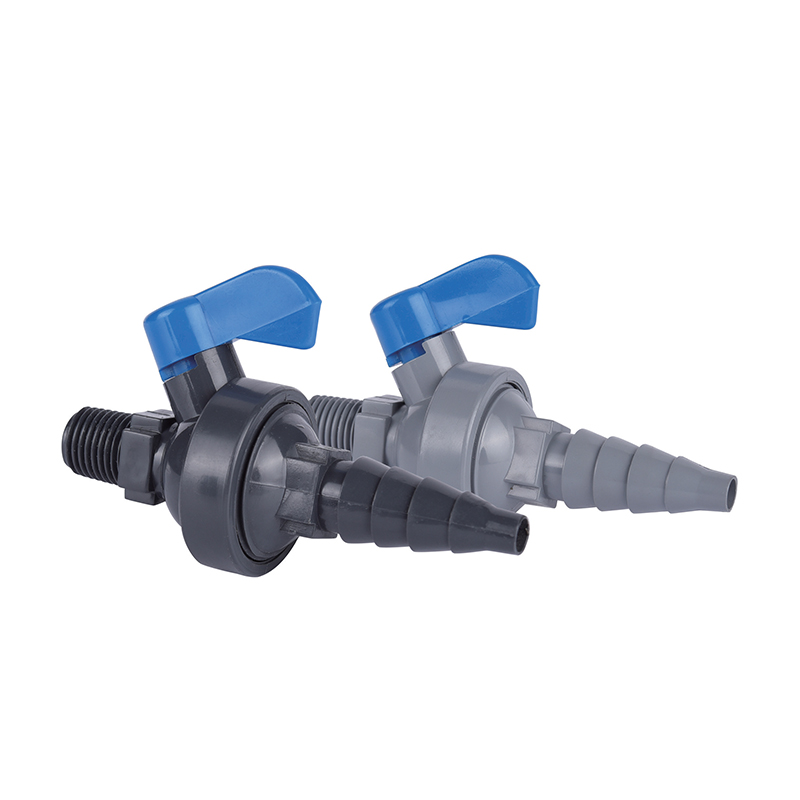
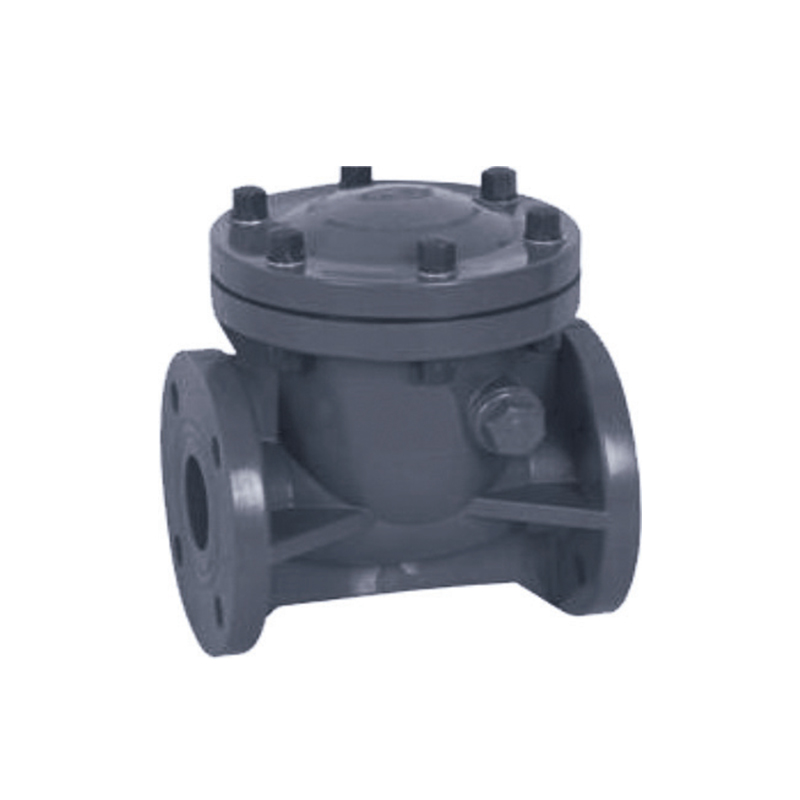
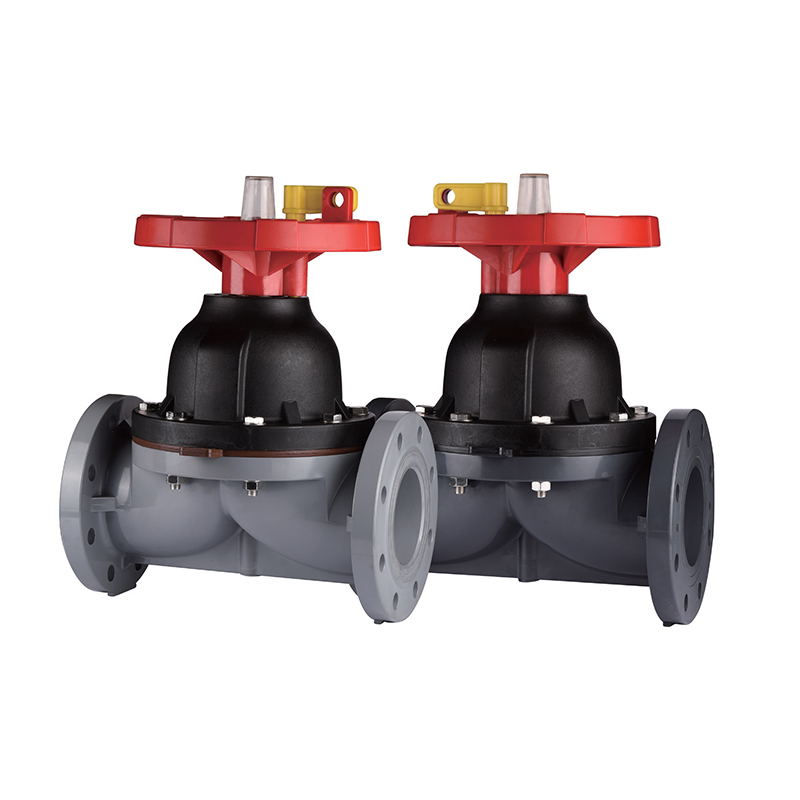
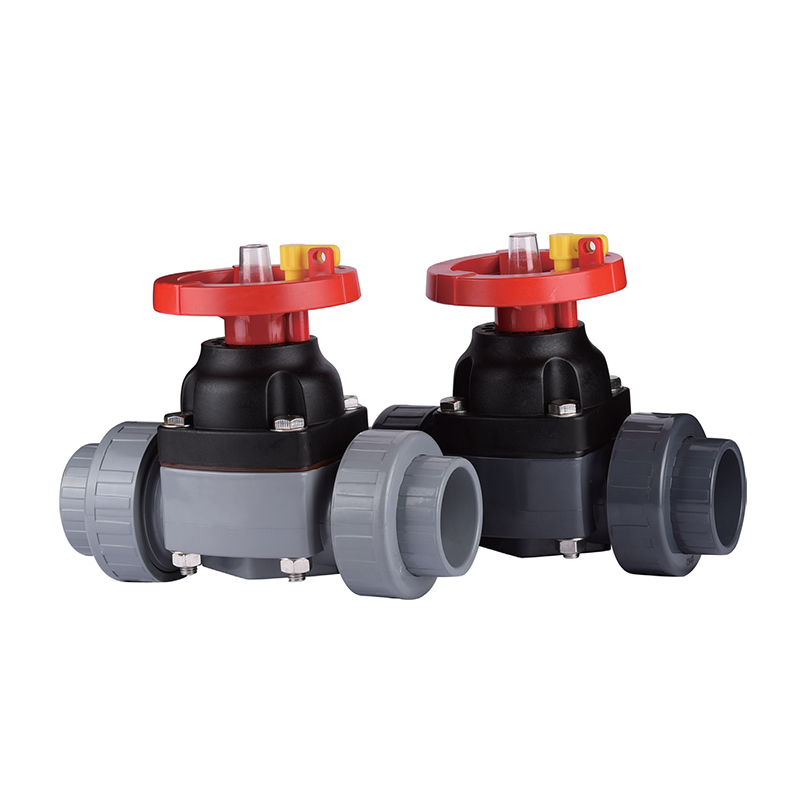
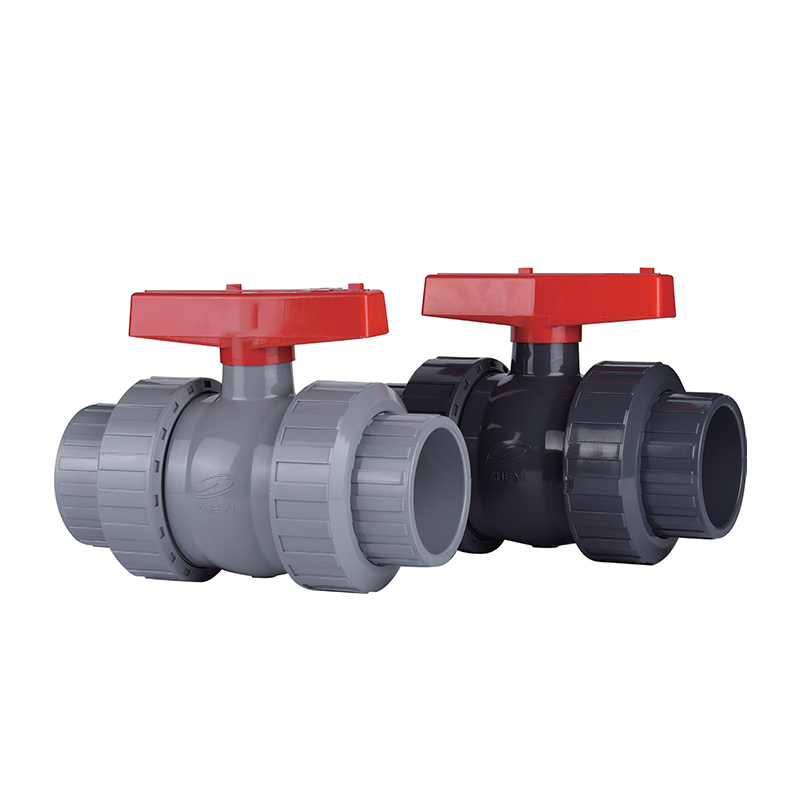
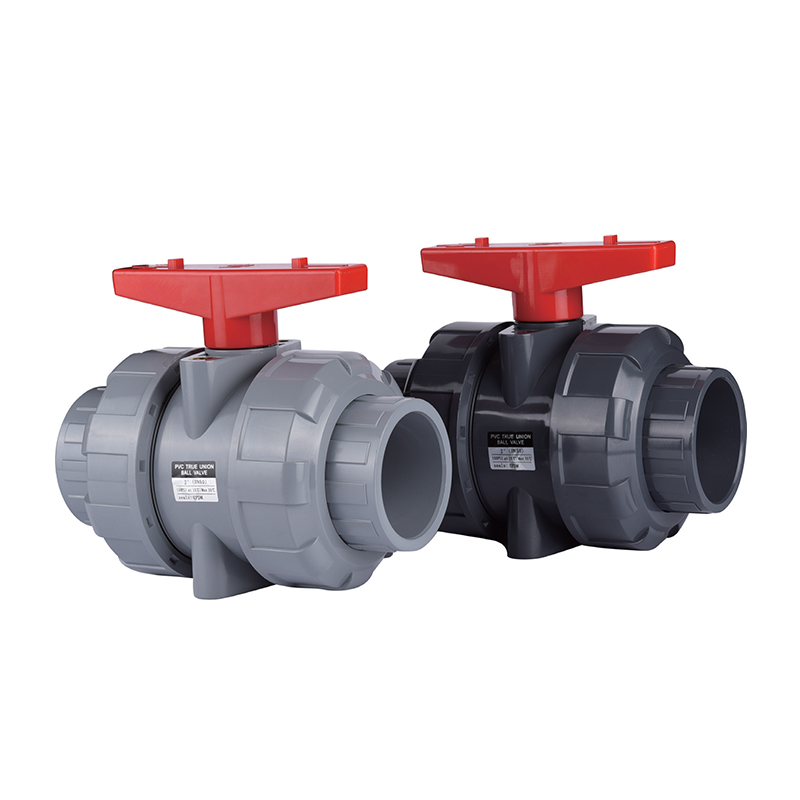
A UPVC valve is a flow-control fitting manufactured from unplasticised polyvinyl chloride — a rigid, chemical-resistant thermoplastic widely used in water treatment, irrigation, chemical dosing, and industrial piping systems. PVC ball valves are highly reliable within their rated pressure and temperature limits, UPVC and standard PVC are fully compatible and routinely joined in the same system, and a well-specified PVC ball valve can last 20–50 years in service with minimal maintenance.
What is a UPVC valve?
UPVC stands for unplasticised polyvinyl chloride — PVC manufactured without the plasticiser additives that make standard flexible PVC soft and pliable. The absence of plasticisers makes UPVC rigid, dimensionally stable, and significantly more resistant to chemical attack and creep under pressure than plasticised grades.
In valve applications, UPVC is used to form the valve body, end connections, and often the ball or disc itself. Internal seals are typically made from EPDM (ethylene propylene diene monomer) for water and mild chemical service, or FKM (Viton) for aggressive acids, solvents, and hydrocarbons.
Key physical and performance characteristics of UPVC valves:
- Pressure rating: Typically PN10 (10 bar / 145 psi) to PN16 (16 bar / 232 psi) at 20°C for standard ball valve bodies. Pressure rating decreases with temperature — at 60°C, rated pressure typically drops to 50–60% of the 20°C value.
- Temperature range: Continuous service from 0°C to 60°C; short-term peaks to 70°C. Above 60°C, UPVC softens progressively and loses structural integrity — CPVC or polypropylene valves are specified instead for hot water systems.
- Chemical resistance: Excellent resistance to chlorinated water, dilute acids, alkalis, salts, and many oxidising agents. Poor resistance to ketones, esters, aromatic hydrocarbons, and concentrated oxidising acids.
- Weight: Approximately one-fifth the weight of equivalent stainless steel valves — significant for overhead installations and large-diameter systems.
- Corrosion resistance: Immune to rust, electrolytic corrosion, and dezincification — a common failure mode in brass valves exposed to soft or aggressive water.
Main types of UPVC valves
| Valve type |
Function |
Common application |
| Ball valve |
Quarter-turn on/off isolation |
Water supply, irrigation, chemical dosing lines |
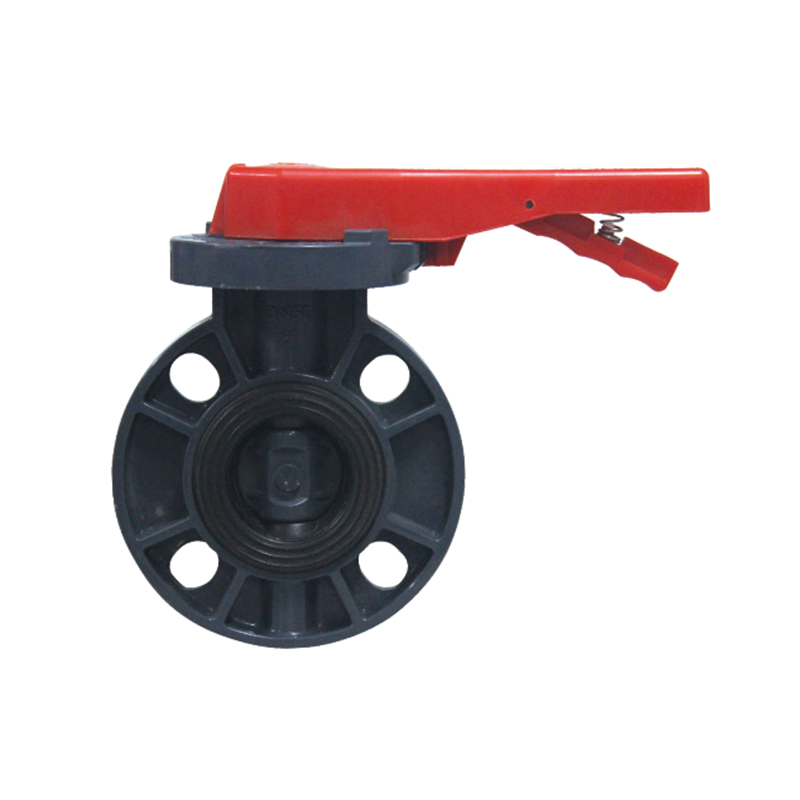
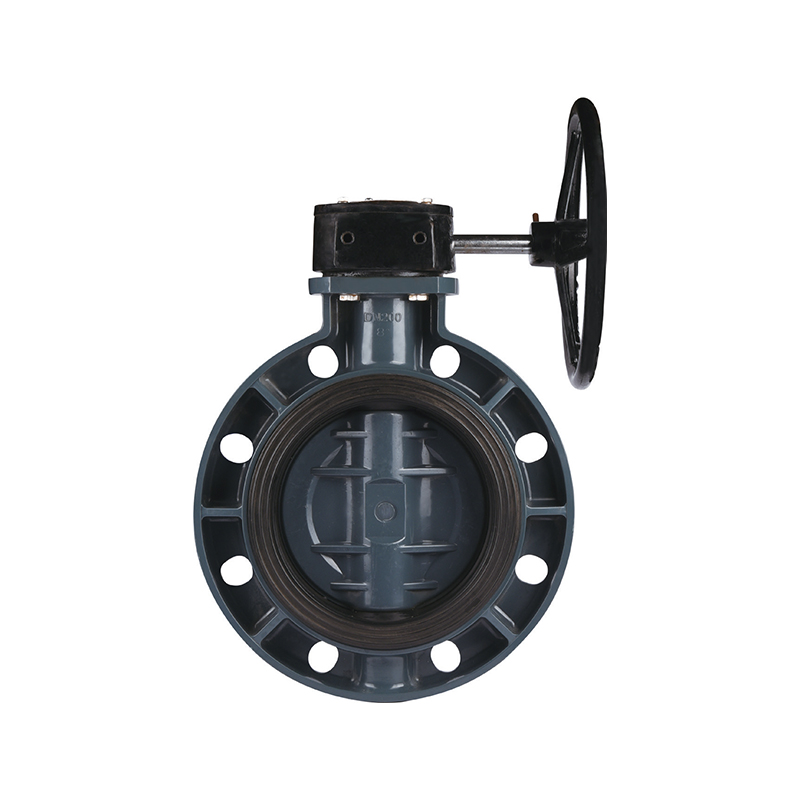
| Butterfly valve |
Quarter-turn throttling and isolation |
Large-diameter water mains, HVAC, effluent systems |
| Diaphragm valve |
Flow regulation, positive shutoff for slurries |
Chemical processing, pharmaceutical, food-grade systems |
| Check valve (non-return) |
Prevents backflow |
Pump discharge lines, dosing systems |
| Gate valve |
Full-bore isolation with low pressure drop |
Water treatment plants, irrigation mains |
| Foot valve |
Maintains pump prime, prevents backflow |
Submersible pump inlets, water storage tanks |
Are PVC ball valves reliable?
Yes — PVC ball valves are highly reliable when operated within their design parameters. They are the dominant valve choice across water treatment, pool and spa, aquaculture, and light chemical processing industries precisely because of their proven track record. Major manufacturers including Asahi/America, Georg Fischer (GF Piping), and Hayward Industries have supplied UPVC ball valves into critical infrastructure for over 40 years with failure rates comparable to metal alternatives at a fraction of the cost.
Reliability depends heavily on staying within three key limits:
- Pressure: Operate at no more than the valve's rated working pressure at the actual system temperature. A valve rated PN16 at 20°C should not be used at 16 bar if the fluid temperature regularly reaches 50°C — at that temperature the safe operating pressure may be only 9–10 bar.
- Temperature: Sustained temperatures above 60°C accelerate creep in the valve body and seats, leading to leakage past the ball. For hot water circuits, specify CPVC valves (rated to 93°C) or consider polypropylene alternatives.
- Chemical compatibility: The most common reliability failure is using a UPVC valve in a chemical service for which it is not rated. Always verify both the body material (UPVC) and seal material (EPDM or FKM) against the specific fluid — chlorinated solvents, THF, and MEK will rapidly destroy UPVC regardless of operating pressure.
Common failure modes and how to avoid them
| Failure mode |
Cause |
Prevention |
| Body cracking |
Water hammer, thermal expansion stress, over-torqued unions |
Install expansion loops, use slow-close actuators, torque unions to hand-tight plus ¼ turn only |
| Seat leakage past ball |
Seat wear from particulate-laden flow, thermal cycling, or operation above temperature rating |
Install upstream strainer (100 mesh for ½–2″ valves), stay within temperature limits |
| Stem seal leakage |
UV degradation of O-ring, chemical attack on EPDM seals |
Specify FKM seals for chemical service; protect outdoor valves from direct UV with insulation wrap |
| UV embrittlement |
Prolonged direct sunlight exposure degrades UPVC surface |
Use UV-stabilised grey UPVC for outdoor installations or paint with water-based acrylic |
| Thread joint failure |
Over-tightening threaded connections, incompatible thread sealants (petroleum-based PTFE tape) |
Use low-density PTFE tape (not petroleum-based paste); do not exceed 3–4 turns past hand-tight on BSP/NPT threads |
In properly designed systems operating within rated conditions, PVC ball valves have an outstanding reliability record. A 2019 review of water treatment facility asset data in the Netherlands found UPVC valve systems averaging over 25 years in service before first seal replacement — outperforming carbon steel valves in the same corrosive chlorinated water environment.
Can UPVC and PVC be used together?
Yes — UPVC and standard PVC (plasticised or unplasticised Schedule 40/80 pipe) are fully compatible and routinely combined in the same piping system. Both materials use identical solvent cement chemistry for socket joints and the same BSPT, NPT, or metric thread standards for threaded connections.
A few practical points to understand when combining them:
- Solvent cementing: Standard IPS or metric PVC solvent cement (e.g., Weld-On 711, Tangit PVC-U) bonds UPVC to UPVC, UPVC to Schedule 40 PVC, and UPVC to Schedule 80 PVC without any compatibility issues. The cement chemically fuses both materials at the molecular level — the joint is stronger than the pipe itself when properly prepared and cured.
- Pressure rating: When combining pipe schedules or wall thicknesses, the system's maximum working pressure is limited by the lowest-rated component in the assembly. A UPVC PN16 valve fitted between Schedule 40 PVC pipe rated at 9.5 bar (for ½″ pipe at 23°C) limits the system to 9.5 bar — not 16 bar.
- Thermal expansion: UPVC and standard PVC have very similar coefficients of thermal expansion (approximately 0.06–0.08 mm/m/°C), so differential expansion at joints is negligible in most service temperature ranges.
- Colour differences: UPVC valve bodies are typically dark grey (RAL 7011) in European and Asian markets, or white/light grey in Australian and North American markets. Schedule 40 PVC pipe is commonly white; Schedule 80 is dark grey. Colour differences are cosmetic only — they do not indicate chemical incompatibility.
- Metric vs imperial dimensions: This is the one area where care is needed. European UPVC valves use metric OD pipe dimensions (e.g., 32 mm, 40 mm, 50 mm), while North American PVC pipe uses nominal pipe size (NPS) with IPS OD dimensions (1¼″, 1½″, 2″). A DN50 UPVC valve socket will not correctly accept a 2″ IPS pipe without an adapter — verify dimensional standards before ordering.
UPVC vs CPVC — understanding the difference when combining materials
CPVC (chlorinated polyvinyl chloride) is a related but distinct material rated for continuous service up to 93°C. UPVC and CPVC are not directly solvent-weldable to each other — they require a transitional solvent cement (such as Weld-On 724 or equivalent) or a mechanical coupling. If your system includes both UPVC cold-service sections and CPVC hot-water sections, always use the correct transition cement at the interface.
How long will a PVC ball valve last?
A PVC ball valve installed within its rated conditions typically lasts 20–50 years, with seals and seats occasionally requiring replacement at 10–15 year intervals in high-cycle or aggressive chemical applications. In low-cycle water service (a valve operated a few times per year for isolation purposes), 30–50 year service life without any maintenance is realistic and commonly observed.
Service life is primarily determined by four factors:
- Cycle frequency: A ball valve rated for 100,000 full open-to-close cycles will last decades in isolation service but may need seat replacement within 5–10 years in a high-frequency automated system cycling dozens of times per day.
- UV exposure: Unstabilised UPVC exposed to direct sunlight becomes brittle within 3–7 years. UV-stabilised grey UPVC (which contains carbon black or UV absorbers) resists degradation for 25+ years outdoors. Always specify UV-stabilised material for any outdoor installation.
- Water quality: Highly chlorinated water (above 4 ppm residual chlorine) or water containing suspended solids accelerates EPDM seal degradation and ball seat wear. In pool and spa applications — where chlorine levels regularly exceed 3–5 ppm — seal replacement every 7–10 years is normal practice.
- Installation quality: The majority of premature PVC valve failures trace back to installation errors rather than material failure. Over-torqued union nuts, water hammer from rapid valve closure, and misaligned pipe imposing side-load stress on valve bodies account for a disproportionate share of early failures.
Extending service life: practical maintenance steps
- Exercise isolation valves at least once per year — a ball valve left in one position for years can have the ball seat permanently deform around the ball, making operation difficult and causing leakage when moved.
- Inspect union O-rings every 5 years in chemical service and replace if any hardening, cracking, or swelling is visible.
- Check for surface crazing or discolouration on outdoor valve bodies annually — early UV degradation is visible before structural failure occurs.
- Install pressure surge arrestors or slow-close actuators on any automated PVC valve system where water hammer is a risk — a single significant water hammer event can crack a valve body instantly regardless of its age.
- Apply water-based acrylic paint to outdoor UPVC valves if UV-stabilised material was not specified — this adds years of UV protection at negligible cost.
Comparative lifespan: UPVC vs other valve materials
| Valve material |
Typical service life |
Main failure mechanism |
Best suited for |
| UPVC |
20–50 years |
UV embrittlement, thermal overstress |
Cold water, chemicals, irrigation |
| CPVC |
20–40 years |
Chlorinated solvent attack, mechanical stress |
Hot water up to 93°C, industrial chemical lines |
| Brass |
15–30 years |
Dezincification in soft/acidic water |
General plumbing, gas, compressed air |
| Stainless steel (316) |
30–60 years |
Crevice corrosion in chloride-rich environments |
High pressure, high temperature, hygienic systems |
| Cast iron |
20–40 years |
Internal corrosion, tuberculation |
Large-diameter water mains, fire systems |
| Carbon steel |
10–25 years |
Corrosion without protective lining/coating |
Oil, gas, steam where corrosion is managed |
Across these comparisons, UPVC valves offer one of the best combinations of service life, corrosion immunity, and purchase cost for cold-water and chemical service applications — making them the default specification choice for water treatment, aquaculture, swimming pool, and light industrial piping systems worldwide.
 +86-15258772971
 dinys009@163.com

 English
 한국어
한국어 Español
 عربى
عربى