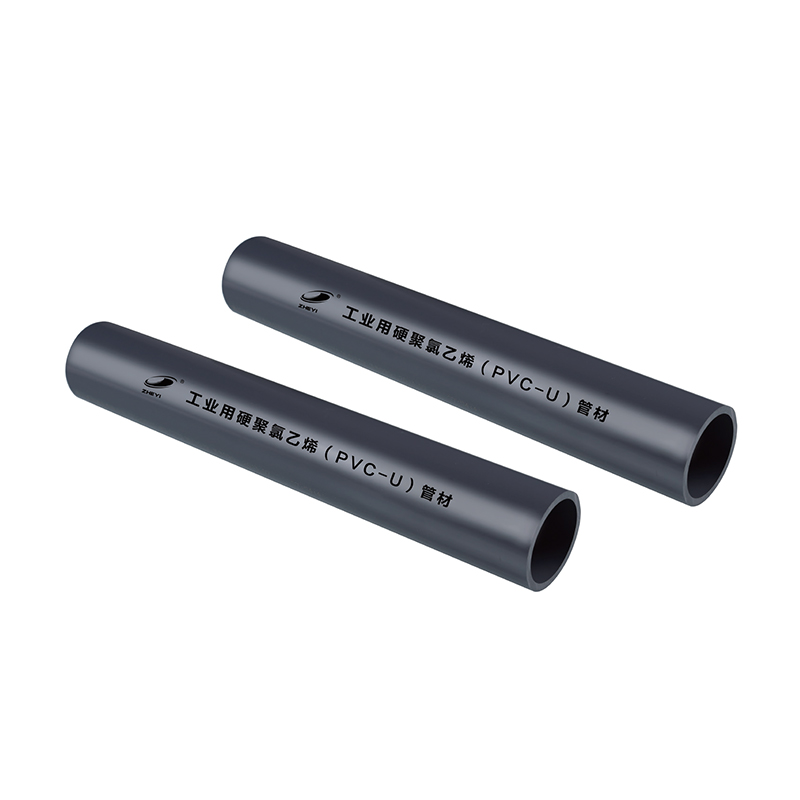
Metallurgy plants operate in some of the most chemically aggressive environments in heavy industry — acid pickling lines, electroplating baths, slag cooling circuits, and chemical dosing systems all demand pipework that will not corrode, crack, or fail under continuous chemical exposure. UPVC pipe for metallurgy has become the material of choice across these applications, replacing carbon steel and cast iron systems that corrode within years and demand constant maintenance.
What Makes UPVC Pipe Chemically Resistant?
UPVC — Unplasticised Polyvinyl Chloride — derives its chemical resistance from a tightly bonded molecular structure that is inherently inert to a wide range of acids, alkalis, and salts. Unlike metals, which corrode through electrochemical reactions with their environment, UPVC does not conduct electricity and carries no ionic potential. The result is a pipe material that remains dimensionally and chemically stable in conditions that destroy conventional metal pipework within months.
UPVC pipe chemical resistance is defined by its ability to maintain structural integrity and flow capacity after prolonged immersion in acids, alkalis, oxidising agents, and saline solutions — without surface degradation, pitting, or permeation.
Laboratory testing to ISO 175 confirms UPVC retains more than 95% of its tensile strength after 12 months of immersion in hydrochloric acid at concentrations up to 35%, sulphuric acid up to 60%, and sodium hydroxide up to 40%. These are the core reagents encountered in metallurgical acid treatment, surface finishing, and waste neutralisation processes.
35% Max HCl concentration resisted without degradation
60% Max H₂SO₄ concentration tolerated at ambient temperature
95%+ Tensile strength retained after 12 months acid immersion
0 Ionic conductivity — UPVC is fully non-conductive
UPVC Pipe Corrosion Resistance in Metallurgy Plants
UPVC pipe corrosion resistance is absolute in the conventional sense: the material does not corrode. There is no oxide layer to breach, no galvanic potential to drive electrochemical attack, and no grain boundary weakness that concentrated acids can exploit. In metallurgy plants — where pipe systems routinely carry acid rinse water, chemical etchants, cooling brines, and electroplating electrolytes — this property eliminates the dominant failure mode that afflicts steel and iron pipe systems.
Common Corrosion Threats in Metallurgy
- Hydrochloric and sulphuric acid in pickling and descaling circuits
- Chloride-rich cooling water causing pitting in stainless steel
- Electroplating electrolytes: chromic acid, nickel sulphate, copper sulphate
- Caustic soda in alkaline cleaning and waste neutralisation lines
- Ferric chloride in chemical milling and etching operations
- High-salinity process water in coastal and arid plant locations
UPVC Response to Each Threat
- No reaction — inner bore remains smooth and unaffected
- Chloride ions cause zero pitting or stress corrosion in UPVC
- Fully compatible at standard process concentrations and temperatures
- Resistant to NaOH up to 40% concentration
- Compatible — no swelling, cracking, or permeation
- Salt and mineral content does not affect UPVC performance
UPVC Pipe for Metallurgy Plants: Industrial Applications
UPVC pipe industrial applications in metallurgy span the full process chain — from raw material preparation through to finished product treatment and waste management. The pipe's combination of chemical inertness, smooth bore, and light weight makes it suitable for both process-critical and utility service lines.
Acid Pickling & Descaling Lines
Hot-rolled steel and aluminium strip passes through hydrochloric or sulphuric acid baths before cold rolling. UPVC pipework carries the acid supply, rinse water, and spent acid return without the wall thinning and contamination risk associated with rubber-lined steel.
Electroplating & Surface Finishing
Chrome plating, nickel deposition, and zinc electroplating all require precise chemical dosing. UPVC resists the full range of plating electrolytes and does not introduce metallic contamination that would compromise bath chemistry or coating quality.
Cooling Water & Slag Quench Systems
Blast furnace and converter cooling circuits handle high-chloride water under continuous flow. UPVC's zero-corrosion profile eliminates the iron oxide contamination and flow restriction that degrades metal pipe systems over time.
Effluent Treatment & Chemical Dosing
Acid and alkali dosing for pH correction, flocculation chemical lines, and treated effluent discharge all benefit from UPVC's consistent bore dimensions and immunity to the alternating acid-alkali cycles that cause metal pipe to fail at welds and fittings.
UPVC Pipe Service Life vs Metal Pipe in Industrial Use
UPVC pipe service life in chemical-bearing metallurgy applications routinely exceeds 25 to 50 years under normal operating conditions. Carbon steel pipe in equivalent acid-exposed service typically requires replacement or relining within 3 to 7 years. The cost differential over a plant's operational life is substantial — and it does not account for the indirect costs of production downtime, acid contamination clean-up, and the safety risks associated with pipe failure in acid service.
| Performance Factor |
UPVC Pipe |
Carbon Steel |
Stainless Steel 316 |
| HCl resistance (35%) |
Excellent |
None |
Poor (pitting) |
| H₂SO₄ resistance (60%) |
Excellent |
None |
Moderate |
| Chloride resistance |
Excellent |
None |
Limited (SCC risk) |
| Expected service life (acid duty) |
25–50 years |
3–7 years |
5–12 years |
| Maintenance frequency |
Minimal |
High |
Moderate |
| Installation weight (DN100) |
~3.1 kg/m |
~16.0 kg/m |
~16.8 kg/m |
| Material cost index |
1.0 |
1.4 |
4.5–6.0 |
UPVC Pipe vs Metal Pipe: Making the Engineering Case
UPVC pipe vs metal pipe comparisons in metallurgy engineering decisions must account for whole-life cost, not just material purchase price. While metal pipe may carry a lower unit cost at procurement, the operational reality in acid-bearing service consistently favours UPVC across every significant cost category.
01 Lower installation cost — UPVC weighs up to 80% less than equivalent-bore steel pipe, reducing structural support requirements and labour hours
02 No protective coatings required — steel and iron pipe in acid service requires internal lining, external painting, and cathodic protection systems that UPVC eliminates entirely
03 Smooth bore maintains flow rate — UPVC's inner surface roughness of 0.0015mm vs steel's 0.046mm means lower pressure drop and no flow degradation as metal pipe corrodes
04 Process purity protection — corrosion products from metal pipe contaminate process streams; UPVC is fully inert and introduces no particulate or ionic contamination
 +86-15258772971
 dinys009@163.com

 English
 한국어
한국어 Español
 عربى
عربى