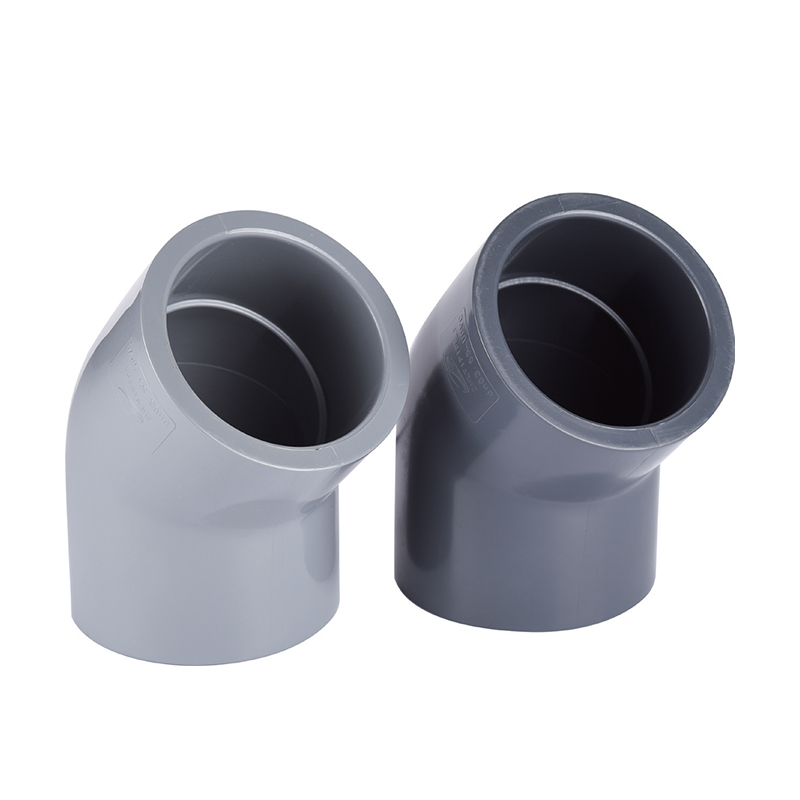
In industrial fluid handling, Chlorinated Polyvinyl Chloride (CPVC) has become a benchmark material for high-temperature and corrosive environments. When specifying 3 4 cpvc fittings, engineers must distinguish between Schedule 40 and Schedule 80 classifications. This choice directly impacts the safety factor and longevity of hot water lines in sectors like metallurgy, photovoltaics, and chemical processing. ZHEYI Group, founded in 2007, has spent nearly two decades refining the R&D and manufacturing of these industrial pipelines, adhering to international standards to serve as a beacon of quality in China's non-metallic pressure pipeline industry.
The Structural Basis of Pressure Performance
The fundamental difference between Schedule 40 and Schedule 80 lies in the wall thickness. While the outside diameter (OD) remains constant to ensure compatibility with standard hangers and supports, the inside diameter (ID) of a Schedule 80 fitting is smaller due to its thicker walls. This added material allows industrial 3/4 cpvc fittings schedule 80 to withstand significantly higher internal pressures than their Schedule 40 counterparts.
According to the 2024 updates from the Plastic Pipe Institute (PPI), the demand for high-wall thickness thermoplastic fittings in industrial water treatment has grown by 6.2%, driven by the need for higher safety margins in pressurized systems. Descriptive technical analysis shows that thicker walls reduce the hoop stress experienced by the fitting under pressure.
Source: PPI Technical Report: Thermoplastic Piping Materials 2024
Comparing Wall Thickness and Pressure Capacity
Schedule 80 fittings are engineered for heavy-duty industrial use, whereas Schedule 40 is typically reserved for lower-pressure irrigation or cold-water applications. For hot water lines, the distinction becomes even more critical as the material's strength derates as temperatures rise.
| Specification |
Schedule 40 (3/4") |
Schedule 80 (3/4") |
| Wall Thickness (Approx.) |
0.113 inches |
0.154 inches |
| Pressure Rating at 73°F (23°C) |
Approx. 280 PSI |
Approx. 470 PSI |
| Primary Application |
Light industrial/Cold water |
Heavy industrial/Hot acid/Pressurized water |
Impact of High Temperature on Pressure Ratings
Standard CPVC systems are rated for service up to 200°F (93°C). However, as the temperature increases, the maximum allowable pressure decreases. Utilizing cpvc fittings for high temperature water lines requires a derating factor. For example, at 180°F (82°C), a CPVC fitting can only hold 25% of its 73°F pressure rating.
Adhering to ASTM F439 3/4 cpvc fittings specifications ensures that the molded fittings can sustain the required pressure-temperature thresholds. ZHEYI Group, a national high-tech enterprise, utilizes advanced tooling equipment from Germany to ensure that our Schedule 80 fittings maintain dimensional stability and structural integrity even at the upper limits of the CPVC thermal envelope.
Derating Factors for 3/4" CPVC Fittings
Engineers must multiply the base pressure rating by the temperature derating factor to find the safe working pressure for their specific hot water application. Schedule 80 fittings provide a much higher starting point, making them the only viable choice for pressurized high-temperature industrial loops.
| Operating Temperature |
Derating Factor |
Safe Pressure (Sch 80 3/4") |
| 73°F (23°C) |
1.00 |
470 PSI |
| 140°F (60°C) |
0.50 |
235 PSI |
| 180°F (82°C) |
0.25 |
117 PSI |
Industrial Application and Chemical Resistance
Beyond pure water, 3 4 cpvc fittings are often subjected to aggressive chemistry. In metallurgy and semiconductor manufacturing, the transport of acids and alkalis at elevated temperatures demands the mechanical robustness of Schedule 80 walls. Thicker walls provide a greater "corrosion allowance," extending the service life of chemical resistant 3/4 cpvc fittings for metallurgy compared to thinner Schedule 40 options.
In 2025, technical breakthroughs in resin stabilization have improved the long-term hydrostatic strength (LTHS) of CPVC. This innovation is critical for nuclear power and lithium battery industries where piping failure is not an option.
B2B Procurement: Sourcing Quality Fittings
When searching for a wholesale 3/4 cpvc fittings supplier, B2B purchasers should verify certifications such as ISO9001, ISO14001, and sanitary licenses for water-related products. ZHEYI Group operates two major bases in East and Central China, with more than 30 sales companies nationwide, ensuring that high-performance pipelines are readily available for global export.
Why Professional Specification Matters
- Safety: Schedule 80 prevents catastrophic bursts in high-pressure hot water lines.
- Reliability: Thicker walls accommodate better solvent cement joints and threading.
- Cost-Efficiency: Longer service life in harsh environments reduces replacement downtime.
Conclusion: The ZHEYI Standard in Pipeline Excellence
Choosing between Schedule 40 and Schedule 80 for 3 4 cpvc fittings is a decision based on pressure requirements, temperature variables, and the specific industrial environment. Schedule 80 remains the standard for hot water lines due to its superior wall thickness and higher pressure rating. At ZHEYI Group, we remain committed to "Excellence and Integrity," providing national-brand industrial pipelines that exceed global expectations.
Frequently Asked Questions (FAQ)
- Can I mix Schedule 40 and Schedule 80 CPVC fittings? While they share the same outside diameter, it is not recommended for high-pressure systems. The system's pressure rating will always be limited by its weakest component (the Schedule 40 part).
- What is the maximum temperature for 3 4 cpvc fittings? Most industrial CPVC fittings are rated for a maximum temperature of 200°F (93°C), but pressure must be derated accordingly.
- Are ZHEYI products compliant with ASTM F439 3/4 cpvc fittings specifications? Yes, ZHEYI Group is a national high-tech enterprise holding over 50 independent intellectual property rights and adheres strictly to ASTM and ISO manufacturing standards.
- Is Schedule 80 CPVC suitable for chemical transport? Yes, the chemical resistant 3/4 cpvc fittings for metallurgy produced by ZHEYI are widely used for transporting acids, alkalis, and ultra-pure water.
- How do I find a reliable wholesale 3/4 cpvc fittings supplier? Look for manufacturers with comprehensive certifications (ISO, Special Equipment License) and a robust R&D background, such as ZHEYI Group's Jiaxing and Wuhan bases.
 +86-15258772971
 dinys009@163.com
 English
 한국어
한국어 Español
 عربى
عربى