An OEM purchase order for Schedule 80 CPVC fittings is a specification contract, not a commodity transaction. The compound must meet ASTM D1784 cell class 23447, the socket dimensions must fall inside ASTM D2122 tolerances, and the pressure rating printed on the carton becomes the manufacturer's legal exposure in every market the buyer ships to. This guide covers the standards, molding process, quality checks, and customization points that define genuine OEM Schedule 80 CPVC fittings production.
What defines an OEM Schedule 80 CPVC fitting
A Schedule 80 CPVC fitting is defined by three verifiable properties: the wall thickness series, the material cell class, and the dimensional tolerances set in ASTM F439.
Schedule 80 is a wall thickness series for plastic piping. Because the wall is thicker than Schedule 40, a Schedule 80 fitting carries a higher pressure rating in the same nominal size, which is why engineers select it for lines above 100 psi at elevated temperature. CPVC is polyvinyl chloride that has been chlorinated to roughly 63 to 69 percent chlorine content, which raises its usable temperature range compared with standard PVC. For a direct comparison of the two wall series, see our article on Schedule 40 versus Schedule 80 pressure ratings.
- Material: chlorinated PVC compound with cell class 23447 per ASTM D1784.
- Product standard: ASTM F439 covers socket-type and threaded Schedule 80 CPVC fittings from 1/2 to 12 inch nominal size.
- Joint design: solvent cement socket or NPT thread, with socket depth controlled directly by the mold cavity.
- Rating basis: pressure rating is a function of wall thickness and service temperature; both values belong on the datasheet.
A Schedule 80 CPVC fitting is a molded chlorinated polyvinyl chloride pipe fitting whose minimum wall thickness, socket geometry, and test requirements follow the Schedule 80 series defined in ASTM F439.
Standards that control OEM production
Every compliant OEM Schedule 80 CPVC fitting can be traced through a short chain of ASTM standards that a buyer can verify by document review.
Before approving a factory, ask for four documents: the material certificate with the D1784 cell class, a dimensional report against ASTM D2122, a lot pressure test record, and a toxicity certification when the fittings will touch drinking water.
Standards governing OEM Schedule 80 CPVC fittings and the documents an OEM buyer should request.
| Standard |
What it controls |
Documents to request |
| ASTM D1784 |
CPVC compound cell classification |
Material certificate showing cell class 23447 |
| ASTM F439 |
Schedule 80 socket and threaded CPVC fittings |
Dimensional compliance report |
| ASTM D2122 |
Method for determining dimensions of pipe and fittings |
Socket depth and wall thickness gaging records |
| ASTM D1598 and D1599 |
Sustained pressure and burst pressure testing |
Lot release test certificates |
| NSF/ANSI 61 |
Extraction limits for potable water contact |
Certification document when required |
Threaded ends on Schedule 80 CPVC fittings use national pipe taper threads and carry the same material and test obligations as socket ends.
If the material certificate does not show ASTM D1784 cell class 23447, the word "Schedule 80" on the quotation is not yet a technical claim.
Temperature changes the rating. A 1-inch Schedule 80 CPVC fitting rated about 370 psi at 73 deg F holds roughly 140 psi at 180 deg F. The full relationship is explained in our guide to CPVC fittings pressure and temperature derating.
How an OEM manufacturer produces Schedule 80 CPVC fittings
OEM production runs through five controlled stages: compound preparation, injection molding, deflashing, dimensional inspection, and marking and packing.
Each stage changes a property that affects the final joint. The mold decides the socket, the melt temperature decides the weld-line strength, and the inspection decides whether the part leaves the factory.
- Compound preparation. The CPVC resin is blended with heat stabilizers, lubricants, and impact modifiers. Moisture is controlled before molding because water vapor creates internal voids in the wall.
- Injection molding. Melt temperature stays in the 200 to 215 deg C range. Hardened tool steel cores form the socket in one shot; cycle time for common sizes runs 30 to 90 seconds.
- Deflashing and reaming. Gates and parting-line flash are removed, and the socket entry is reamed so the mating pipe enters with the prescribed glue gap.
- Dimensional gaging. Socket depth, internal diameter, and wall thickness are checked against ASTM D2122 tolerances with plug gages and micrometers.
- Marking and packing. Each fitting is permanently marked with size, schedule, standard, brand, and production batch, then packed per the buyer's export instruction.
The socket is the critical surface. Dimensional inspection on the socket is the single most important quality gate in the entire production flow.
Nominal pressure ratings of Schedule 80 CPVC pipe at 73 deg F
Representative published values; actual ratings depend on the manufacturer's compound and wall thickness.
Quality control in an OEM fitting plant
OEM quality control on CPVC fittings operates at three levels: in-process checks, lot-release tests, and periodic type testing.
The in-process stage carries the highest risk because mold wear changes the socket profile long before it becomes visible on the outside of the part.
- Dimensional check on every mold cavity at the start of each shift.
- Hydrostatic burst sampling on representative fittings per ASTM D1599.
- Sustained pressure testing on batch samples per ASTM D1598.
- Solvent cement joint compatibility check with the buyer's specified cement.
- Crush and drop impact checks on molded samples from each run.
Joint compatibility is confirmed with the cement the installer will actually use, because curing behavior affects shipping and installation timing. Field limits are covered in the CPVC solvent cement cure time guide.
Two failure modes dominate OEM rejections: a worn socket that fails plug-gage checks, and compound substitution that changes the cell class without requalification. Both are caught by dimensional gaging and a material certificate.
OEM customization options for Schedule 80 CPVC fittings
OEM customization for Schedule 80 CPVC fittings covers marking, packaging, color, documentation, and, when the order volume justifies tooling investment, dimensional variants.
- Private socket marking with size, schedule, brand, and the applicable standard legend.
- Carton and barcode design, including multilingual boxes and pallet patterns.
- Bulk packaging by box, bag, or master carton for channel distribution.
- Color matching for industrial gray and cream standards, with custom colors requiring formulation work.
- Custom socket depths or end configurations that require a dedicated mold.
- Documentation packages with a certificate of conformance, material certificate, and per-lot test reports.
For high-rotation items, an OEM program can start with zero tooling cost. Buyer-branded runs of CPVC 90-degree elbow fittings, CPVC tee fittings, and CPVC union fittings are molded on standard tooling with customer marking on the body and the carton.
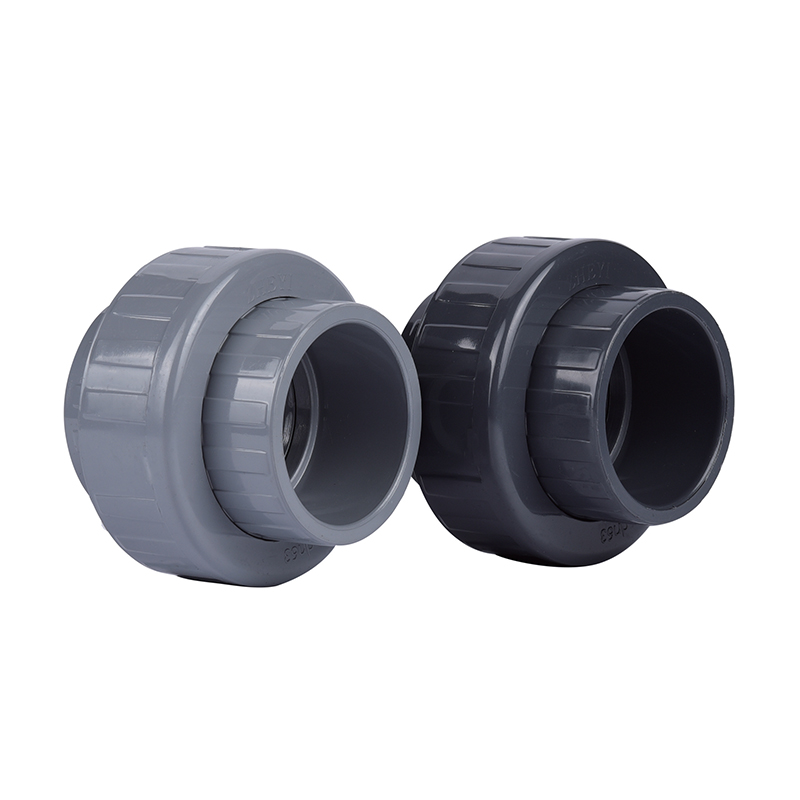 Custom SCH8O/DIN UPVC/CPVC Ⅰ Union For Food Industry/Automotive/Electronic SupplZheyi Pipeline (Wuhan) Co., Ltd. Is China Custom SCH8O/DIN UPVC/CPVC Ⅰ Union For Food Industry/Automotive/Electronic Suppliers, Factory, ...View Product →
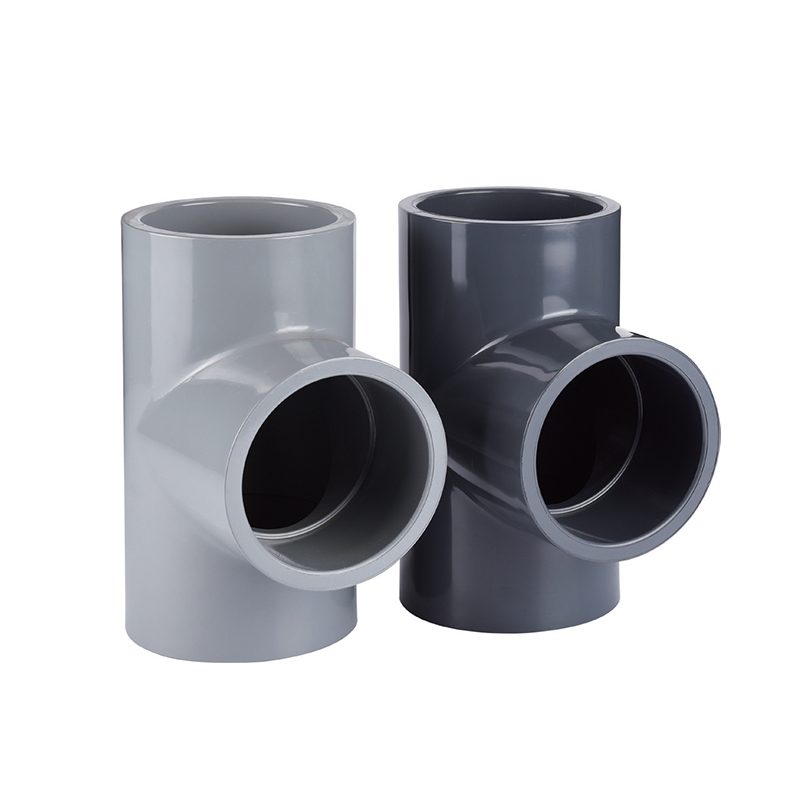 Custom SCH8O/DIN UPVC/CPVC Tee For Food Industry/Automotive/Electronic SuppliersZheyi Pipeline (Wuhan) Co., Ltd. Is China Custom SCH8O/DIN UPVC/CPVC Tee For Food Industry/Automotive/Electronic Suppliers, Factory, Manu...View Product →
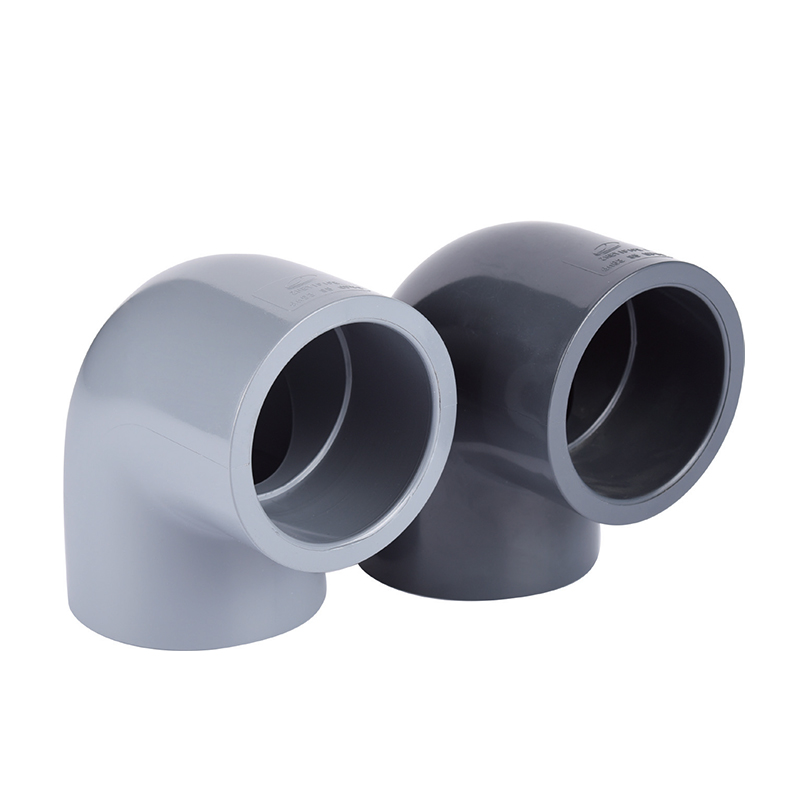 Custom SCH8O/DIN UPVC/CPVC 90° Elbow For Food Industry/Automotive/Electronic SupZheyi Pipeline (Wuhan) Co., Ltd. Is China Custom SCH8O/DIN UPVC/CPVC 90° Elbow For Food Industry/Automotive/Electronic Suppliers, Factory...View Product →
The tooling rule in OEM fitting programs: any change to socket or spigot geometry means a new mold, and a new mold means a development lead time of roughly 6 to 10 weeks, including dimensional approval samples before mass production.
How to qualify an OEM Schedule 80 CPVC fitting supplier
Qualify an OEM supplier with documents and approved samples, not with a price list.
The factory you choose should state which standard governs the product, show the dimensional tolerances, and defend them with records. ZHEYI Group (Wuhan) Co., Ltd., a custom wholesale manufacturer of industrial non-metallic piping systems with two vertically integrated manufacturing centers in East and Central China, supplies CPVC and UPVC products under both DIN and ANSI standards, which keeps this first document check simple for cross-border buyers. Its quality workflow is presented as ISO 9001-aligned across both production sites.
Signals that should stop a purchase order
- No material certificate or a refusal to share cell class information.
- Socket depth varies between samples drawn from the same lot.
- Third-party inspection is refused in the contract.
- Pressure test records are not available per batch.
Signals worth trusting
- The applicable standard is published on the product page.
- A certificate of conformance ships with every lot.
- Pre-shipment inspection is accepted without penalty.
- A formal sample approval step runs before mass production.
The three-line contract that covers most OEM risk: material per ASTM D1784 cell class 23447, dimensions per ASTM F439, lot testing per ASTM D1599.
Frequently asked questions about OEM Schedule 80 CPVC fittings
What does Schedule 80 mean in a CPVC fitting?
Schedule 80 is a wall thickness series. A Schedule 80 CPVC fitting has a thicker wall than Schedule 40 in the same nominal size, which raises its pressure rating and adds allowance for mechanical damage. ASTM F439 is the governing standard for Schedule 80 CPVC fittings.
What is the CPVC cell class 23447?
Cell class 23447 is the ASTM D1784 designation for chlorinated polyvinyl chloride compound intended for pressure applications. The digits define the polymer type, impact resistance, hydrostatic strength, and other required properties. It is the minimum proof of material quality for an OEM program.
Can an OEM manufacturer make custom socket depths or end configurations?
Yes, but only with a dedicated mold. Custom socket depth, threaded ends, or special lengths require tooling development, which makes economic sense for annual volumes that amortize the mold cost. Development typically adds 6 to 10 weeks to the schedule.
What documents should an OEM buyer request before placing a purchase order?
Request a material certificate with the D1784 cell class, a dimensional report against ASTM D2122, a batch pressure test certificate, and an NSF/ANSI 61 certification when drinking water contact is involved. A signed sample approval report locks the specification for both sides.
The fastest way to benchmark an OEM factory: send a drawing that includes the standards clause, then ask for its dimensional report before discussing pricing.
 +86-15258772971
 dinys009@163.com
 English
 한국어
한국어 Español
 عربى
عربى