Material Quality Sets the Limit for CPVC Fitting Performance
A maintenance engineer in a lithium chemical plant opened a line after six months of service and found hairline cracks around the socket of a 2-inch Schedule 80 CPVC elbow. The pipe was intact. The fitting was the weak point, and the cause was not overpressure or incorrect installation. It was material quality.
That result should not surprise anyone who has worked with CPVC. A fitting can carry the same material name as the pipe, yet behave completely differently under sustained pressure, heat, and chemical exposure because its compound is not the same. Material quality is the primary determinant of a CPVC fitting’s pressure capacity, chemical resistance, impact strength, and service life. Every other decision, from pipe size to connection method, sits on top of that foundation.
What Material Quality Means in a CPVC Fitting
CPVC is made by chlorinating PVC resin, typically raising the chlorine content to around 63 to 67 percent by weight. That process changes the polymer’s behavior: heat distortion temperature rises, and resistance to many aggressive chemicals improves. But a fitting is not a piece of raw resin. It is a compound made from the resin plus heat stabilizers, impact modifiers, lubricants, pigments, and sometimes fillers. Each component affects how the fitting performs when it is pressurized, heated, exposed to chemicals, or joined to another pipe.
Poor-quality material often comes from off-spec resin, excessive regrind, or dilution with lower-cost polymer and fillers. These materials can look identical to a properly made fitting and still pass a casual visual inspection. They do not carry the same long-term strength, and they do not fail in the same way.
Key Material Properties Behind CPVC Fitting Performance
When you compare CPVC fittings from different suppliers, the first thing to examine is not the surface finish or the price per unit. It is the material system that determines how the fitting will respond to real service conditions. Several material attributes are directly connected to performance.
How CPVC material attributes map to observable fitting performance
| Material attribute |
What it controls |
Warning sign of poor quality |
| Chlorine content |
Heat resistance, chemical compatibility, and mechanical stiffness |
Premature softening or swelling in hot service |
| Molecular weight / intrinsic viscosity |
Creep resistance and long-term pressure strength |
Distortion or cracking under sustained load |
| Impact modifier |
Toughness and ductility |
Brittle cracking at socket edges or after handling |
| Stabilizer system |
Melt stability and molded-part integrity |
Dark streaks, brittle walls, or dull, rough surfaces |
| Dimensional consistency |
Socket fit, uniform wall thickness, and joint quality |
Oversized sockets, shallow weld depth, leakage |
These properties are not independent. A low chlorine level reduces heat resistance. A weak impact modifier makes the fitting vulnerable to notches at the socket. A poor stabilizer system allows degradation to begin during molding, which lowers strength before the fitting ever reaches the site. Once those risks combine, the fitting becomes the predictable failure point in an otherwise sound piping system.
Pressure, Temperature, and the Limits of Poor Material
CPVC fittings are often selected because they can handle higher service temperatures than UPVC fittings. But the rated pressure of a CPVC fitting is based on long-term hydrostatic strength testing, not on a one-time burst test. A controlled CPVC compound maintains its strength along a predictable regression curve. A contaminated or poorly stabilized compound loses strength much faster under continuous pressure and heat.
The same nominal fitting made by two suppliers can therefore have different allowable pressure ratings. This is why it is important to request the manufacturer’s pressure-temperature table for the specific fitting size and schedule you intend to use. The difference becomes visible at elevated temperatures: a Schedule 80 CPVC fitting that is acceptable at 73°F may need a significantly reduced working pressure at 180°F. If the material quality is poor, the derating curve becomes even steeper.
For a more complete view of this concept, the CPVC pipe pressure rating guide explains the difference between short-term failure and design stress. The same logic applies to fittings. Also check the UPVC and CPVC fitting pressure-temperature derating guide when comparing products for hot chemical service.
Joint Quality and Installation Performance
Solvent cement is the most common method for joining CPVC fittings. The solvent softens both the pipe outer surface and the fitting socket, allowing polymer chains to fuse into a continuous joint. This fusion works reliably only when the fitting material is a consistent, high-quality CPVC compound. If the material contains excessive filler, mold release residue, or a poorly blended stabilizer system, the solvent may not dissolve enough polymer to create a dependable bond. The joint can look fully seated while remaining weak beneath the surface.
Dimensional quality makes the problem worse. An oversized socket reduces the interference fit and leaves a thin gap between pipe and fitting. The solvent film must bridge that gap, and if it evaporates before complete fusion, the result is a leak path or a joint that fails under pressure cycling. Responsible manufacturers control not only the material formulation but also the socket depth, wall thickness, and concentricity of every fitting.
Impact Resistance and Handling
Fittings are also knocked, clamped, threaded, and repositioned on site. A brittle fitting can survive factory inspection but crack in a pipe rack or at a threaded connection. This is where the impact modifier plays a direct role. In cold weather, in fast-assembly environments, or when using power equipment, low-grade CPVC material is more likely to develop microcracks that grow during thermal cycling.
For installers, the practical takeaway is simple: a fitting that feels “dry,” shows surface splay, or forms a poor solvent bond during trial assembly is telling you something about the material. Do not press forward. The CPVC fittings solvent cement cure time guide covers the joint assembly side of the process, but even the correct cure time cannot compensate for a bad material surface.
Why Material Quality Matters Most in Aggressive Industrial Service
In chemical processing, lithium battery production, metallurgy, and industrial water treatment, CPVC lines often carry hot acids, caustic solutions, oxidizers, and chlorinated media. CPVC is selected for these services because of its corrosion resistance. But the chemical resistance is a property of the compound, not just the product name. Fillers used in cheap fittings can improve the part’s stiffness on paper while providing no chemical resistance. When exposed to hot aggressive fluids, those fillers may be attacked, causing swelling, grazing, or a measurable loss of mechanical strength.
Material quality also determines how closely a fitting matches the pipe it is joined to. A piping system made from CPVC requires pipe, fittings, and valves to behave as one mechanical unit. If the fitting is manufactured from a different material grade, its thermal expansion, creep behavior, and chemical compatibility all shift. That mismatch is hard to see in a catalog but easy to see in maintenance records.
When evaluating a new plant line or replacement circuit, consider the complete material family. The CPVC pressure pipe system offered by ZHEYI is intended to be paired with matching CPVC fittings and valves, which reduces the risk of mixing incompatible material grades and unknown tolerances.
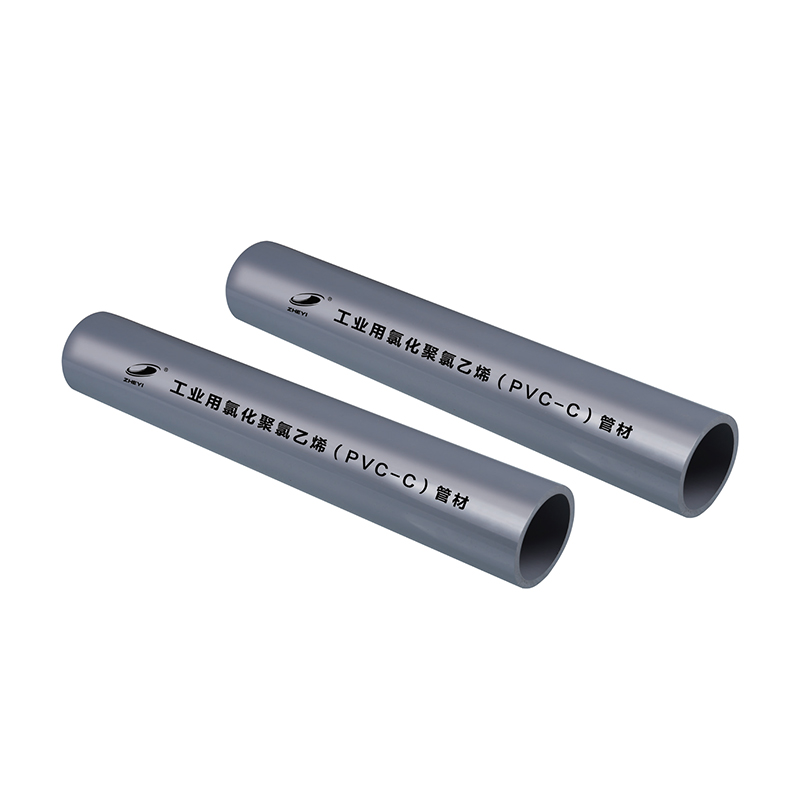 Custom CPVC Pipe pressure For Food Industry/Automotive/Electronic Suppliers, FacZheyi Pipeline (Wuhan) Co., Ltd. Is China Custom CPVC Pipe pressure For Food Industry/Automotive/Electronic Suppliers, Factory, Manufactu...View Product →
A Practical Material Quality Checklist for CPVC Fitting Buyers
Because material quality is not visible in a brochure, you need a verification routine before committing to a supplier, especially for custom industrial projects. Use the following checklist to reduce procurement risk.
- Ask for the material grade and compound source. A serious supplier should be able to identify the base CPVC resin and additive system, not just say “it is CPVC.”
- Review physical property data, including tensile strength, heat distortion temperature, impact resistance, and density. Ideally, the numbers come from tested fittings, not only from raw resin data sheets.
- Confirm the pressure-temperature table for each fitting size and schedule. Do not assume one product family has the same rating as another.
- Measure dimensional consistency across multiple units. Wall thickness, socket depth, and outside diameter should be within tolerance from the first box to the last.
- Request batch traceability from raw material to finished fitting. This matters most when you are buying a high volume of custom products or working with a wholesale manufacturer.
During physical inspection, also look inside sockets and threaded areas. A CPVC 90-degree elbow fitting with uniform wall thickness and clean socket walls is a sign of controlled material flow and stable molding conditions. If you see burn marks, rough cavities, or brittle flash, treat those as warning signs rather than cosmetic issues.
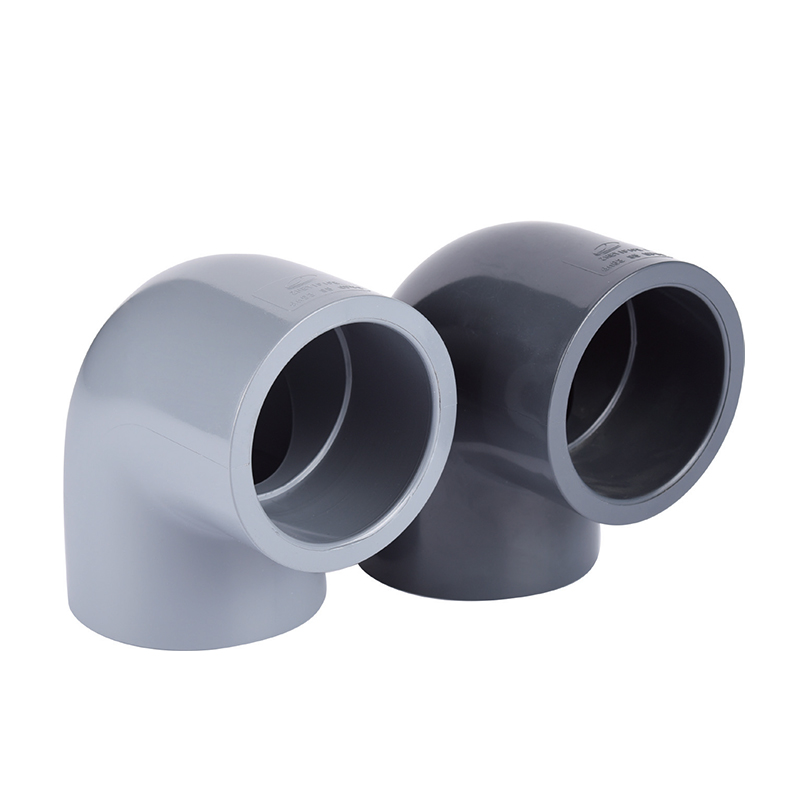 Custom SCH8O/DIN UPVC/CPVC 90° Elbow For Food Industry/Automotive/Electronic SupZheyi Pipeline (Wuhan) Co., Ltd. Is China Custom SCH8O/DIN UPVC/CPVC 90° Elbow For Food Industry/Automotive/Electronic Suppliers, Factory...View Product →
For maintenance-heavy lines, pay special attention to union connections. A CPVC union fitting relies on flat, creep-resistant sealing surfaces to prevent drips at the gasket face. Low-quality material can deform over time, turning a simple maintenance joint into a recurring leak source.
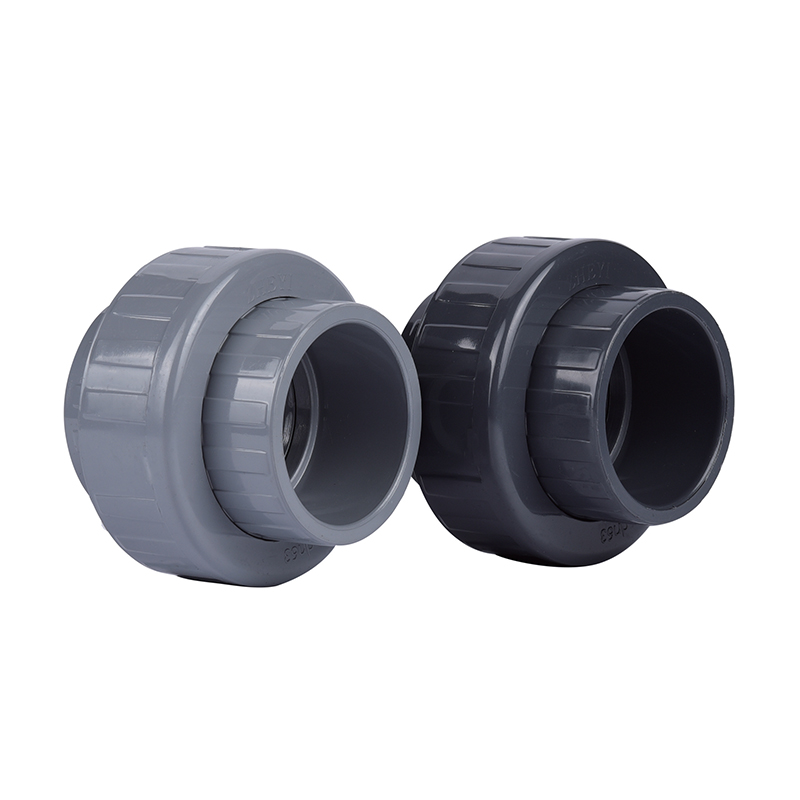 Custom SCH8O/DIN UPVC/CPVC Ⅰ Union For Food Industry/Automotive/Electronic SupplZheyi Pipeline (Wuhan) Co., Ltd. Is China Custom SCH8O/DIN UPVC/CPVC Ⅰ Union For Food Industry/Automotive/Electronic Suppliers, Factory, ...View Product →
Make Material Quality Part of Your Fitting Specification
Material quality is not a premium feature added at the end of production. It is built into the compound, the molding process, and the inspection routine. Pressure rating, chemical resistance, impact strength, and dimensional control all trace back to one question: how much control was applied to the material itself.
Buyers who verify these details receive longer service life and fewer unplanned shutdowns. Buyers who rely only on price or appearance may not discover the difference until a fitting cracks. In CPVC piping systems, the fitting is often the smallest component, but it can be the one that decides whether the whole line stays in service.
 +86-15258772971
 dinys009@163.com
 English
 한국어
한국어 Español
 عربى
عربى