In a semiconductor wet bench or a pharmaceutical clean-utility skid, the pipe between the water treatment train and the point of use determines final water purity as much as the membranes do. A poorly made joint can shed particles, a low-grade resin can leach organics, and an overstated pressure class can rupture during hot sanitization. CPVC pipe for high-purity water systems resolves these problems only when the base resin, wall schedule, temperature rating, and connection method are matched to the actual duty of the loop.
93°CMaximum continuous water service temperature
58%Chlorine content in chlorinated PVC compound
0.3 micronTypical internal bore roughness Ra of new pipe
24 hSolvent cement cure at 20°C before hot-water duty
Why CPVC Holds High-Purity Water Service
CPVC pipe is a proven high-purity distribution material because it combines broad chemical resistance, useful mechanical strength up to 93°C water service, and low extractables when supplied from a clean compound formulation. In any closed high-purity loop, three contaminants threaten water quality: ionic leachates, organic residues, and particulate shedding. The chlorine content of CPVC, typically 56 to 58 percent by mass, stiffens the polymer chain and reduces migration of small molecules into the water stream. That is why pharmaceutical plants have specified CPVC for WFI distribution and why electronics facilities use it in ultrapure water loops.
Definition
A high-purity water system is a closed-loop fluid network that keeps ionic, organic, and particulate contamination below a defined threshold, requiring pipe materials with smooth bores, low extractables, and no corrosion by-products.
Design engineers gain two practical advantages from CPVC: sanitization flexibility and particle stability. Stainless steel systems require passivation after welding; CPVC contains no metal, needs no passivation, and can be periodically hot-water sanitized. The direct comparison against other thermoplastics appears in the maximum continuous water service temperature chart below.
Maximum continuous water service temperature by thermoplastic
Base Resin and Additive System
Base resin quality is the highest-impact parameter in CPVC high-purity piping, because regrind, off-spec stabilizers, or excessive lubricants become the exact molecules you later measure in a water sample. Certified CPVC compounds follow a defined formulation standard such as ASTM D1784 cell class 23447-B or NSF 61 for potable-water contact. These standards place ceilings on lead, volatile organics, and total organic carbon extractables.
When a supplier substitutes regrind or adds processing aids beyond the approved range, chlorination levels drop, wall density changes, and extractable levels rise. Before approving a batch, the buyer should request a material certificate showing the cell class, production batch number, chlorination degree, and the latest hydrostatic test certificate.
Verify these resin properties in every supplier bid:
- Cell class designation per ASTM D1784 or the equivalent national standard
- Chlorine content by mass, in the 56 to 58 percent range
- TOC and ionic extractable test results from the compound supplier
- Written confirmation that no post-consumer regrind enters the extrusion line
Pressure Class and Wall Thickness
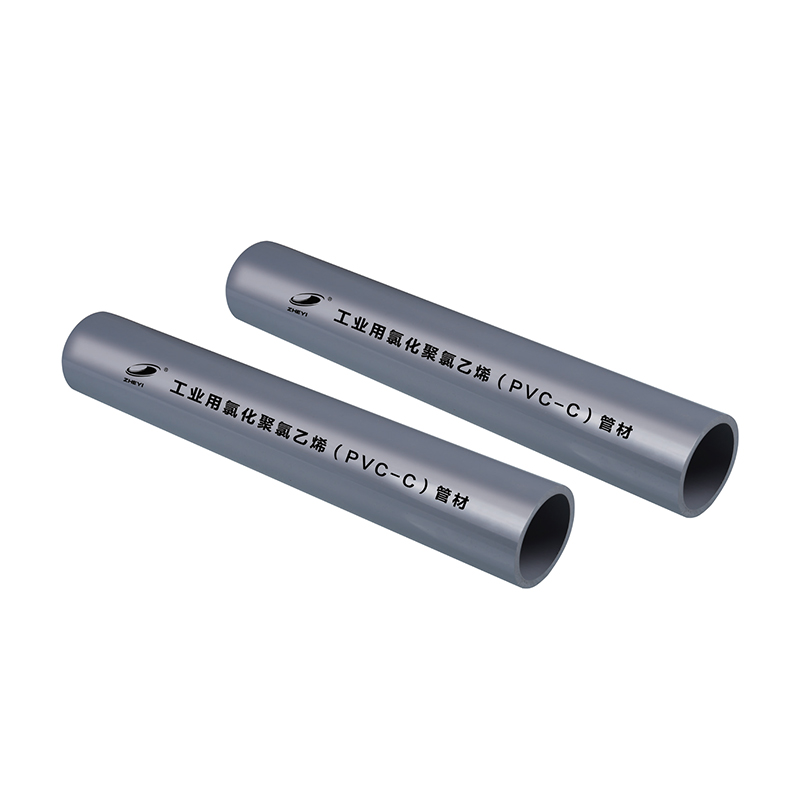 ZHEYI CPVC Pressure Pipe in Schedule 40, 80, and DIN PN SeriesThis chlorinated polyvinyl chloride pipe suits high-purity hot-water loops, resisting corrosion and handling temperatures up to 93°C. Multiple wall schedules let engineers match hydrostatic strength to system dimensions.View Product →
The pressure rating of CPVC pipe is a function of wall thickness, diameter, temperature, and service life. ZHEYI Group produces CPVC pressure pipes in ANSI Schedule 40 and Schedule 80 series and in DIN PN10 and PN16 series, which lets an engineer match the wall schedule to the loop's dimensional standard. Schedule 80's thicker wall provides nearly double the hydrostatic strength of Schedule 40 at the same temperature, making it the dominant choice for high-purity loops above 25 mm nominal bore.
Published ratings apply at 23°C and derate with temperature, so the loop must be sized from the worst-case hot condition. For help translating operating temperature into an effective pressure allowance, see our CPVC pipe pressure rating chart and calculation guide.
Representative pressure ratings for 25 mm CPVC pipe in water service. Confirm exact figures with the pipe manufacturer.
| Schedule |
Rating at 23°C |
Rating at 80°C |
Typical high-purity loop use |
| Schedule 40 |
15 bar |
9 bar |
Cold reverse-osmosis reject and drain lines |
| Schedule 80 |
28 bar |
16 bar |
Hot purified water and WFI distribution |
| DIN PN16 |
16 bar |
10 bar |
Metric piping systems in European plants |
Selection rule: if the loop operates above 60°C, jump to Schedule 80 before comparing prices. The thicker wall provides a safety margin for thermal cycling and hot sanitization.
Temperature Profile and Derating
The maximum continuous operating temperature of CPVC in pressurized water service is generally 93°C, but that ceiling applies to clean water only. Strong oxidizers, chlorinated organics, or acid streams lower the ceiling substantially. Even within the limit, thermal cycling between 20°C and 85°C expands and relaxes the pipe; repeated cycling shortens system life unless the layout includes expansion loops, offsets, or bellows-type expansion joints.
For hot water distribution, the CPVC derating curve behaves predictably: above 50°C, allowable working pressure drops roughly 1 to 2 percent per degree Celsius, depending on compound and wall thickness. Always calculate the loop design point from the simultaneous worst-case temperature and pressure, not from the annual average.
Design rule: set the system design point at the highest sanitization temperature, not the normal flow temperature. A loop sanitized at 85°C and 6 bar needs a wall and pressure rating sized for 85°C with a safety factor of at least 2.
Surface Quality and Particle Shedding
Particle shedding is the hidden failure mode of CPVC in ultrapure loops. Extruded CPVC bore surfaces typically measure between 0.3 and 0.7 micron Ra, smooth enough to suppress biofilm formation in cold loops and keep particle counts low. The real particle risk concentrates at joints: field-cut edges, over-reamed sockets, aggressive deburring, and excessively thick solvent cement create roughness peaks that can flake into the flow stream.
In semiconductor fabs, final rinse loops commonly hold water to a particle specification of 0.5 micron or finer. For those services, specify low-particulate solvent cement, extend the cure time, and flush the line before running high-value product.
Bore roughness in fresh pipe CPVC: 0.3 to 0.7 micron Ra / UPVC: 0.5 to 1.0 micron Ra / Mechanically polished stainless steel: 0.4 to 0.8 micron Ra
Jointing, Valves and Connection Integrity
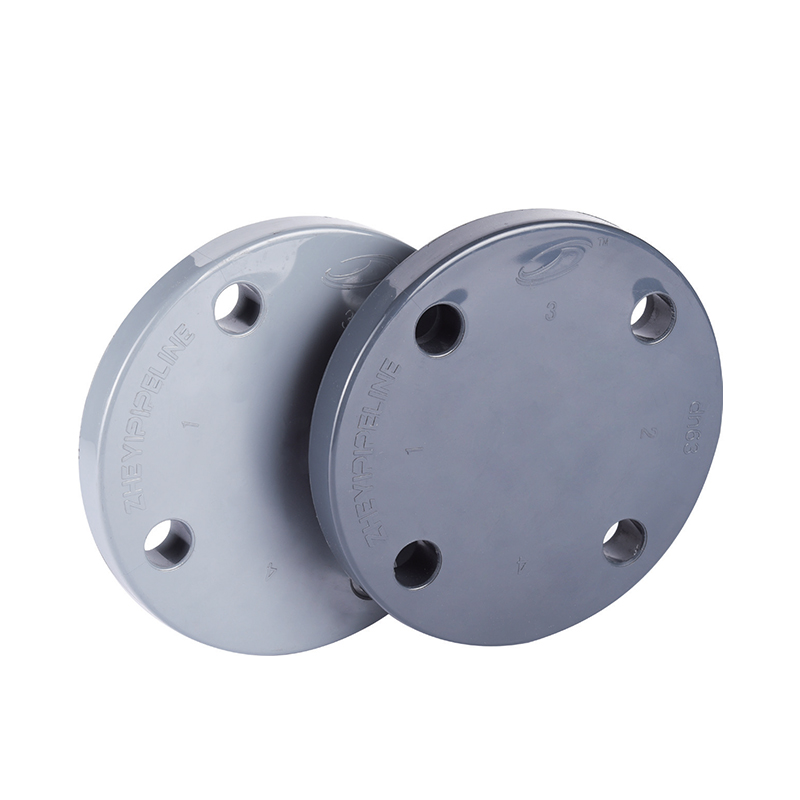
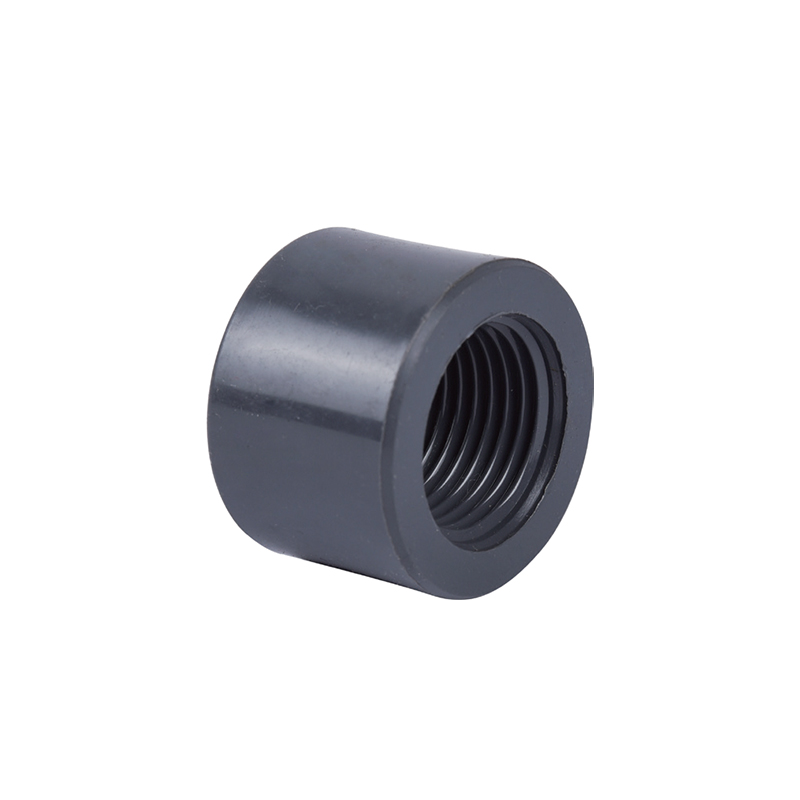
In high-purity CPVC systems, most leaks and particle events happen at connections, not in the pipe body. Solvent cement welding remains the standard for socket ends, but the cement grade, joint gap tolerance, and cure time must match the water temperature. Threaded connections should be avoided on pipe larger than 25 mm where thermal cycling or vibration is present, because thread roots create stress concentration points. True-union fittings allow a valve or instrument to be removed without cutting the pipe, and flanged connections with full-face gaskets handle higher torque at equipment tie-ins.
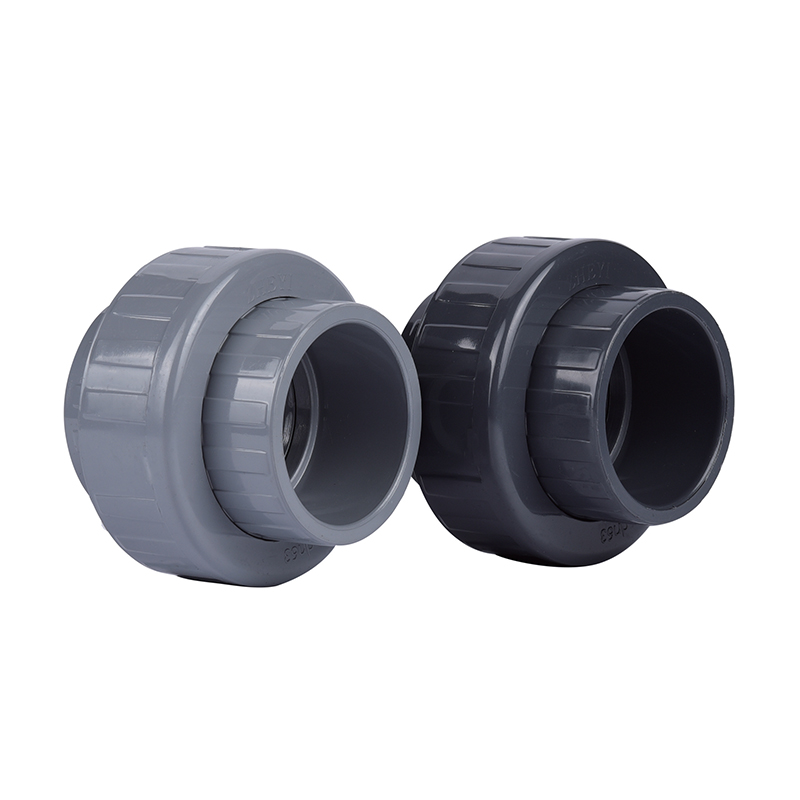 ZHEYI SCH80/DIN Three-Piece CPVC Union with EPDM or FKM SealsA true-union fitting allows clean disconnection without cutting pipe, reducing maintenance dead-legs. Available in UPVC and CPVC, with dual ANSI/DIN compatibility and leak-proof O-ring sealing for high-purity systems.View Product →
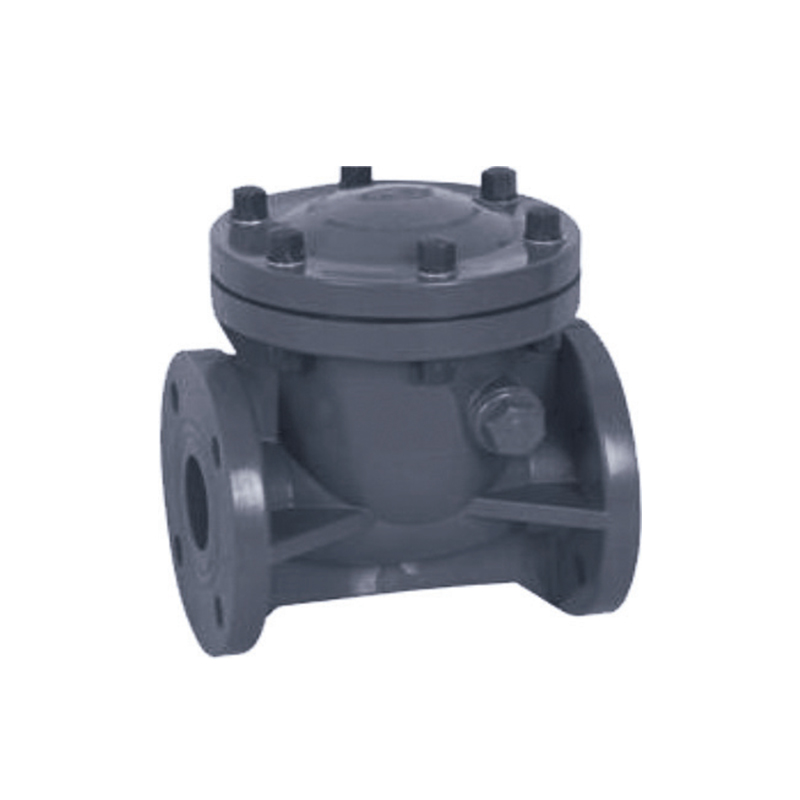
Valves for high-purity water need smooth internal bores, low dead-leg volume, and seat materials that do not extract into hot water. ZHEYI Group supplies CPVC true-union ball valves with EPDM or PTFE seals, a common configuration for 2-inch and smaller high-purity loops because the union on both sides allows clean disconnection for maintenance or flushing.
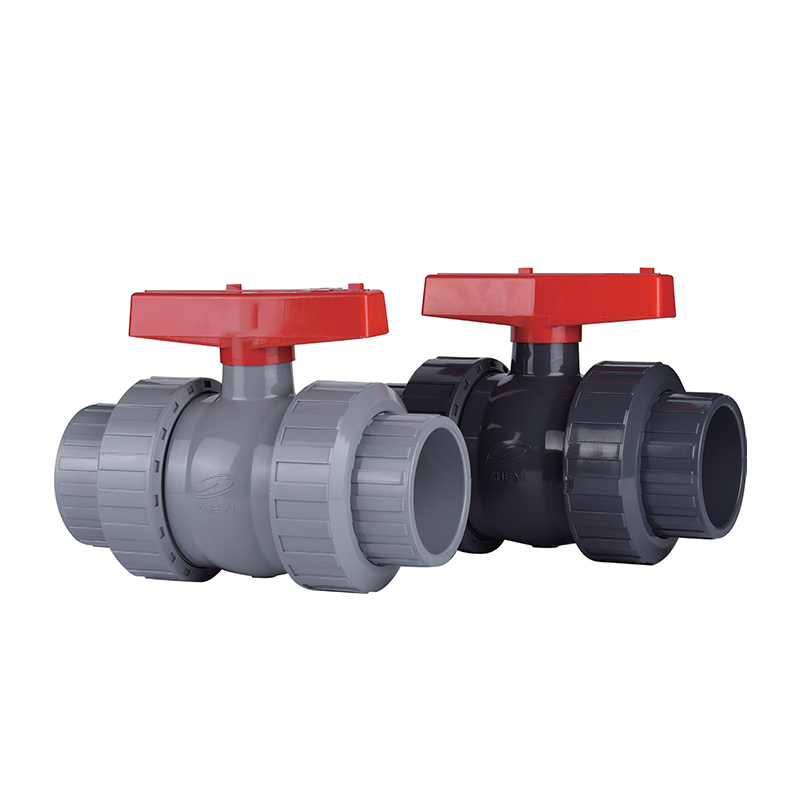 ZHEYI SCH80/DIN Full Port CPVC Ball Valve with PTFE SeatsThis quarter-turn isolation valve provides bubble-tight shut-off for corrosive and high-purity fluids. Full-port design minimizes pressure drop; CPVC version handles up to 93°C, with lockable lever for position assurance.View Product →
Socket solvent weldLowest cost, smooth bore, requires cure time
True unionServiceable joint, removable without cutting
FlangedHigh torque, standard at equipment connections
ThreadedAvoid above 25 mm in hot loops with vibration
Standards Compliance and Documentation
DIN and ANSI systems are both structurally valid for CPVC high-purity piping, but mixing them in one loop creates interface mismatch: flange bolt circles, gasket dimensions, and pressure classes differ. ANSI standards such as ASTM F441 define CPVC pipe in Schedule 40 and 80 dimensions with NPT threads, while DIN 8061 and 8063 use metric socket dimensions sized for solvent welding. A global buyer servicing multiple plants must document which system each line follows. See our DIN and ANSI standards comparison for thermoplastic valves and pipes before finalizing the specification.
With each delivery, request a quality documentation package containing the mill test certificate, dimensional inspection report, hydrostatic pressure test certificate, and resin cell class certificate. These four documents let a project engineer confirm that the delivered pipe matches the approved engineering design.
Minimum documentation set for high-purity CPVC procurement
- Resin cell class certificate from the compound supplier
- Batch traceability record from extrusion date to raw material lot
- Hydrostatic pressure test report at 23°C and at the intended operating temperature
- Dimensional inspection report covering wall thickness and bore internal diameter
Selection Workflow That Prevents Failures
A reproducible five-step workflow reduces the risk of mis-specification: first freeze the duty, then select the dimension standard, then choose the joint strategy, then verify the documentation package.
- Verify loop chemistryMeasure pH range, oxidizer concentration, sanitization agent, and expected operating hours at peak temperature.
- Map the temperature-pressure envelopeUse the worst-case simultaneous combination of temperature and pressure, including sanitization cycles.
- Select the dimension standardAlign wall schedule and flange standard with existing equipment and local maintenance capability.
- Choose joint and valve strategySeparate permanent socket welds from maintainable true-union and flanged connections at equipment tie-ins.
- Audit the documentation packageReject deliveries that lack cell-class certificates, hydrostatic reports, and batch traceability.
Rule of thumb: for high-purity loops above 60°C, CPVC Schedule 80 with true-union valves and full-face flanged equipment connections is the most defensible generic configuration.
Frequently Asked Questions
Is CPVC safe for high-purity water?
Yes, when the compound is certified for potable or high-purity water contact and the solvent cement is formulated for low-particulate service. Certified CPVC shows low total organic carbon extractables and produces no corrosion by-products, which is why pharmaceutical and semiconductor plants use it in WFI and ultrapure water loops.
What is the difference between CPVC and UPVC for high-purity applications?
UPVC retains useful pressure strength only up to roughly 50 to 60°C and loses most of its rating at the high end of that range. CPVC maintains a much higher pressure rating at elevated temperature and is approved up to 93°C in water service. For cold loops below 50°C, UPVC is a lower-cost option, but CPVC adds sanitization flexibility and a broad safety margin.
How do I prevent particle shedding from CPVC joints?
Use a sharp pipe cutter, deburr both the external and internal edge, and apply low-particulate solvent cement with a consistent brushing technique. Extend the cure time before pressurization; a typical recommendation is 24 to 72 hours at 20°C when the line will carry hot water.
Can CPVC high-purity piping be connected to stainless steel equipment?
Yes, with flanged transitions and an appropriate full-face gasket such as EPDM or PTFE. The CPVC flange must be torqued to the manufacturer's limit at the operating temperature to avoid creep, and the transition should remain accessible for inspection.
 +86-15258772971
 dinys009@163.com

 English
 한국어
한국어 Español
 عربى
عربى