When a semiconductor fab expands its wet process bay, the ultrapure water (UPW) loop becomes a critical path, and CPVC pipe for electronic grade water is the component most often under-specified.
Piping that performs well in general chemical service can fail a UPW loop by releasing ions, organics, or particles. This guide defines the material, surface, dimensional, and jointing requirements for CPVC piping in semiconductor plants, and explains why the pipe alone is only half of the specification.
18.2 megohm-cm UPW resistivity target at 25°C; the distribution piping must not lower it by a measurable point over years of service.
What Electronic Grade Water Requires from Piping
Electronic grade water (EGW), also called ultrapure water (UPW), is water purified to parts-per-billion or parts-per-trillion contamination levels, with a resistivity of 18.2 megohm-cm at 25°C and total organic carbon (TOC) below 5 ppb.
Wet process tools use EGW directly in cleaning, etching, and rinsing steps. A single trace ion event in the sub-ppb range can shift device thresholds and destroy yield. The piping therefore must not become a contamination source over years of service.
Zero ionic leachables from resin, stabilizers, or processing aids
Surface smoothness that prevents particle entrapment and biofilm nucleation
Oxidation resistance to dissolved ozone, commonly maintained at 30 to 90 ppb in UPW distribution
A bacteria-resistant bore with no pits, voids, weld lines, or carbonized spots
Core definition: Electronic grade water is water that meets SEMI F63 purity limits, controlled to parts-per-trillion for ionic and organic impurities, and delivered to semiconductor process tools without measurable degradation from the distribution system.
Why CPVC is the Specified Material for UPW Loops
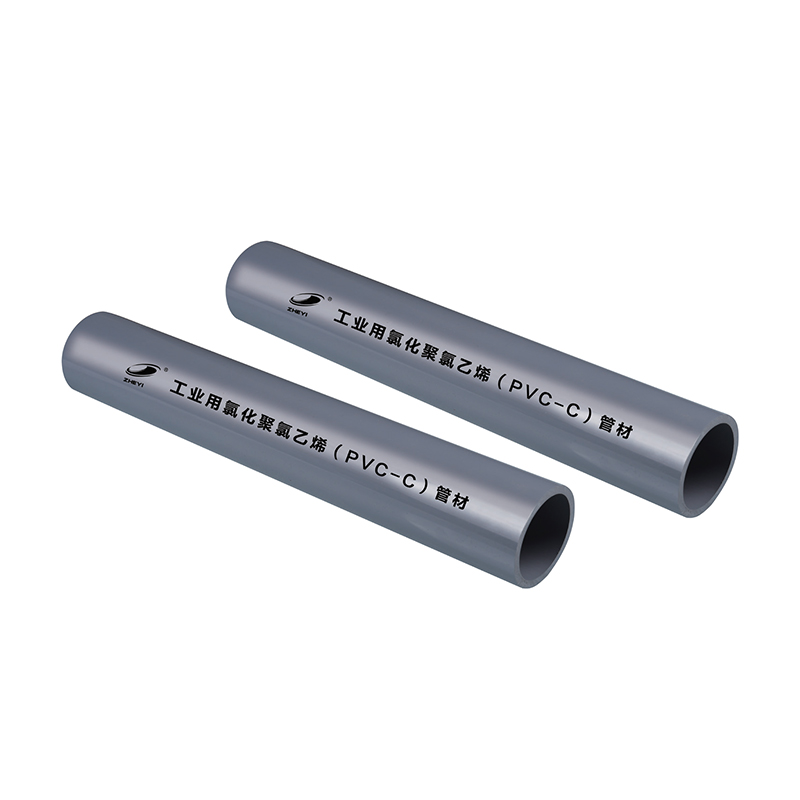
CPVC, or chlorinated polyvinyl chloride, is specified for electronic grade water because its chlorinated backbone resists oxidative attack from ozonated UPW, and because a bore extruded from virgin compound keeps particle shedding low without the galvanic risks of metal systems.
ZHEYI Group, a custom wholesale manufacturer of industrial non-metallic piping systems with vertically integrated production plants in eastern and central China, produces CPVC pressure pipe from virgin formulation for high-purity water service.
Compared with the realistic alternatives, CPVC occupies the practical middle of the selection map: it runs hotter than UPVC, costs less than PVDF, and avoids the surface-passivation and ion-release concerns of welded stainless pipe in ozonated service.
Material comparison for semiconductor UPW piping service.
Property
UPVC
CPVC
PVDF
316L SS
Max continuous temperature
60°C
95°C
120°C
High
Ozonated UPW resistance
Poor
Good
Good
Fair
Ionic leach rate
Low
Low
Very low
Variable
Joint method
Solvent cement
Solvent cement
Heat fusion
Orbital weld
Relative installed cost
Low
Moderate
High
High
95°C / 0.3 micron Maximum continuous service temperature and typical bore surface finish are the two numbers that separate semiconductor-grade CPVC from plumbing-grade product.
Typical maximum continuous operating temperatures at low pressure; apply derating factors above ambient temperature.
Piping Requirements for Semiconductor Plants
Semiconductor-grade CPVC pipe must be produced from dedicated virgin compound with no reprocessed material, and the extrusion process must be controlled to prevent carbonization, internal stress, or surface voids.
Plant engineers should verify the material certificate, batch traceability, and surface condition before pipe enters the fab. The full requirement set covers four areas:
Clean smooth bore with no fish eyes, carbon specks, or flow marks
Production in a clean environment to avoid embedded airborne particles
Individual protective end caps or packaging for every pipe length
Batch-lot marking and certificates of analysis for full traceability
Why surface finish matters
Surface roughness affects both hydraulic smoothness and particle retention. A glossy, non-porous interior is easier to keep free of biofilm and flushes cleaner after maintenance. Confirm the manufacturer's documented surface finish, dimensional tolerances, and matching CPVC fittings before accepting material for an UPW loop.
Practical definition: Semiconductor-grade CPVC pipe is CPVC pressure pipe manufactured, packaged, and documented specifically to prevent contamination of high-purity water, not merely to resist pressure.
Pressure and Temperature Ratings
CPVC pipe in electronic grade water service is typically specified in Schedule 80, and its pressure rating at operating temperature must be calculated by applying the derating factors in ASTM F441 to the 23°C rating.
100%Schedule 80 rating retained at 23°C
65%Rating retained at 60°C
95°CMaximum continuous service temperature
0.3 micronTypical smooth-bore surface finish
Derating is not optional. A Schedule 80 line rated at 850 psi at 23°C holds only about 300 psi at 82°C. Wet process loops rarely run above 70°C, which is why CPVC's 95°C ceiling provides real margin while UPVC sits too close to its 60°C limit.
Typical CPVC Schedule 80 pressure derating factors by service temperature for water service.
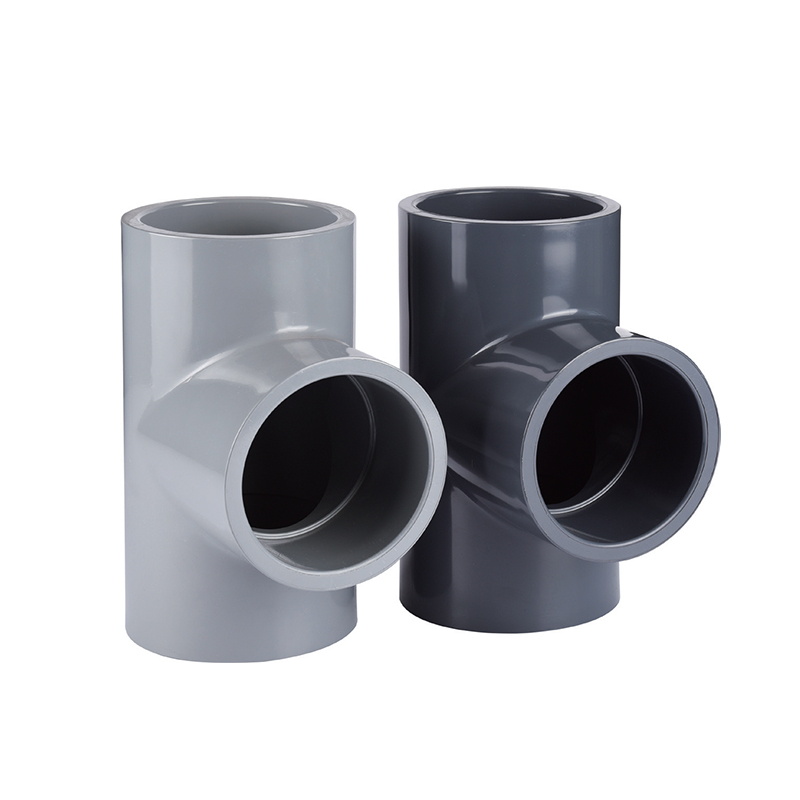
Semiconductor plant CPVC piping is specified under ASTM F441 for pressure pipe and ASTM F439 for socket fittings, with SEMI F57 covering component requirements for ultrapure water systems.
Applicable standards for CPVC piping in semiconductor UPW service.
Standard
Scope
Why it matters in an UPW loop
ASTM F441
CPVC Schedule 40 and 80 pressure pipe
Defines wall thickness and pressure ratings
ASTM F439
CPVC socket-type pipe fittings
Sets dimensional standards for solvent cement joints
SEMI F57
Ultrapure water system components
Requires surface finish and cleanliness validation
ISO 15493 / DIN 8061
Thermoplastic pipe systems
Metric-system equivalents for global fab projects
Procurement rule: In a semiconductor plant audit, a pipe supplier without batch traceability, virgin-resin declarations, and third-party leach test data will be rejected in the first qualification round.
Installation and Jointing
The long-term failure of CPVC in UPW loops is almost always a jointing failure, not a pipe failure: an improperly made solvent cement joint traps chemistry, creates voids, and becomes a contamination source.
Cut the pipe square and remove all burrs from the bore
Clean and prime the joint surfaces with high-purity primer
Apply low-leach CPVC solvent cement in a uniform layer
Insert the spigot with a quarter-turn rotation and hold for full displacement
Allow the joint to cure for the full time-temperature schedule
Flush the completed line before introducing polished UPW
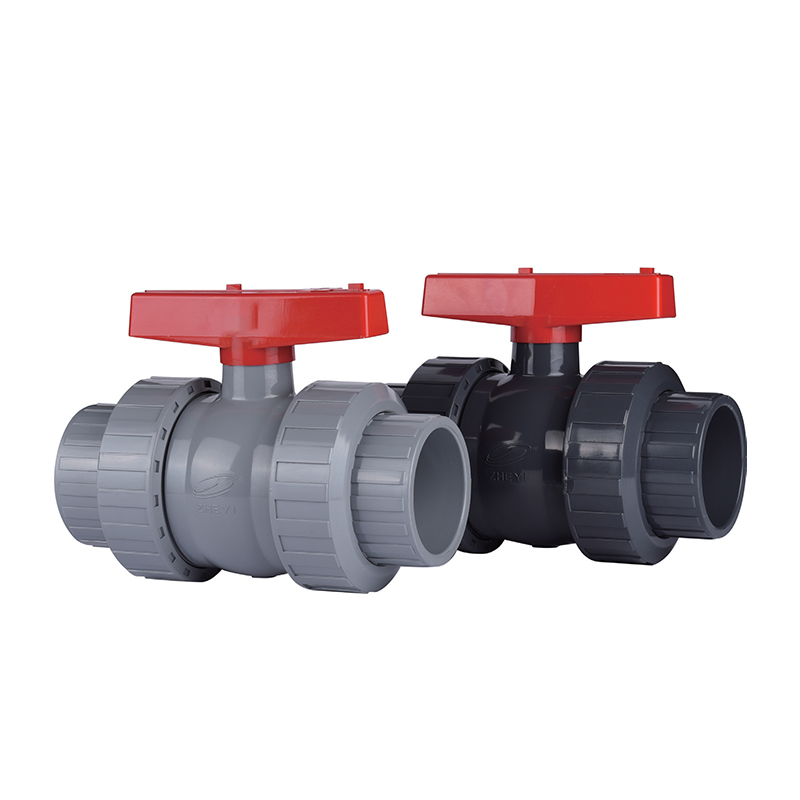
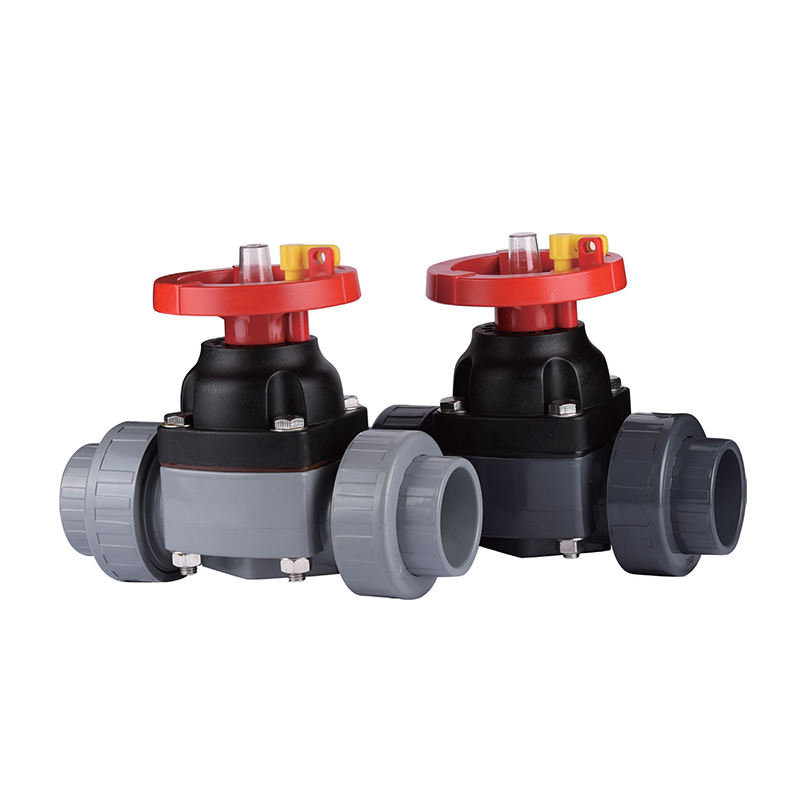
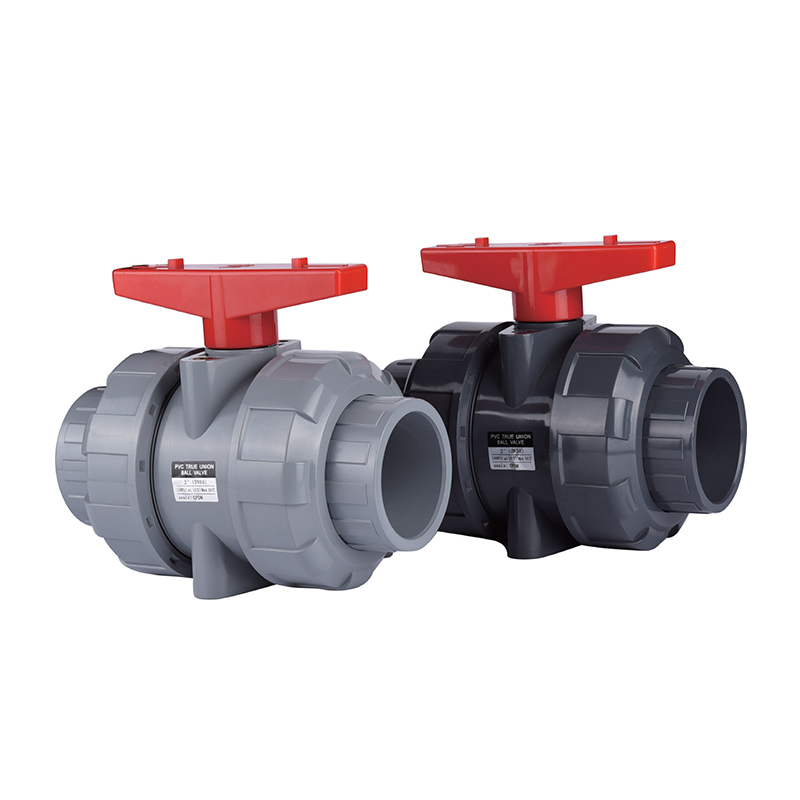
Valve stations in an UPW loop need the same jointing discipline. A true-union ball valve with full CPVC wetted surfaces simplifies maintenance and avoids dead legs while keeping material continuity intact.
Field rule: Never solvent-weld in a wet or dusty environment; moisture trapped in the joint creates voids that emerge months later as contamination spikes.
Frequently Asked Questions
Is standard plumbing CPVC acceptable for electronic grade water?
No. Plumbing-grade CPVC may contain recycled content, mold-release agents, or additives that leach organics. Semiconductor-grade CPVC must be produced from virgin compound under controlled extrusion and packed to prevent contamination.
What is the maximum operating temperature for CPVC pipe in UPW service?
CPVC can operate continuously at up to 95°C at negligible pressure, but at working pressure the rating drops with temperature; at 82°C a Schedule 80 line retains roughly 35 percent of its 23°C rating.
How long must a CPVC solvent cement joint cure before pressurization?
Cure time depends on temperature, humidity, and pipe size; typical guidance is 48 hours at 16 to 27°C for 1-inch lines and up to 96 hours for 2-inch and larger. Early pressurization causes joint creep and voids.
Can CPVC piping handle ozonated UPW?
Yes. CPVC's chlorinated structure resists ozone attack far better than UPVC or polypropylene, which is why it is preferred for distribution loops operating with dissolved ozone concentrations of 30 to 90 ppb.
 +86-15258772971
 dinys009@163.com
 English
 한국어
 Español
 عربى