Walk the utility basement of a semiconductor plant and the largest pipe runs are usually not the ones feeding the process tools. They are the lines carrying scrubber blowdown, spent acid, cooling tower make-up and rinse water away from the fab, and a large share of those lines are UPVC.
That split decides most of the selection argument that follows. Inside a wafer fab, UPVC is a utility and waste-handling material. It is not the high-purity material that touches the process at the point of use. Projects that blur the two end up with particle excursions on a deionised water loop, a rejected material submittal, or a joint failure behind an inaccessible wall.
The factors below are the ones that change the outcome: where the material is acceptable, how the pressure rating collapses with temperature, how to segregate chemical streams, and what to write into the purchase order.
23 °CReference temperature behind every published UPVC pressure rating
0.50Typical derating factor applied at 43 °C service temperature
5.4 x 10^-5Thermal expansion coefficient of rigid PVC, per °C
Where UPVC Belongs in a Semiconductor Plant
UPVC belongs on the utility, waste and pretreatment circuits of a semiconductor plant, not on the ultrapure water loop that serves the process tools.
Point-of-use ultrapure water is normally carried in PVDF or PFA, with polypropylene used in some lower-purity sections. UPVC sits upstream and downstream of that loop: raw water intake and multimedia filtration, reverse osmosis permeate at reduced purity, cooling tower make-up and blowdown, scrubber and exhaust water, floor drains, acid and alkali waste collection, neutralisation effluent, and general plant service water.
The reasons are practical rather than premium. UPVC is among the lowest-cost corrosion-resistant thermoplastics, it fabricates on site with hand tools, and it joins by solvent cement instead of heat fusion, so a maintenance team can repair a line without a fusion machine.
Definition
UPVC, or unplasticized polyvinyl chloride, is PVC compounded without plasticizers. A typical pressure-pipe compound carries roughly 57 percent chlorine by mass, a thermal stabiliser system, and a pigment or filler package. Because no plasticizer is added, the wall does not migrate phthalates into the fluid, which is one reason the material is accepted on water and waste circuits where organic leaching is monitored.
Streams that suit UPVC
- Dilute acid and alkali waste collection downstream of neutralisation
- Scrubber water, exhaust treatment and floor drain headers
- Cooling tower make-up, blowdown and plant service water
- RO reject, backwash and pretreatment dosing lines
- Laboratory and utility drains with verified chemical duty
Streams to route elsewhere
- Point-of-use ultrapure water feeding process tools
- Solvent-bearing waste such as acetone, MEK or NMP
- Concentrated 98 percent sulfuric acid and piranha mixtures
- Sustained service above roughly 50 °C
- Cleanroom return-air plenums that call for FM 4910 listed plastics
Pressure Rating and Temperature Derating Drive the Pipe Schedule
Every published UPVC pressure rating is referenced to 23 °C, and the same pipe carries roughly half of its nominal pressure at 43 °C.
This is the most frequent sizing error on fab utility packages: a schedule is picked from a nominal PN or Schedule number and never derated for the real service temperature. A PN16 metric line a designer reads as 16 bar is closer to an 8 bar line once the fluid runs at 43 °C, which is ordinary for scrubber water returning from an exhaust abatement unit.
The dimensional references matter as much as the number. ASTM D1785 covers inch-size PVC pressure pipe in Schedule 40, 80 and 120; ASTM D2467 covers Schedule 80 fittings; ISO 1452 and the DIN 8061 and 8062 series cover metric PN-rated systems. A PN16 pipe will not accept a Schedule 40 inch fitting, and mixing the two families on one header is a dimensional mismatch rather than a design choice.
Typical PVC-U temperature derating factors referenced to a 23 °C baseline; confirm the values for the specific compound and governing standard before fixing the schedule.
| Service temperature |
Typical derating factor |
Nominal PN16 becomes |
| 23 °C |
1.00 |
PN16 |
| 32 °C |
0.75 |
PN12 |
| 38 °C |
0.62 |
PN10 |
| 43 °C |
0.50 |
PN8 |
| 49 °C |
0.40 |
PN6 |
| 60 °C |
0.22 |
PN3.5 |
Apply the factor to the design pressure, not to the day-to-day operating pressure, and keep a separate safety allowance for water hammer from fast-closing valves. The working method for that calculation is set out in the note on pressure rating and temperature derating of UPVC and CPVC fittings, which walks through the same table against a worked line size.
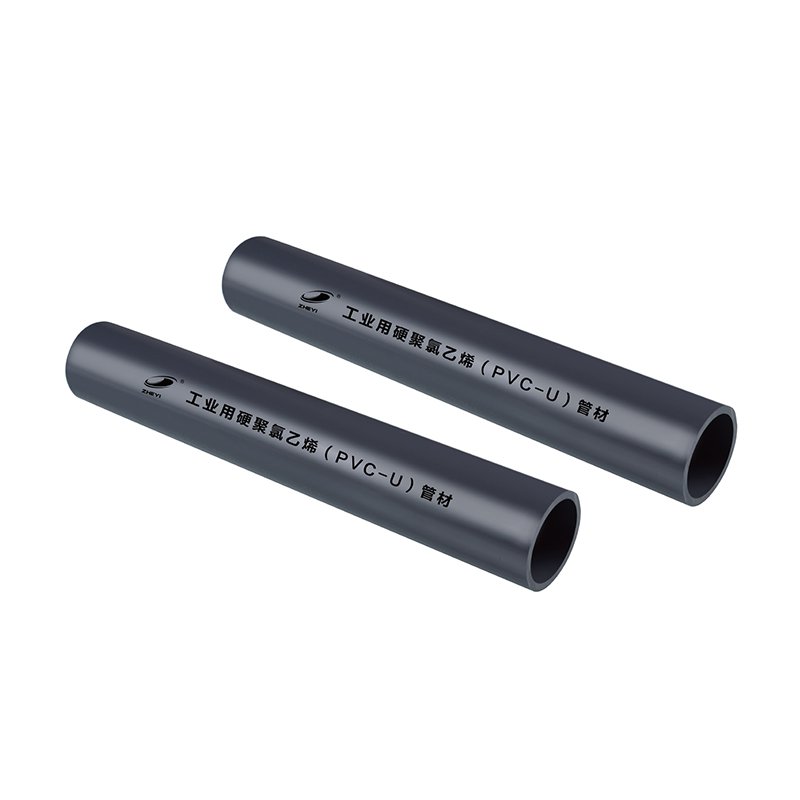 SCH80/DIN Custom UPVC Pressure PipesCustom UPVC pressure pipe for industrial water and chemical service, with pressure ratings and temperature limits relevant to derating decisions.View Product →
Rigid PVC softens before it melts: Vicat softening points for pressure-pipe compounds sit in the high 70s Celsius, so a line rated at 60 °C is already running with a derating factor near 0.22 and almost no margin. Above that temperature, CPVC, PPH or PVDF stops being an upgrade and becomes the correct material.
Chemical Compatibility Starts With Waste Stream Segregation
Segregate solvent-bearing waste from acid and alkaline waste before selecting any pipe material; UPVC handles dilute acids and alkalis well and handles ketones, esters and chlorinated solvents poorly.
Semiconductor waste is rarely one stream. A single wet-clean tool can discharge dilute hydrofluoric acid, SC-1 chemistry built on ammonium hydroxide and hydrogen peroxide, SC-2 chemistry built on hydrochloric acid and hydrogen peroxide, and solvent waste from resist stripping. Each of those behaves differently against the same polymer.
- Dilute mineral acids and alkalis: generally suitable in PVC-U, subject to concentration and temperature limits taken from the compound supplier's resistance data.
- Hydrofluoric acid: segregate at the tool and verify resistance for the exact concentration before routing to a plastic waste header; HF waste handling is usually a dedicated system.
- Concentrated sulfuric acid and piranha mixtures: strong oxidisers that attack the polymer chain, normally kept on quartz, PVDF or dedicated lines until diluted.
- Solvents such as acetone, MEK, NMP and chlorinated strippers: poor resistance in PVC, which swells or stress-cracks; route to PP, PVDF or stainless depending on the solvent.
- Ozonated or hydrogen-peroxide-dosed deionised water: check oxidative resistance data for the specific compound instead of assuming it matches plain water service.
A catalogue resistance chart is a starting point, not a design document. Peak concentration, contact temperature and the length of stagnant exposure change the answer. Compound-specific data from the resin or pipe supplier outranks a generic PVC rating, and a full-size immersion test on the actual waste stream settles arguments that a table cannot.
Jointing, Fittings and Valves Set the Failure Rate
Most UPVC failures inside a fab trace back to the joint rather than the pipe wall: a joint cemented to ASTM D2855 outlasts the surrounding installation, while a starved or rushed joint fails within a few thermal cycles.
Solvent cementing is a chemical weld. The cement softens both surfaces, the spigot must be pushed home against an interference fit, and the assembly has to stay undisturbed for the cure period in ASTM D2855, which ranges from about 15 minutes for small diameters in warm weather to 24 hours for larger joints in cold conditions. Cements and primers should meet ASTM D2564 and should come from the same system as the pipe, because a mismatched cement can leave a soft joint that creeps under pressure.
- Dry-fit the whole assembly first, mark the insertion depth, then cement; a joint that bottoms out halfway is already scrap.
- Avoid threaded joints on deionised water and high-purity service, where the thread roots form crevices that trap particles and biofilm.
- Use flanged transitions at equipment, pumps and tanks so maintenance can break a line without cutting it.
- Keep the cement off the bore; a bead of excess cement inside the pipe becomes a nucleation site for scale and particle shedding.
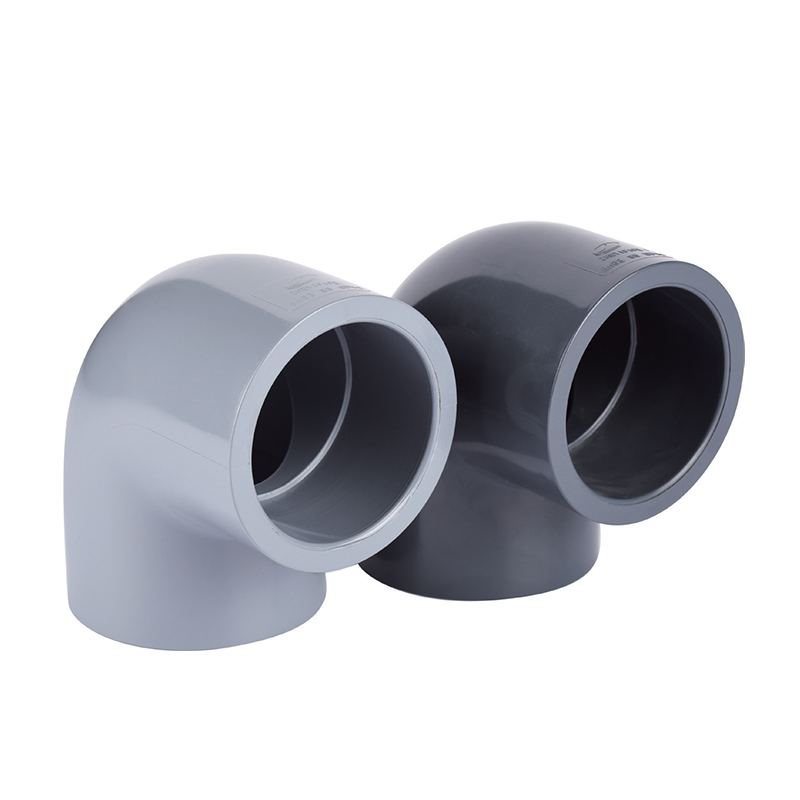 SCH80/DIN UPVC and CPVC 90° ElbowThis 90° UPVC/CPVC elbow supports solvent-bonded piping layouts and is dimensioned to DIN, ANSI and JIS for water, drainage and chemical service.View Product →
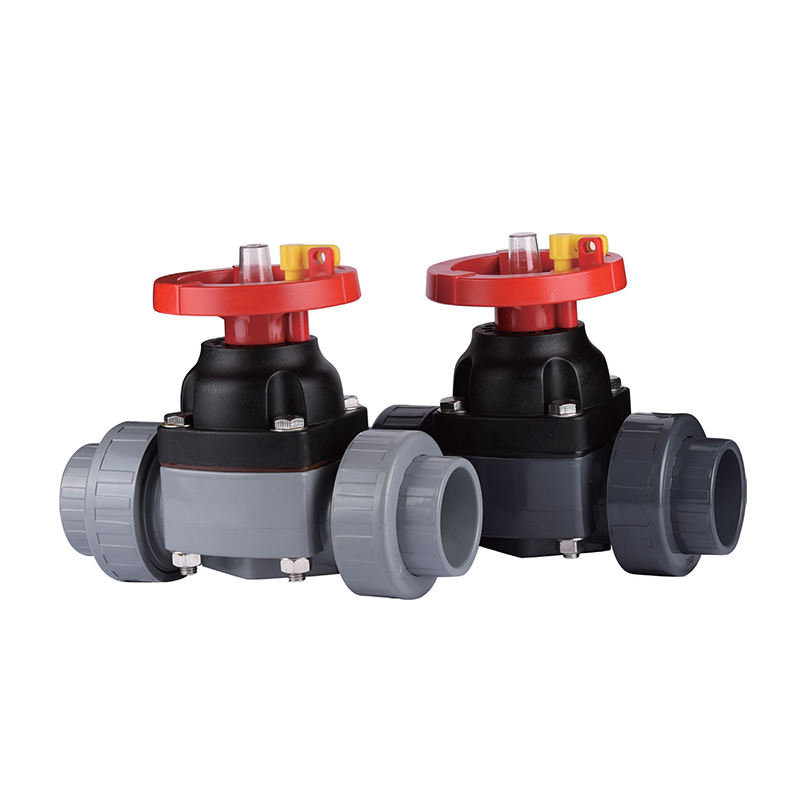
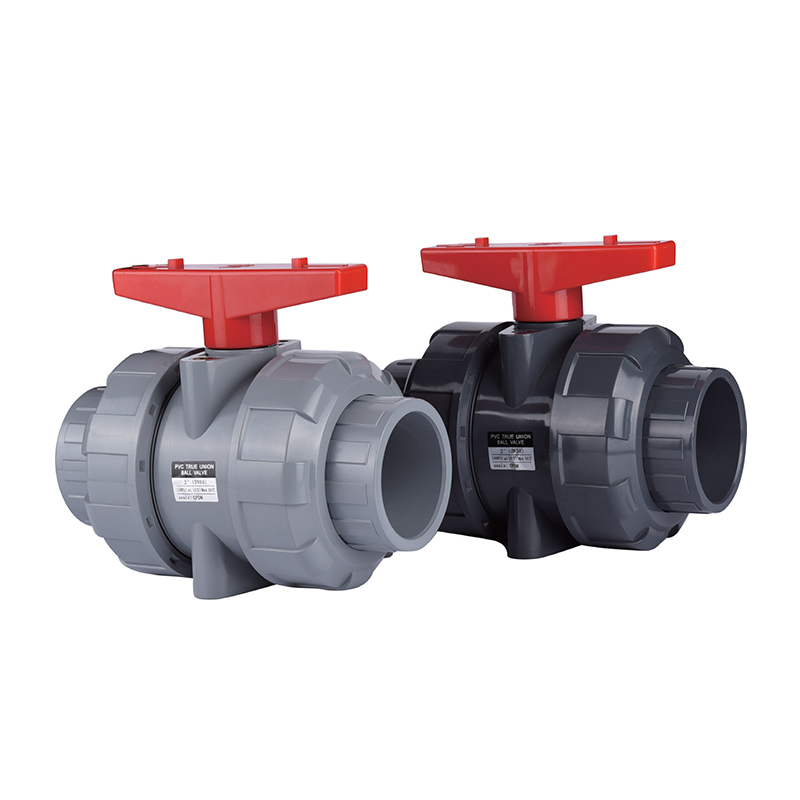
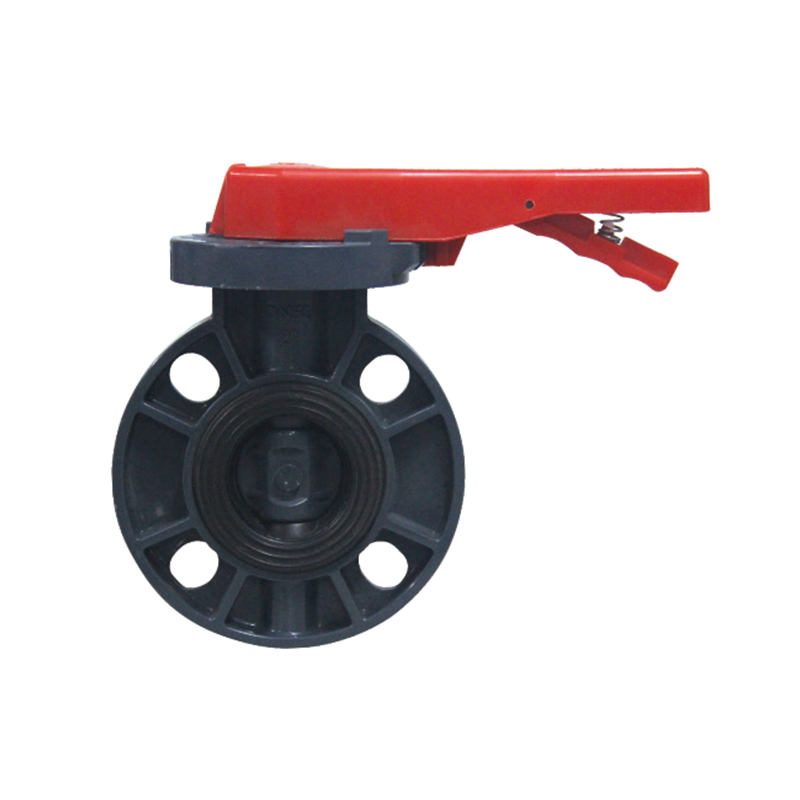
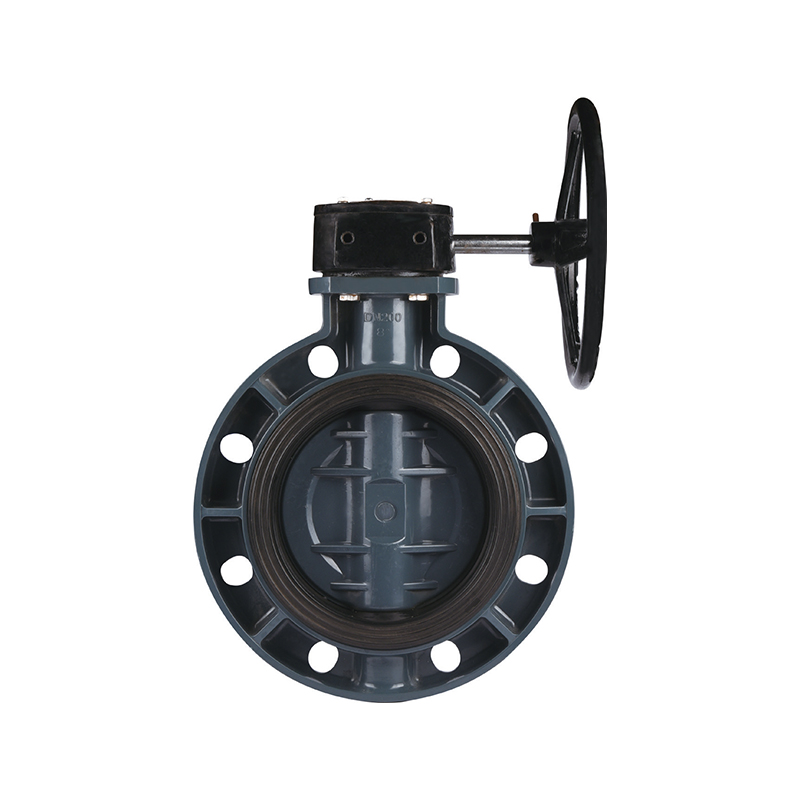
Valve selection follows the same logic. Ball valves give tight shutoff and quarter-turn operation for clean chemical service, while a UPVC flange diaphragm valve is the usual choice where the stream carries solids, slurry or neutralisation sludge, because the diaphragm isolates the working parts from the fluid and the body drains cleanly.
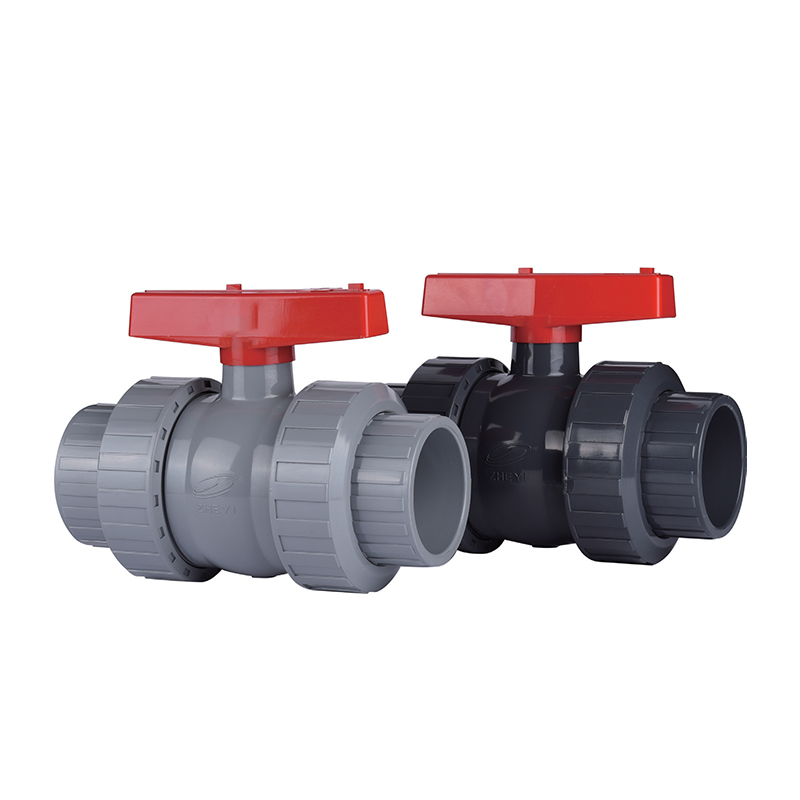 SCH80/DIN UPVC/CPVC Type I Ball ValveA quarter-turn Type I ball valve in UPVC or CPVC for chemical, water-treatment and HVAC lines, with DN15–DN100 sizes and PN10–PN16 ratings.View Product →
Cleanroom Fire Rules, UV and Expansion Are the Quiet Specification Traps
Standard UPVC is not typically listed to FM 4910, so any run inside a cleanroom return-air plenum needs a material review before the pipe is released for fabrication.
Rigid PVC is self-extinguishing, with a limiting oxygen index near 45, but it produces dense smoke when it does burn. Cleanroom specifications for semiconductor fabs routinely invoke the FM 4910 cleanroom materials flammability protocol, and ordinary PVC-U compounds are generally not on that list. The practical answer is to keep the run outside the plenum, or to specify a listed material for the portion that has to pass through it.
Two more site conditions catch buyers out. Ultraviolet exposure on roof-mounted racks degrades unpigmented PVC, so outdoor runs need a titanium-dioxide-bearing compound or a physical shield. And thermal movement on long straight runs is larger than most steel-trained installers expect.
Illustrative calculation. A 30 m straight UPVC run with a 20 °C swing between installation temperature and service temperature moves by 30 x 5.4 x 10^-5 x 20, which equals 0.032 m, or about 32 mm. On a line with anchored valves at both ends, that movement has to go somewhere: an expansion loop, an offset leg, or a guided slide at each support. Support spacing for plastic is tighter than for steel, and guide spacing at changes of direction carries more load than the straight run.
A Six-Step Selection Sequence
Six decisions fix the specification, and each one closes off options for the next; running them out of order is what produces a submittal that comes back marked.
- Map every stream by chemistry, peak concentration, normal and maximum temperature, and flow rate. Give solvent waste its own list from the start.
- Fix the design temperature as the highest credible service condition, not the average operating value, then select the derating factor from the governing standard.
- Apply the derated pressure to the line and choose the schedule or PN class, keeping one dimensional family across the whole header.
- Confirm compound-level chemical resistance, including the stabiliser system; calcium-zinc or tin stabilised compounds are the usual requirement for water contact, while lead-stabilised pipe belongs nowhere near a fab.
- Define the jointing method, the installer qualification and the cure schedule, then check that the fittings, valves and gaskets share the same pressure class as the pipe.
- Write the standard, the test reports and the documentation package into the purchase order so acceptance is measurable rather than a matter of opinion.
What to Put in the Purchase Order
A UPVC purchase order for a semiconductor project should name the product standard, the compound, the test reports and the traceability requirement, because a generic pipe-and-fittings order cannot be verified on arrival.
The following items are the ones that most often go missing between a technical specification and an actual order, and each one is checkable at goods-in:
- Product standard and edition: ASTM D1785 for inch pipe, ASTM D2467 for Schedule 80 fittings, ISO 1452 or DIN 8061 and 8062 for metric PN systems.
- Compound declaration: stabiliser type, no regrind in the pressure-bearing wall, and pigment or UV package for outdoor runs.
- Certification: NSF/ANSI 61 for any line in contact with potable or process water, and NSF/ANSI 14 for the piping system components.
- Test documentation: dimensional inspection, hydrostatic proof test and Vicat softening results for the delivered lot.
- Flange and interface detail: DIN or ANSI drilling, gasket material and bolt grade, agreed before fabrication starts.
- Marking and traceability: compound lot, production date and standard reference legible on every length.
Suppliers who offer both DIN and ANSI families, and who publish which standard each catalogue item follows, remove most of the interface risk before the first drawing is issued. ZHEYI Group, trading as ZHEYI Pipeline (Wuhan) Co., Ltd., manufactures UPVC and CPVC pipe, fittings and valves against DIN and ANSI references from two production sites in eastern and central China, and states that its processes follow ISO 9001 quality management.
Direct Answers for Specification Meetings
Can UPVC carry ultrapure water inside a semiconductor fab?
Only on lower-purity sections. Point-of-use ultrapure water is normally carried in PVDF or PFA because those materials hold particle and total organic carbon specifications that PVC-U does not target. UPVC is appropriate for pretreatment, RO reject, cooling water and waste circuits, where purity is measured in conductivity and suspended solids rather than in parts-per-trillion contamination.
What temperature should a UPVC line be designed for?
Design to the highest credible service temperature and derate from the 23 °C baseline. At 43 °C a typical compound retains about 0.50 of its nominal rating, and at 60 °C roughly 0.22. Sustained service above about 50 °C usually points to CPVC, PPH or PVDF instead of pushing PVC-U past its softening margin.
Yes, when the joint follows ASTM D2855 and the cement meets ASTM D2564. Cure time depends on diameter and ambient temperature and runs from roughly 15 minutes to 24 hours. Where a line has to be opened for cleaning, use flanged or union connections rather than cutting cemented joints and re-making them in place.
How do DIN and ANSI specifications change the submittal?
They change dimensions, flange drilling and pressure class notation, not the polymer. ASTM D1785 pipe is sized by Schedule, while ISO 1452 and DIN 8062 use PN classes in metric outside diameters. Choose one family for the whole header, declare it on the drawing, and verify that the fittings and valves share the same class before releasing the order.
 +86-15258772971
 dinys009@163.com
 English
 한국어
 Español
 عربى