Why Industrial Project Teams Order Custom CPVC Fittings
Custom CPVC fittings are pipe components manufactured to project-specific dimensional, standard, and performance requirements rather than selected from a distributor price list.
A chemical plant specifying CPVC piping for an 80 deg C hydrochloric acid transfer line rarely finds a ready-made 3-inch reducing tee with ANSI face dimensions and one socket end in a standard catalog. The practical answer is a custom CPVC fitting engineered around the actual process temperature, pressure class, connection type, and installation envelope.
CPVC, or chlorinated polyvinyl chloride, is specified across industrial projects because it combines broad chemical resistance with a higher temperature ceiling than ordinary PVC. Fittings must follow the same material discipline: a fitting with a thinner wall or an incompatible socket depth becomes the weakest point in the line. Custom work should therefore start from process conditions, not from a drawing pulled out of an old project file.
In industrial service, custom means the fitting matches the media, the operating temperature, the connection standard, and the physical layout of a specific line.
Material and Standard Selection Comes First
The first specification decision for a custom CPVC fitting is not the angle or branch size; it is the material grade, pressure schedule, and dimensional standard.
CPVC Grade and Service Limits
CPVC compounds vary in chlorination level, impact strength, heat distortion temperature, and resistance to specific chemicals. Typical industrial CPVC systems are designed for continuous service in the range of 80 to 93 deg C, with pressure ratings derated as the operating temperature climbs. A custom fitting that uses the correct nominal size but the wrong schedule can drop the system pressure rating below the pump and valve ratings.
Zheyi Pipeline (Wuhan) Co., Ltd., operating as ZHEYI Group, treats pipes and fittings as one matched system. Its CPVC pressure pipes are produced with schedules and socket dimensions that align with the same custom fitting line.
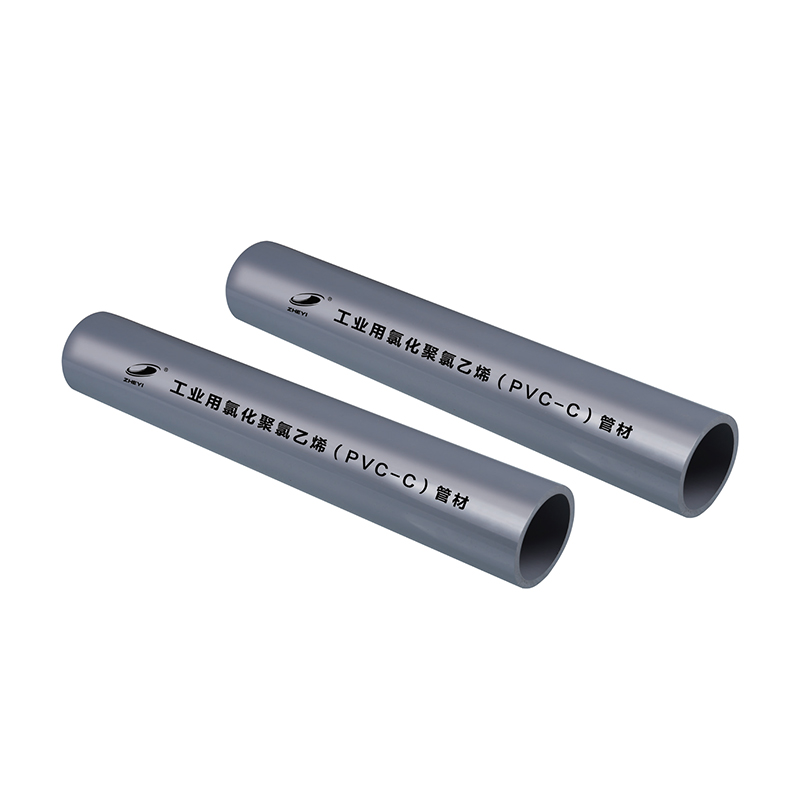 Custom CPVC Pipe pressure For Food Industry/Automotive/Electronic Suppliers, FacZheyi Pipeline (Wuhan) Co., Ltd. Is China Custom CPVC Pipe pressure For Food Industry/Automotive/Electronic Suppliers, Factory, Manufactu...View Product →
DIN or ANSI Dimensional Systems
DIN and ANSI dimensional systems are not interchangeable. A European process package may specify DIN 8063 socket depths and metric diameters, while a North American project will call for ASTM F438, ASTM F439, or ANSI B16.5 flanged connection data. The manufacturer must be able to execute both systems without shifting wall thickness, center-to-face dimensions, or pressure rating. For cross-border package equipment, review our DIN/ANSI UPVC and CPVC pipe alternatives before locking the fitting specification.
A custom CPVC fitting is reliable only when wall thickness, end connection, material grade, and dimensional standard are designed as one unit.
Common end-connection families for custom CPVC fittings
| Connection family |
Typical variables |
Common industrial use |
| Socket or solvent cement |
Socket depth, interference fit, wall schedule |
Chemical dosing and smaller bore lines |
| Threaded |
NPT or BSP thread, thread length, hex size |
Instrument connections and tank accessories |
| Flanged |
ANSI B16.5 or DIN PN10/PN16 drilling, facing |
Pump isolation and tank nozzles |
| True union |
Seal face, O-ring groove, live-load tension |
Lines that require frequent maintenance |
What Can Be Customized in a CPVC Fitting
Custom CPVC fitting work usually covers five areas: geometric configuration, end connections, pressure class, traceability, and delivery form.
- Branch geometry such as reducing tees, off-center crosses, long-radius elbows, and saddle joints for tie-ins.
- Mixed end connections including socket, thread, plain end, flange, and true union on a single component.
- Pressure class changes with thicker walls, reinforced hubs, or extra material around threaded sections.
- Marking and traceability details such as project codes, batch numbers, and pressure ratings printed on the part.
- Delivery form including kitted sets, pre-welded sub-assemblies, and labelled modules for field crews.
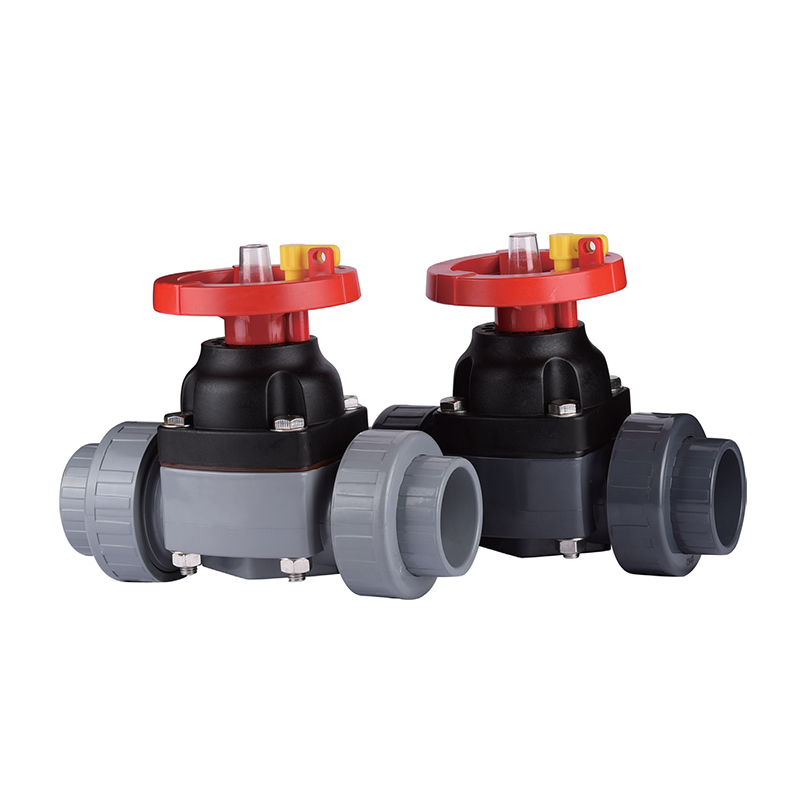
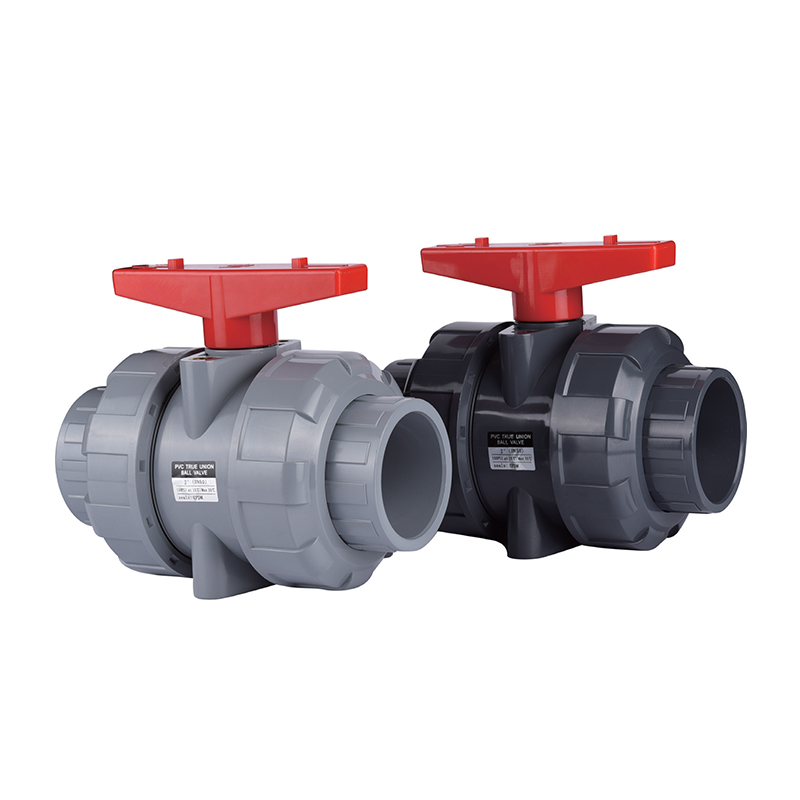
For maintenance-heavy lines, a true-union CPVC fitting can be customized with a threaded branch, a plain socket end, and a union seal face in one molded piece. This reduces the number of separate adapters in the line and shortens downtime during cleaning or inspection.
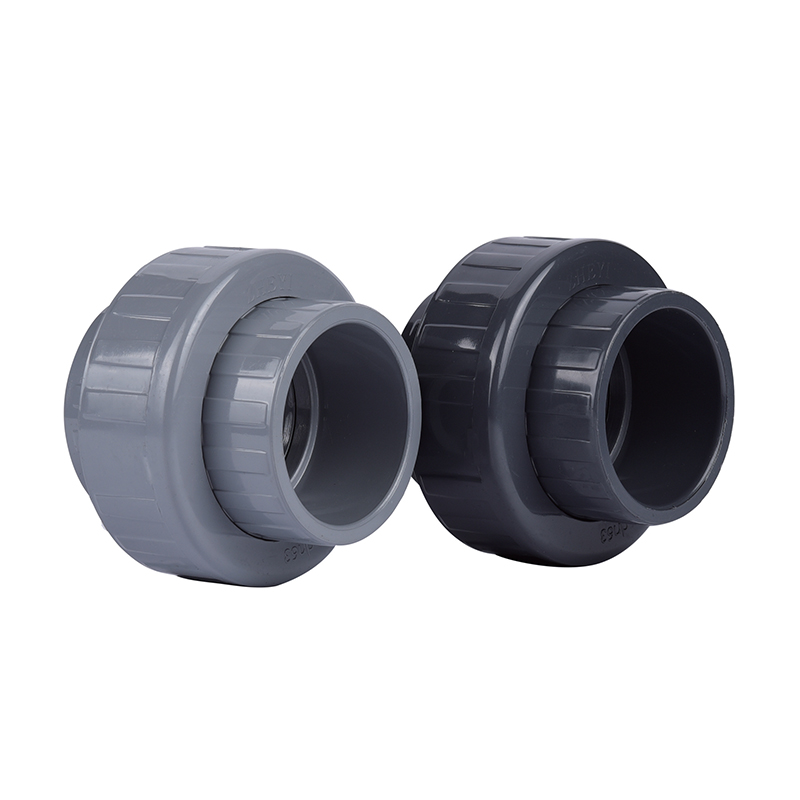 Custom SCH8O/DIN UPVC/CPVC Ⅰ Union For Food Industry/Automotive/Electronic SupplZheyi Pipeline (Wuhan) Co., Ltd. Is China Custom SCH8O/DIN UPVC/CPVC Ⅰ Union For Food Industry/Automotive/Electronic Suppliers, Factory, ...View Product →
Definition: A custom CPVC fitting is a pressure-containing component with geometry, end connections, or traceability features developed for a specific project rather than a standard catalog number.
Off-the-Shelf or Custom: How to Decide
Stock CPVC fittings are acceptable when the published catalog rating covers the full process envelope; custom fittings are justified when they reduce field joints, eliminate adapters, or support a wider temperature and pressure range.
Use stock fittings when
- the service temperature stays below the catalog rating
- the pressure class matches the line schedule
- standard geometries fit the available space
- project schedule cannot absorb tooling time
Choose custom fittings when
- branch geometry differs from catalog dimensions
- mixed end connections can remove adapters
- a single material system must cover more process conditions
- batch traceability and project marking are required
The economic rule is simple: custom fittings pay for themselves when they save field joints, remove adapters, or keep the piping system within a known pressure-temperature envelope.
Custom CPVC Fitting Specification Checklist
A correct specification defines the fluid, temperature, pressure, connection standard, geometry, and traceability requirements before production begins.
A one-page process datasheet is enough to start an RFQ. Include the worst-case operating temperature, not the average, because CPVC pressure ratings are temperature-sensitive.
Define the service envelope
List the fluid composition, maximum operating pressure, peak temperature, and any surge or vacuum conditions that the fitting may see.
Match connection standards
Identify each end connection with its standard, size, and facing requirement. Note whether the fitting is socket, threaded, flanged, or a combination.
Set pressure and test limits
Specify the required pressure class at the design temperature and state whether hydrostatic or pneumatic testing is required before shipment.
Define traceability and packaging
Decide whether batch numbers, material certificates, and project codes must be marked on the part. Confirm packaging requirements for export or site storage.
Typical lead-time levels for CPVC fitting orders
Stock or low complexity1-2 weeks
Modified end connection2-4 weeks
New geometry with tooling4-8 weeks
Full assembly and traceability6-10 weeks
Ranges vary with tooling, material availability, and order volume. Confirm each lead time during the RFQ stage.
Supplier Capabilities That Decide Project Success
The right custom CPVC fitting partner is a manufacturer with material control, in-house tooling support, and traceable quality procedures.
Zheyi Pipeline (Wuhan) Co., Ltd., operating as ZHEYI Group, has positioned itself as a custom wholesale manufacturer since 2007. It reports two vertically integrated manufacturing centers in eastern and central China, uses ISO 9001-compliant quality procedures, and supports both DIN and ANSI based dimensions. Beyond CPVC, its material lineup includes UPVC, PPH, PVDF, and FRP composites, which allows a project to standardize on one supplier when different fluids require different material classes.
Where flow control is needed, CPVC ball valve options can be specified with the same standard interface and supplied as part of the same package. For a broader view of the non-metallic piping scope, the ZHEYI industrial piping portfolio also covers filters, flowmeters, and membrane accessories.
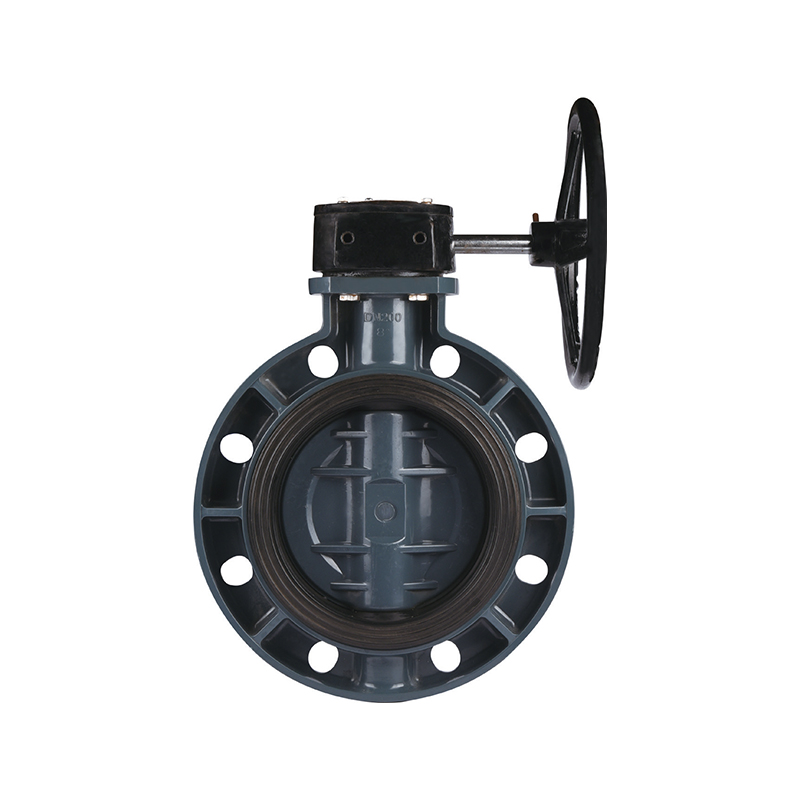
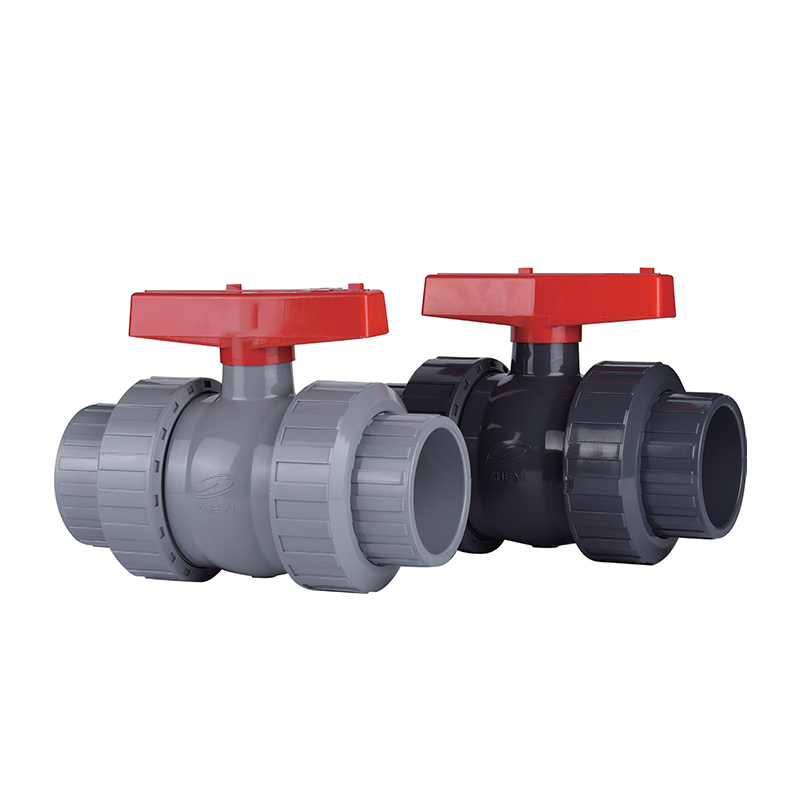 Custom SCH8O/DIN UPVC/CPVC Ⅰ Ball Valve For Food Industry/Automotive/Electronic Zheyi Pipeline (Wuhan) Co., Ltd. Is China Custom SCH8O/DIN UPVC/CPVC Ⅰ Ball Valve For Food Industry/Automotive/Electronic Suppliers, Fact...View Product →
2007Operation start
2Vertical manufacturing centers
ISO 9001Quality procedure
DIN/ANSIDimensional systems
Before approval, verify that the supplier can inspect dimensions, test representative samples, and issue traceable lot-based reports. The lowest-cost custom fitting is not the cheapest unit price; it is the fitting that installs correctly, survives the process cycle, and does not delay mechanical completion.
Frequently Asked Questions
The following answers cover the most common CPVC fitting questions on industrial projects.
Can CPVC fittings be manufactured in both metric and inch sizes?
Yes. Established manufacturers can execute both metric DIN dimensions and inch-based NPS dimensions, but the mold and tooling may be dedicated to each standard. Confirm socket depth, end face dimensions, and pressure class before production starts.
What is the typical lead time for custom CPVC fittings?
Small tooling changes can take 2 to 4 weeks. A completely new geometry with dedicated mold sets may take 6 to 10 weeks. Order volume and material supply are the largest variables in the schedule.
How do temperature and pressure affect a custom CPVC fitting design?
CPVC loses strength as temperature increases. The design pressure becomes a derated value, so wall thickness, socket depth, and reinforcement must be sized for the actual operating temperature rather than the nominal pipe schedule. Review a CPVC pipe pressure-rating and derating guide before finalizing the schedule.
What inspection documents should be requested with custom CPVC fittings?
Request dimensional inspection records, material batch information, and pressure test reports where applicable. A supplier with traceable quality procedures should be able to issue lot-based documentation for each fitting order.
A custom CPVC fitting is not an afterthought. It is a pressure-rated component that must be specified, manufactured, and tested like any other piece of industrial equipment.
 +86-15258772971
 dinys009@163.com
 English
 한국어
한국어 Español
 عربى
عربى