A CPVC line carrying dilute sulfuric acid can still show smooth bore surfaces, tight socket joints, and unchanged pressure test results after years of service. That outcome is not accidental. Fittings are the points where flow direction changes, turbulence begins, and mechanical stress concentrates. Chemical resistance improves CPVC fitting performance by slowing the degradation mechanisms that would otherwise turn those local stress points into cracks, swelling, or loss of bond strength.
What chemical resistance actually does inside a CPVC fitting
CPVC fittings are molded from chlorinated polyvinyl chloride, a rigid thermoplastic that resists a broad range of acids, alkalis, salts, and industrial process fluids. The fitting does not rely on a coating or lining. The chemical resistance comes from the polymer structure itself, which means the full wall thickness of the fitting remains part of the protection system.
Swelling and plasticization control
When a thermoplastic absorbs a chemical, the polymer chain spacing can increase. That change softens the material, lowers its tensile strength, and makes the fitting more sensitive to pressure and thermal expansion. In a chemically resistant CPVC fitting, absorption stays low enough that the material keeps its stiffness, hardness, and load-bearing capacity. This is especially important at threaded joints, flange faces, and socket ends where a small dimensional change can cause leakage or loosen compression assemblies.
Hydrolysis and oxidation resistance
Many aggressive service failures are not simple corrosion. Water, acids, or oxidizing agents can attack the polymer chain itself through hydrolysis or oxidation. A chemically resistant CPVC compound resists this chain damage, preserving the molecular weight and ductility that allow the fitting to absorb mechanical stress without brittle failure. The same quality also protects the material when the pipe is exposed to cleaning chemicals, hot process water, or intermittent oxidizing conditions.
Why fitting performance is different from pipe performance
Straight pipe carries fluid in one direction with relatively uniform wall stress. A fitting changes the flow path, introduces bending moments, and creates welded, threaded, or flanged interfaces. That is why CPVC chemical resistance matters even if the pipe itself appears compatible. The fitting is often the first place where chemical attack becomes visible.
Socket joints and solvent-cement bonds
In a solvent-cemented CPVC system, the joint is a fused polymer connection. The chemical resistance of both the fitting and the pipe determines whether that bond remains strong over time. If the socket softens, swells, or loses its dimensional grip, the joint can creep even without visible dripping. A chemically stable CPVC socket keeps its interference and bond strength, which means fewer leaks and less frequent joint inspection.
Dimensional stability under pressure and thermal cycling
Fittings are exposed to the same temperature swings and pressure cycles as the pipe, but their thicker walls and changing geometry make them more sensitive to stress concentration. A fitting with poor chemical resistance can swell, distort, or develop micro-cracks near the root of a socket or under a flange. Good chemical resistance prevents those changes from accumulating. The fitting retains its center-to-end dimensions, gasket alignment, and support contact, which keeps the whole piping system predictable.
How chemical resistance changes real performance criteria
The connection between chemical resistance and CPVC fitting performance is not theoretical. It can be measured in joint tightness, burst pressure retention, and dimensional verification after extended exposure. The table below summarizes the practical effects.
Table 1. How chemical resistance translates into measurable CPVC fitting performance.
| Performance area |
Failure mode without chemical resistance |
Benefit with adequate CPVC resistance |
| Socket joint integrity |
Softening at the bond line, socket creep, and slow leakage |
Long-term bond strength and leak-tight sealing |
| Pressure capability |
Cracking at stress points and reduced burst pressure |
Pressure rating maintained through expected service |
| Dimensional fit |
Swelling changes center-to-end dimensions and gasket fit |
Stable dimensions support flange and union alignment |
Temperature makes chemical resistance even more important. A chemical that appears harmless at room temperature can attack a CPVC fitting much faster at 90°C because the polymer has more energy and the diffusion rate increases. Manufacturers rate CPVC fittings for specific pressure and temperature combinations, not for a single maximum pressure. The practical rule is: as temperature rises, the allowable pressure rating falls. The CPVC fitting pressure and temperature derating guidance explains why a fitting selected only on pipe size and pressure can fail if the operating temperature is ignored.
Selection considerations for aggressive chemical service
Choosing chemically resistant CPVC fittings is not just about picking "plastic" instead of metal. The service environment, wall thickness, joint method, and manufacturing standard all affect how the material performs.
Match the fitting to the chemical and temperature envelope
CPVC is suitable for many mineral acids, bases, and salt solutions, but it is not compatible with every chemical. Strong oxidizing acids, aromatic hydrocarbons, chlorinated solvents, and some ketones can soften or attack the polymer. Before finalizing a fitting schedule, confirm the exact chemical concentration and the maximum operating temperature. If the service is near the compatibility limit, choose a heavier wall class or a different material rather than assuming every CPVC fitting behaves the same.
Understand wall thickness and pressure rating
Wall thickness affects how much of the fitting wall remains available to support pressure after chemical exposure and surface stress begin to act. A thicker wall gives more corrosion allowance and more resistance to creep over time. Engineers often compare Schedule 40 and Schedule 80 differences when deciding which fitting class to use. Schedule 80 fittings have thicker walls and a higher pressure rating, but they also offer a larger safety margin when the chemical service is continuous rather than occasional.
Check joint design, flange dimensions, and standard
The same CPVC material can perform differently depending on how it is joined to the rest of the system. Socket joints, threaded joints, flanged joints, and true-union connections each place mechanical stress in different locations. The socket depth, spigot dimensions, and solvent cement gap also vary with manufacturing standards. If the project uses imported or standard-specific components, verify that the fitting and pipe are designed for the same connection method. The DIN and ANSI connection requirements show why fitting dimensions cannot be mixed casually. A chemically resistant fitting is only reliable if it is also geometrically compatible with the rest of the pipeline.
Assemble the entire chemical-resistant system, not just the fitting
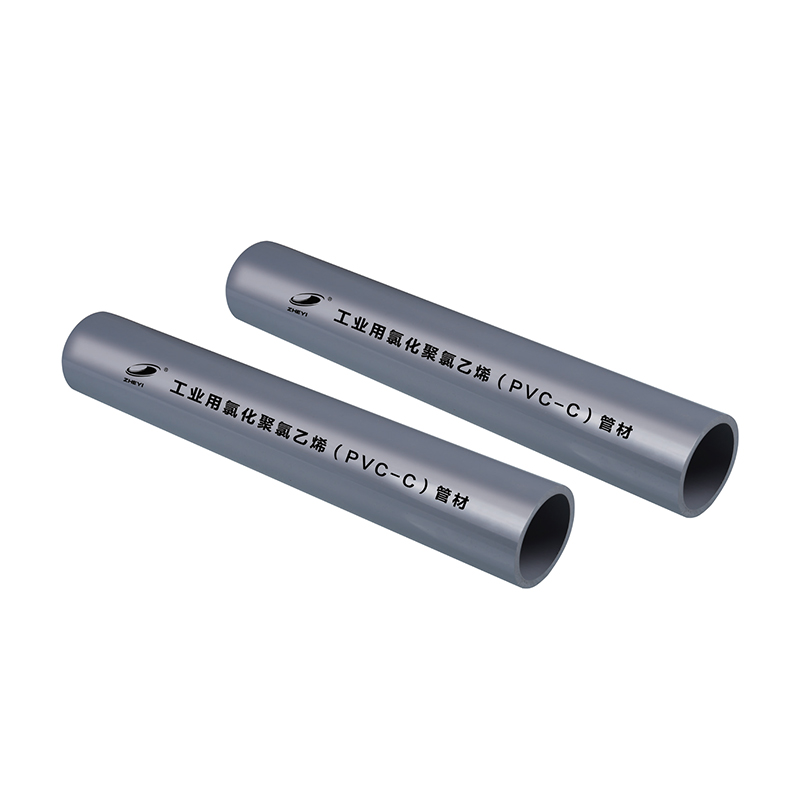
A fitting does not affect system performance by itself. The CPVC pressure pipes connected to the fitting must have the same chemical resistance, thermal expansion behavior, and dimensional tolerances. A chemically resistant fitting attached to a pipe with a different socket depth or a lower-pressure rating creates a weak point no matter how stable the fitting material is. In a well-designed system, the pipe, fitting, solvent cement, and valve bodies share the same service envelope.
Flow-changing components deserve extra attention because they are exposed to turbulence and localized pressure loss. A CPVC 90-degree elbow experiences higher wall stress on the outer radius and different flow patterns than a straight section. Chemical resistance prevents the surface from softening in that high-stress zone, which reduces the risk of environmental stress cracking over time. The same principle applies to reducers, tees, and threaded adapters where flow direction and cross-section change at the same time.
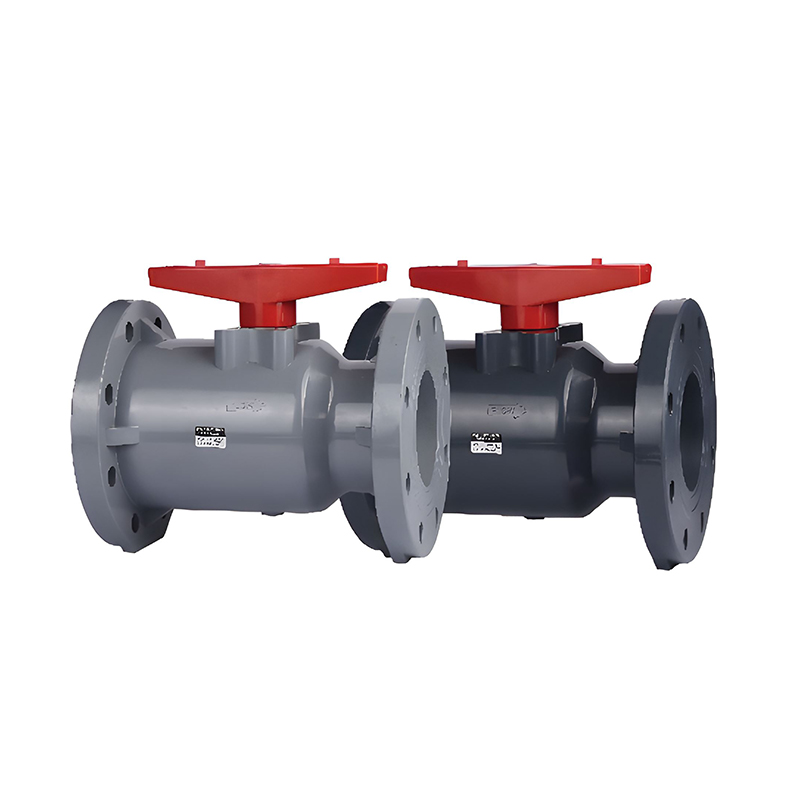
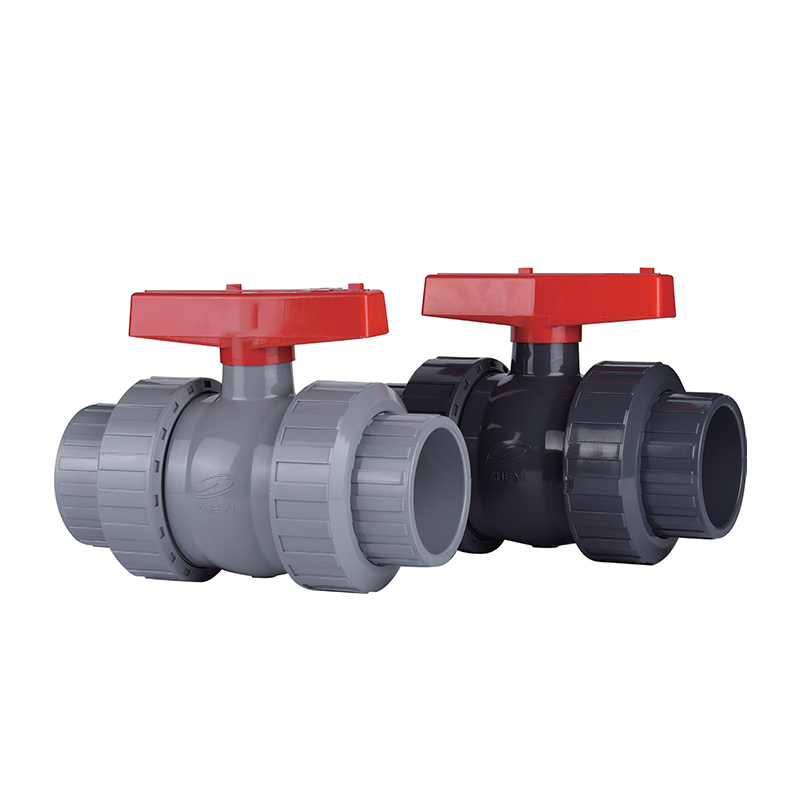
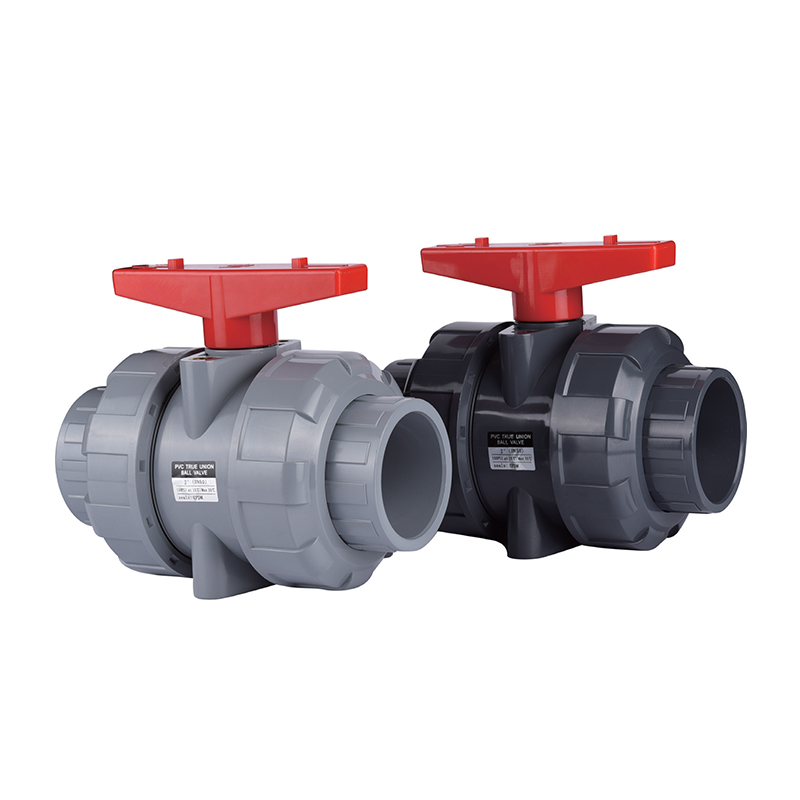
Isolation and control points also depend on chemical resistance. A CPVC ball valve used in aggressive chemical service must keep its sealing surfaces closed and its body dimensionally stable while the media is static inside the valve cavity. If the valve body swells or the seat area softens, the valve can become difficult to operate or fail to close fully. Chemical resistance in the body material is just as important as the seal design.
Final thought
Chemical resistance improves CPVC fitting performance because it protects the material from the inside out. It keeps socket joints tight, maintains dimensional stability, preserves pressure capability, and limits damage at stress concentration points. For engineers and procurement teams working with aggressive industrial fluids, the quickest way to reduce risk is to select CPVC fittings on the basis of chemical compatibility, temperature rating, wall thickness, and joint standard before looking at price or availability. The visible performance of a piping system often depends on the fittings that are easiest to overlook.
 +86-15258772971
 dinys009@163.com

 English
 한국어
한국어 Español
 عربى
عربى