A maintenance supervisor opens a work order after a hydrotest: a newly installed CPVC branch line is weeping at two socket joints, and a 40 mm horizontal run has hairline cracks where it hangs from a steel bracket. Neither failure is random. Both are classic symptoms of common problems with CPVC fittings, and both could have been prevented at the specification and installation stage.
Here is the field conclusion in one sentence: CPVC fittings rarely fail because the material is weak. They fail when they are over-tightened, joined with the wrong solvent, supported without thermal allowances, or specified outside their pressure-temperature envelope. This guide breaks down the most frequent failure modes, what actually causes them, and the practical fixes that keep industrial CPVC systems reliable for decades.
Why CPVC Fittings Fail in Industrial Service
CPVC (chlorinated polyvinyl chloride) is a natural choice for chemical processing, water treatment, metallurgy, and semiconductor plants because it resists a wide range of acids, alkalis, and hot process fluids. Most engineers already know that the material is corrosion-resistant and heat-tolerant. What is often overlooked is that the fitting, not the straight pipe, is the most heavily stressed part of the line.
The fitting is the stress concentration point
Sockets, thread roots, branch outlets, and flange junctions all concentrate mechanical and thermal stress. A pipe run moves with temperature; the fitting is where that movement is resisted. Add a poorly prepared joint surface or a misaligned bolted flange, and the fitting becomes the weak link.
Metal-installation habits are the real enemy
CPVC is not steel. It expands more with heat, softens as the temperature climbs, and responds poorly to sharp impact. Installers who torque threaded CPVC fittings like steel, hang long unsupported runs, or pressurize the system before solvent welds have cured will see the same failure pattern no matter which fitting brand they buy.
Six Common Problems with CPVC Fittings and How to Solve Them
Maintenance records from chemical and water plants show the same handful of problems reappearing project after project. The table below condenses them into a quick reference, and the sections that follow explain the mechanisms and the fixes in more detail.
Common CPVC fitting failure modes, the typical causes behind them, and the practical solutions used in the field.
| Problem |
Typical cause |
Practical solution |
| Weeping or leaking joints |
Wrong solvent cement, short cure time, moisture |
Use CPVC-rated cement and follow the full cure schedule |
| Cracks and brittle fractures |
Impact, over-tightening, UV exposure |
Protect from sunlight, use cushioned supports, avoid sharp force |
| Bowed or pulled-out lines |
Thermal expansion without compensation |
Add expansion loops and correctly spaced supports |
| Cracks at threaded connections |
Metal-like torque on plastic threads |
Tighten by hand plus a quarter turn; use PTFE tape |
| Sudden burst at operating pressure |
Pressure rating not de-rated for temperature |
Verify the rating at the actual service temperature |
| Softening or crazed surfaces |
Incompatible chemical contact |
Confirm chemical resistance before installation |
1. Joint leaks caused by improper solvent cementing
The most frequent CPVC fitting failure is a weeping or leaking socket joint. The usual causes are all-purpose cement used instead of a CPVC-rated solvent cement, a gap between the pipe end and the socket bottom, or a pressure test performed before the cement has developed full strength. Many field repairs also skip the deburring and chamfering step, which then scrapes the solvent weld off the pipe surface during assembly.
The fix starts with surface preparation. Cut the pipe square, remove burrs, chamfer the end, and mark the insertion depth. Use a cement formulated specifically for CPVC, apply it evenly to both surfaces, and hold the joint together for the recommended set time. Pressure testing should wait until the full cure period has passed; a solvent cement cure time guide makes the waiting period explicit for different temperatures. If a joint leaks after curing, cut it out and remake it. Applying cement over a wet joint only makes the problem worse.
2. Cracking and embrittlement in the fitting body
Hairline cracks in the fitting socket or on the outside radius of a bend usually mean the material was subjected to impact, stress, or weathering beyond what CPVC tolerates. Dropped spools, tightening a metal bracket directly against the plastic, and long outdoor exposure to ultraviolet light all contribute. Low-temperature installation makes the problem worse, because CPVC becomes less ductile when cold.
Fittings should be brought to room temperature before assembly in cold weather. Supports should use rounded edges or rubber-lined clamps, and outdoor lines should be painted or wrapped where UV exposure is expected. For a more detailed set of field controls, an embrittlement prevention guide written for industrial CPVC lines is a practical reference. If a fitting is already cracked, it cannot be repaired reliably. The damaged section must be cut out and replaced with a new solvent-welded joint using a CPVC coupler.
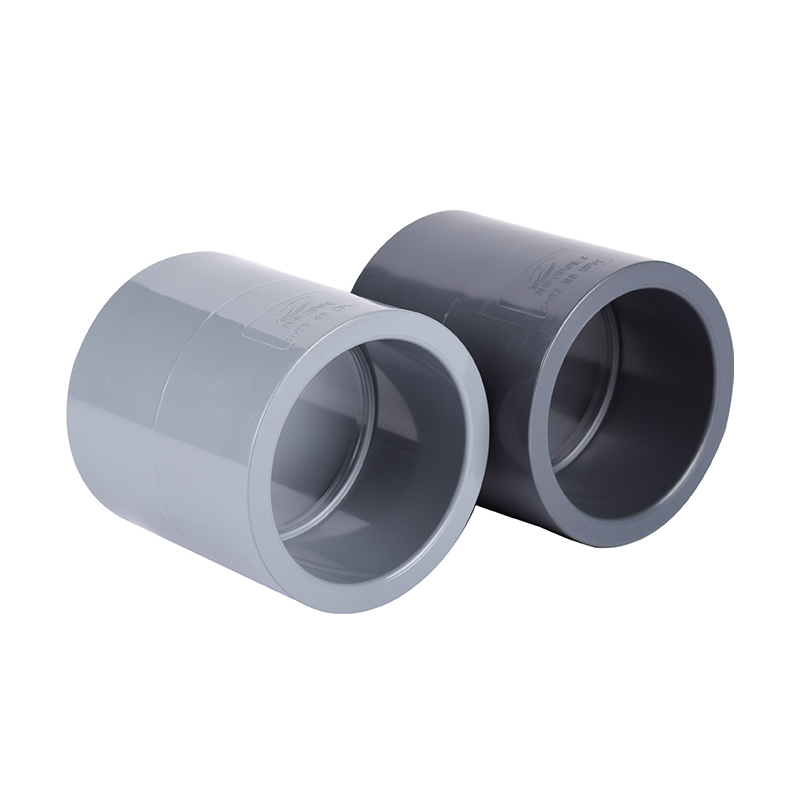 Custom SCH8O/DIN UPVC/CPVC Coupler For Food Industry/Automotive/Electronic SupplZheyi Pipeline (Wuhan) Co., Ltd. Is China Custom SCH8O/DIN UPVC/CPVC Coupler For Food Industry/Automotive/Electronic Suppliers, Factory, ...View Product →
3. Thermal expansion and insufficient support
CPVC has a coefficient of thermal expansion roughly six times higher than steel. A 6-metre straight run that heats up by 40 °C will grow about 25 mm. If the line is fixed rigidly at both ends, the fittings take the strain: sockets push apart, branch connections tear, and flanges misalign. The result is a bowed pipe or stress marks appearing next to a fitting.
The solution is to design for movement instead of fighting it. Include expansion loops, offset changes of direction, or bellows-type expansion joints on long runs. Anchor heavy components such as valves, and place guides close to anchors so that expansion is directed toward the loops. Support spacing must also be reduced when the fluid temperature rises, because the pipe softens and sags between supports at higher service temperatures.
4. Cracking at threaded connections
Threaded CPVC fittings usually fail from a very specific mistake: applying metal-fitting torque. Plastic threads act as stress concentrators, and overtightening produces radial cracks that appear immediately or weeks later. A second problem is the thread sealant itself. Some pipe dopes contain solvents that attack CPVC, causing surface softening and dulling before cracking begins.
Use only PTFE tape or a thread sealant certified as compatible with CPVC. Tighten by hand until snug, then give no more than a quarter turn with a wrench, and never use a pipe wrench on a CPVC fitting. For connections that require periodic maintenance disassembly, a CPVC union fitting opens without twisting the pipe or disturbing adjacent joints, which makes it a safer choice than a threaded joint that is repeatedly tightened and loosened.
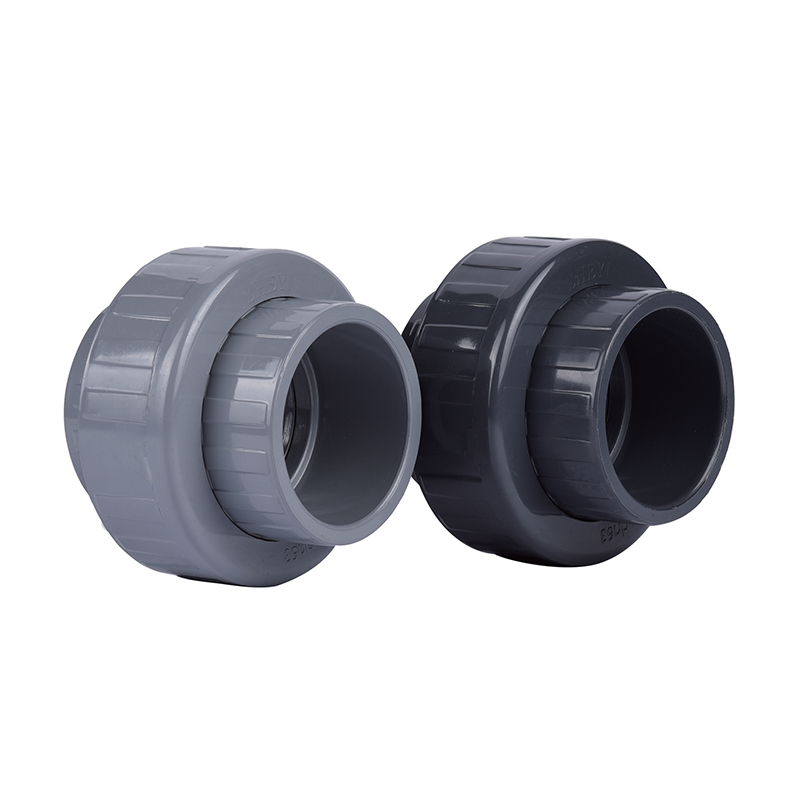 Custom SCH8O/DIN UPVC/CPVC Ⅰ Union For Food Industry/Automotive/Electronic SupplZheyi Pipeline (Wuhan) Co., Ltd. Is China Custom SCH8O/DIN UPVC/CPVC Ⅰ Union For Food Industry/Automotive/Electronic Suppliers, Factory, ...View Product →
5. Pressure rating mistakes at elevated temperature
CPVC fittings are rated for pressure at 23 °C. As temperature climbs, that rating falls quickly. At 80 °C, a CPVC pressure rating can drop to roughly 30 to 40 percent of its room-temperature value. A line specified for 10 bar in cold conditions may be operating beyond its rating once the fluid reaches 70 °C, even if the pipe appears to handle it initially.
The fix is straightforward: select Schedule 80 fittings for hot or high-pressure service, and verify the pressure-temperature rating chart of the exact product supplied. A pressure-temperature de-rating check is the single most important step in CPVC specification, because it is the step most often skipped when a project is in a hurry. Labels and packing documents from reliable manufacturers state the de-rated values; if a supplier cannot provide them, treat the quotation as incomplete.
6. Chemical compatibility errors
CPVC resists a broad range of chemicals, but not everything. Strong oxidizers, certain ketones, esters, and aromatic hydrocarbons can soften or swell the material. When a fitting develops a dull, crazed surface or begins to soften in service, the chemical compatibility was simply evaluated too optimistically.
Before installation, confirm the fluid composition, concentration, and temperature against the manufacturer's chemical resistance tables. Also consider what the line will carry during cleaning or flushing. A cleaning agent that is incompatible can damage fittings even when the normal process fluid is perfectly safe.
Selection and Installation Practices That Prevent Most Failures
Match the pipe, fitting, and standard to the duty
The surest way to avoid fitting problems is to specify them out of the system. Begin with CPVC pressure pipes that carry clear pressure ratings and consistent socket dimensions; when pipes and fittings come from the same production family, the fit is predictable at every joint. Confirm the standard, DIN or ANSI, and stay with it consistently for pipes, fittings, and flanges, because mixing wall-thickness systems is a common source of sloppy socket engagement.
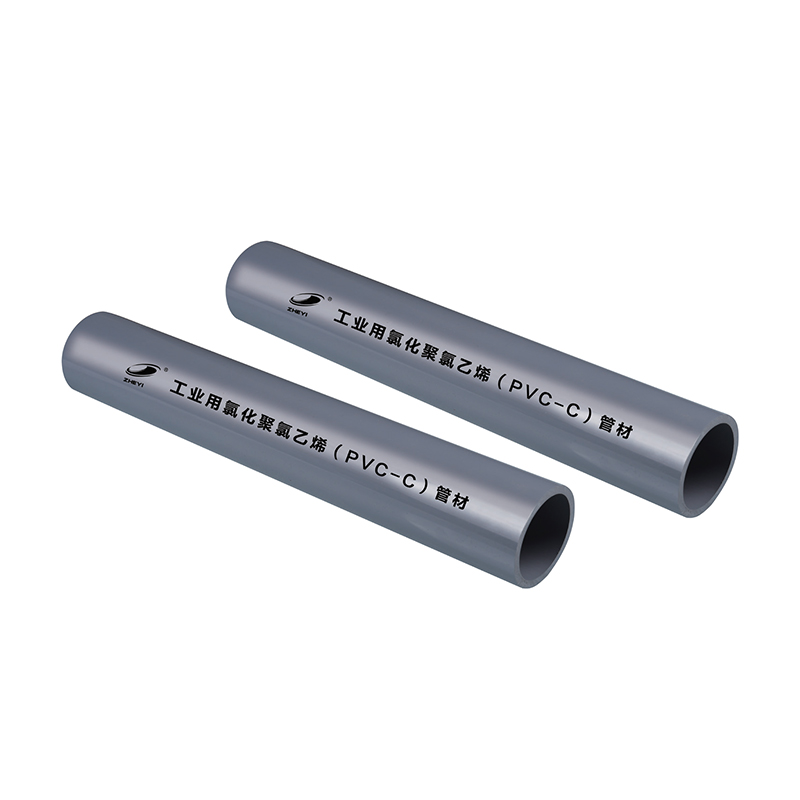 Custom CPVC Pipe pressure For Food Industry/Automotive/Electronic Suppliers, FacZheyi Pipeline (Wuhan) Co., Ltd. Is China Custom CPVC Pipe pressure For Food Industry/Automotive/Electronic Suppliers, Factory, Manufactu...View Product →
Support spacing deserves the same level of attention as the pressure rating. The table below gives typical starting points for horizontal industrial lines; always cross-check them against the pipe manufacturer's design tables for the actual wall thickness and temperature.
Support spacing for horizontal CPVC lines should decrease as service temperature rises. The values are starting points for design review, not a substitute for the manufacturer's table.
| Nominal size |
At 20 °C |
At 60 °C |
At 80 °C |
| 20–25 mm |
1.5 m |
1.2 m |
0.9 m |
| 50 mm |
1.8 m |
1.5 m |
1.2 m |
| 100 mm |
2.4 m |
1.8 m |
1.5 m |
At minimum, support every change of direction, every valve, and every heavy fitting. A valve hanging unsupported puts bending stress on the two nearest fittings, and that stress usually shows up later as a crack.
Follow a disciplined joining procedure
Even the best fittings will fail if the joining procedure is sloppy. The steps are not complicated, but they need to be done in the same order every time:
- Square-cut the pipe and remove internal and external burrs.
- Chamfer the pipe end and mark the insertion depth.
- Dry-fit the joint to confirm a snug, but not forced, fit.
- Apply CPVC solvent cement to both surfaces and insert the pipe fully.
- Hold for the recommended set time and allow full cure before pressure testing.
The complete sequence, including the checkpoints that inspection teams look for, is covered in the CPVC pipe fittings installation guide published by ZHEYI. Following it consistently prevents most of the problems described earlier in this article.
How a Qualified Manufacturer Reduces Field Risk
Fittings are a small fraction of a project's cost, but they cause most of the leaks. Choosing a manufacturer with controlled production, proper material selection, and clear documentation is an investment in avoiding downtime. A vertically integrated producer can control the CPVC compound, moulding parameters, dimensional testing, and packaging, which is exactly what plants need when every joint must be reliable.
Working with a manufacturer that understands the chemical and temperature limits of its own products also improves project clarity. Instead of pushing a generic fitting, an experienced supplier will raise the de-rating question before delivery, confirm whether the line should follow DIN or ANSI standards, and recommend realistic support spacing. Manufacturers with long CPVC production history, such as the ZHEYI production centres, can provide this input at the quotation stage.
The most common problems with CPVC fittings are not caused by bad material. They come from incorrect solvent work, thermal expansion that was not designed for, threaded joints tightened like steel, de-rating that was ignored, and chemical compatibility that was assumed instead of verified. Apply the corrections above, and a CPVC system will deliver the long, predictable service life that made you choose it in the first place.
 +86-15258772971
 dinys009@163.com

 English
 한국어
 Español
 عربى