A procurement engineer unwraps a carton of 1-inch Schedule 80 CPVC fittings labeled "SCH 80, ASTM F439." The price is competitive, the color looks right, and the certification is promised in the quote. The first caliper check reads a barrel wall of 0.161 inch against a required 0.179 inch, and no hydrostatic test report is in the delivery. That carton does not meet ASTM F439, and it should never have been quoted as certified. This guide explains how Schedule 80 CPVC fittings are actually tested and certified, which standards define a compliant part, and which documents a serious industrial buyer must demand.
Why Schedule 80 CPVC Fittings Need Verification
Testing and certification are the only reliable way to confirm that a Schedule 80 CPVC fitting will carry its rated pressure at operating temperature. Schedule 80 refers to the wall-thickness series, not to pressure. For a 1-inch fitting, the minimum wall is 0.179 inch, compared with 0.133 inch for Schedule 40, and the corresponding pressure rating for certified CPVC is 850 psi (58.6 bar) at 73°F (23°C).
CPVC, or chlorinated polyvinyl chloride, contains roughly 63 percent chlorine by weight, which raises its heat deflection temperature well above PVC and allows continuous service to about 200°F (93°C) with the correct derating. A thicker wall reduces hoop stress at a given pressure, which is why Schedule 80 carries almost double the rating of Schedule 40. But a rating is valid only if the wall is actually thick enough and the compound matches the certified cell class.
Schedule 40 versus Schedule 80 CPVC fittings for 1-inch nominal size
| Property |
Schedule 40 |
Schedule 80 |
| Wall thickness (inch) |
0.133 |
0.179 |
| Pressure rating at 73°F (psi) |
450 |
850 |
| Pressure rating at 180°F (psi) |
200 |
425 |
| Typical service medium |
Cold water, light chemicals |
Hot chemicals, process fluids |
| Relative material weight |
Baseline |
About 35 percent heavier |
For a side-by-side look at how the two schedules behave under identical service conditions, see our Schedule 40 vs Schedule 80 pressure comparison.
In piping terminology, Schedule defines wall thickness, not pressure. A Schedule 80 fitting is certified to carry almost twice the pressure of Schedule 40 only when every dimension - wall, socket depth, and hub profile - meets the stated specification.
The Standards That Define a Certified Fitting
Four standards govern nearly every Schedule 80 CPVC fitting used in industrial service: ASTM D1784, ASTM F439, ASTM D2837 (or ISO 9080), and NSF/ANSI 61 where potable water contact applies.
ASTM D1784 classifies rigid PVC and CPVC compounds by cell class. A typical pressure-grade CPVC compound such as 23447 is defined by impact resistance, tensile strength, modulus, deflection temperature, and chemical resistance. ASTM F439 is the specification for Schedule 40 and Schedule 80 CPVC fittings; it sets dimensional tolerances, minimum socket depths, and workmanship requirements. ASTM D2837 and ISO 9080 define the regression testing that establishes the hydrostatic design basis, and NSF/ANSI 61 covers health effects for potable water.
- ASTM D1784 - compound cell class and material traceability
- ASTM F439 - dimensional tolerances, socket depth, and workmanship for CPVC fittings
- ASTM D2837 / ISO 9080 - long-term hydrostatic strength and design basis
- NSF/ANSI 61 - health certification for drinking water contact
A certified fitting carries the manufacturer name, nominal size, "CPVC", "SCH 80", and the applicable standard number molded or printed on the body. If any of those elements is missing, the fitting cannot be conclusively traced to a certified batch. ZHEYI Group (Zheyi Pipeline (Wuhan) Co., Ltd.), a CPVC/UPVC manufacturer with two vertical-integration plants in China and production experience since 2007, supplies CPVC pressure pipes dimensioned to DIN and ANSI standards with compound-level documentation for complete piping systems.
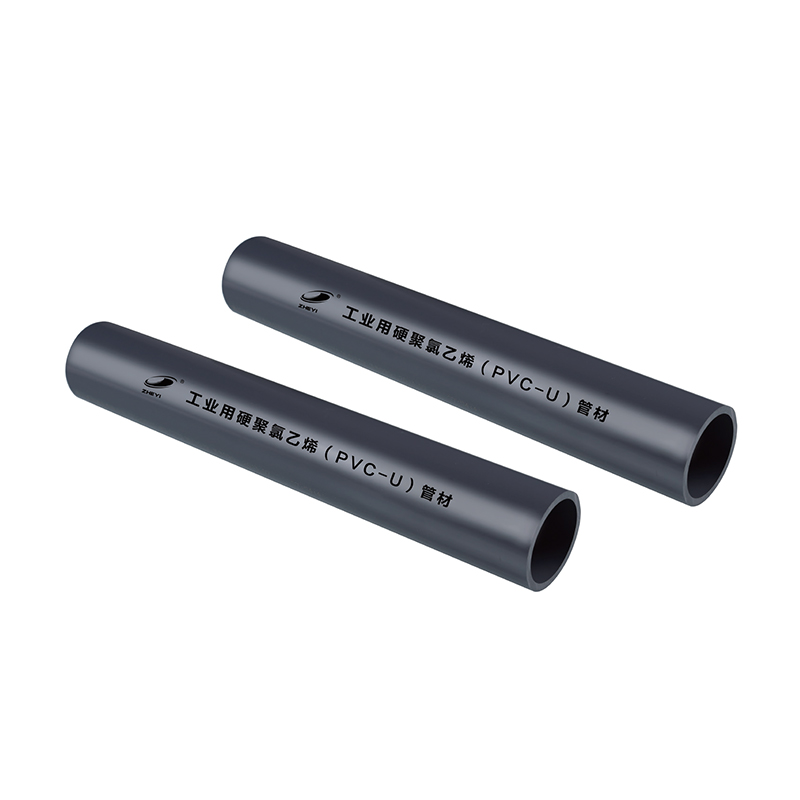
When fittings are paired with certified pipe, the same traceability applies to the CPVC pressure pipes in the system.
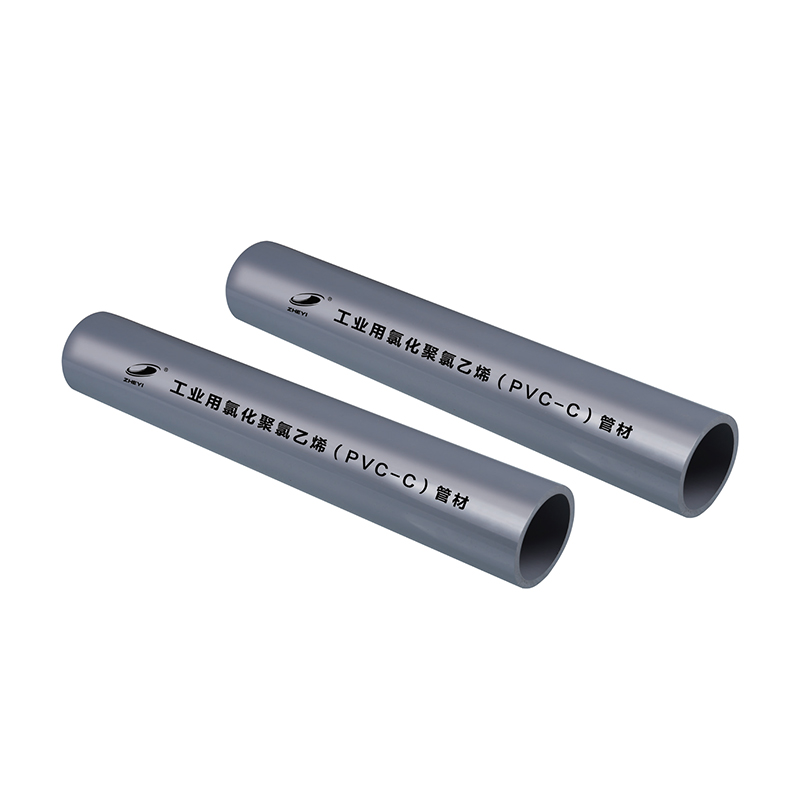 Custom CPVC Pipe pressure For Food Industry/Automotive/Electronic Suppliers, FacZheyi Pipeline (Wuhan) Co., Ltd. Is China Custom CPVC Pipe pressure For Food Industry/Automotive/Electronic Suppliers, Factory, Manufactu...View Product →
Marking checklist: a verifiable Schedule 80 CPVC fitting shows at least four things on its body - manufacturer, size, "CPVC", and "SCH 80". Treat the batch as unverified until the material and test certificates arrive.
How Pressure Ratings Are Tested and Derated
The pressure rating of a Schedule 80 CPVC fitting is established by long-term hydrostatic testing, not by static wall-thickness math. Manufacturers run two families of tests. In short-term hydrostatic burst testing (ASTM D1599), a fitting is pressurized until failure; certified parts typically burst at several times their rated pressure, which confirms material consistency and molding quality. In long-term sustained-pressure testing (ASTM D1598 or ISO 9080), multiple samples are held at different stress levels for thousands of hours, and the results are projected by regression analysis to a 100,000-hour (11.4-year) basis.
For a CPVC 4120 pressure compound, this testing yields a hydrostatic design basis of 4,000 psi at 73°F. Applying the standard 2.0 safety factor gives a 2,000 psi design stress, which is the foundation for the 850 psi rating on a 1-inch Schedule 80 fitting.
Typical pressure derating curve for 1-inch Schedule 80 CPVC
Illustrative values based on ASTM F439 rated pipe; actual values depend on compound and wall tolerance.
73°F850 psi
140°F680 psi
180°F425 psi
200°F320 psi
210°F250 psi
The chart shows the pattern every certification report must reproduce: the rating falls continuously as temperature rises, and the loss reaches about 50 percent at 180°F. The full calculation method is documented in our CPVC pressure rating calculation guide, and the multiplicative derating rules for field use are detailed in our temperature derating guide.
1-inch Schedule 80 CPVC approved to 850 psi at 73°F is typically rated near 425 psi at 180°F - a 50 percent reduction in allowable working pressure that certification documents must show in tabulated, lot-specific form.
Documentation and Third-Party Verification
An industrial buyer should treat Schedule 80 CPVC fittings without traceable test documentation as unverified material. Low-pressure plumbing can tolerate a missing certificate; a process line carrying 180°F chemicals or a semiconductor wet-bench loop cannot. For critical service, request and file the following before installation:
- Compound material certificate showing the cell class and batch number
- Hydrostatic test report or a certificate of conformance covering the lot
- Third-party inspection reports (SGS, TUV, BV) where the project specification requires independent verification
- Lot traceability code matching the markings on every carton
- Packing list stating the standard (ASTM F439), schedule (80), and nominal sizes
These documents must be matched, not just collected. ZHEYI Group issues batch-level documentation for its UPVC/CPVC systems, including CPVC tee fittings produced to DIN or ANSI interfaces, so every molded part in a delivered order can be traced back to a compound batch and a test record.
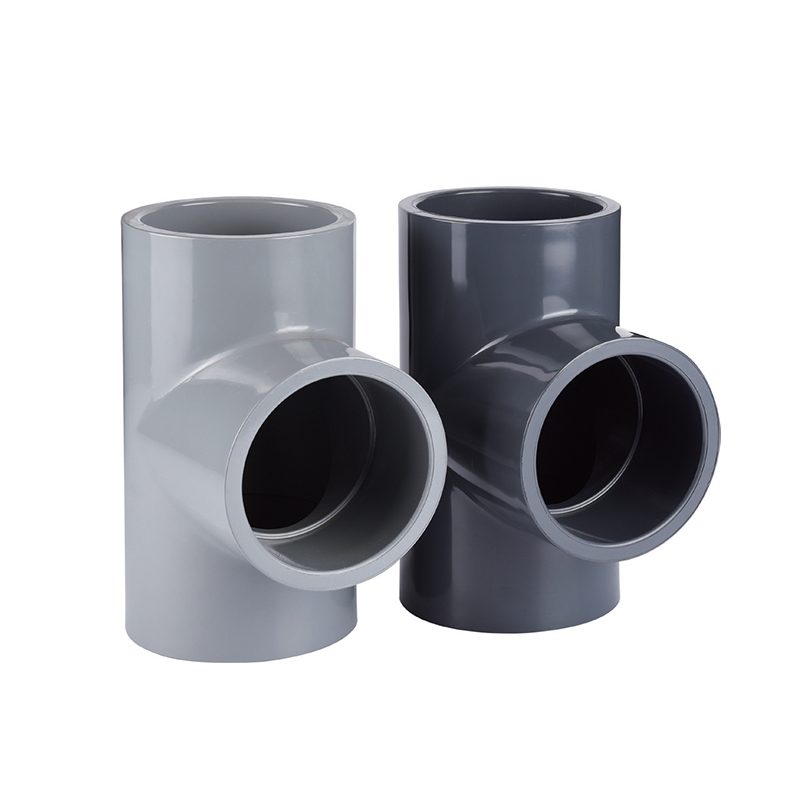 Custom SCH8O/DIN UPVC/CPVC Tee For Food Industry/Automotive/Electronic SuppliersZheyi Pipeline (Wuhan) Co., Ltd. Is China Custom SCH8O/DIN UPVC/CPVC Tee For Food Industry/Automotive/Electronic Suppliers, Factory, Manu...View Product →
Non-negotiable documents for critical process lines: compound material certificate, hydrostatic test report, and a lot traceability code that matches the fittings.
Failure Modes That Testing Catches
The most common reasons a Schedule 80 CPVC fitting fails certification are under-thickness walls, short socket depth, weak weld lines, and excessive socket ovality. Each defect has a signature location and a reliable detection method, and the same checkpoints apply to factory test reports and to incoming goods inspection.
Typical certification failure modes and detection methods for Schedule 80 CPVC fittings
| Defect |
Where it appears |
Consequence |
Detection method |
| Under-minimum wall thickness |
Fitting barrel |
Burst below rated pressure |
Caliper measurement plus hydrostatic burst test |
| Short socket depth |
Hub |
Weak solvent-cement joint |
Socket-depth gauge |
| Weld-line weakness |
Knit lines near the gate |
Leaks under thermal cycling |
Visual inspection plus pressure cycling |
| Socket ovality |
Hub mouth |
Loose joint and leakage |
Plug-gauge fit test |
Field verifiability matters because the assembly crew, not the factory, controls joint quality. Socket depth is the most useful dimension to check before solvent-cement assembly, and it is most relevant on elbows where the hub is the last molded feature to fill; check CPVC 90 degree elbows against the manufacturer's drawing before installation.
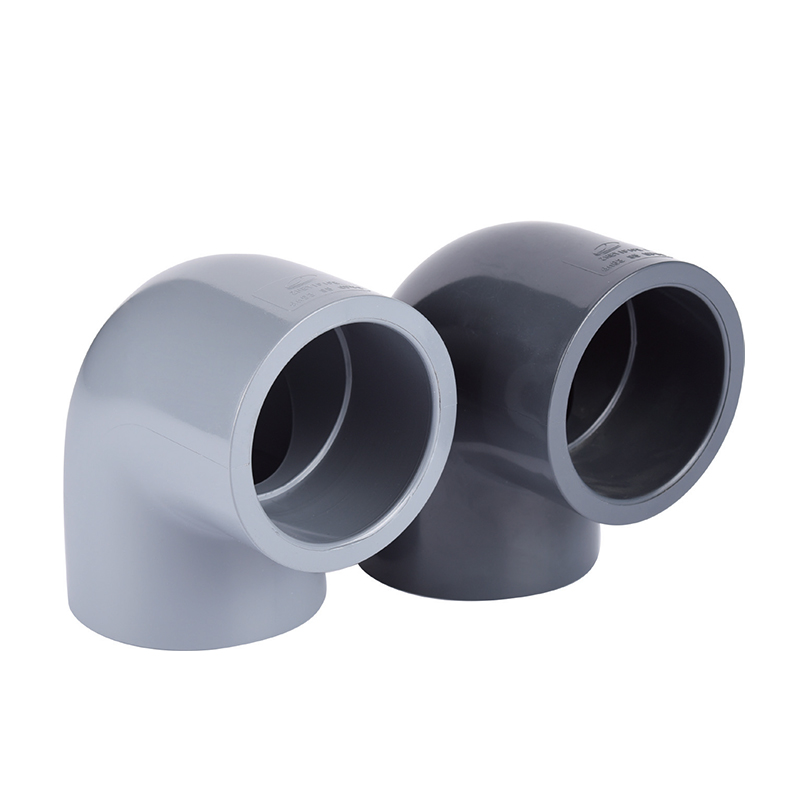 Custom SCH8O/DIN UPVC/CPVC 90° Elbow For Food Industry/Automotive/Electronic SupZheyi Pipeline (Wuhan) Co., Ltd. Is China Custom SCH8O/DIN UPVC/CPVC 90° Elbow For Food Industry/Automotive/Electronic Suppliers, Factory...View Product →
Certification is not a batch sticker. It is a set of measurements, a test method, and a traceable result - and every one of those elements must survive the trip from the factory to the field.
Frequently Asked Questions
Do Schedule 80 CPVC fittings carry the same pressure rating as Schedule 80 CPVC pipe?
Yes, when both are made from certified CPVC compounds, fittings are rated to the same pressure as the pipe at the same temperature. In practice, the solvent-cement joint becomes the limiting element, which is why socket depth and cure time are critical acceptance criteria.
What is the maximum service temperature for certified CPVC fittings?
CPVC is generally rated for continuous use to 200°F (93°C), with some compounds accepted to 210°F (99°C). The limiting factor is pressure, not melting: at 200°F, the allowable pressure drops to roughly 40 percent of the 73°F rating.
How do I verify that a fitting is really Schedule 80?
Measure the wall thickness and socket depth, confirm the body markings, and match them to a lot certificate. For a 1-inch fitting, the wall should be at least 0.179 inch; for other sizes, use the ASTM F439 dimension table.
Which certifications are required for potable water service?
For drinking water applications, fittings must meet NSF/ANSI 61 health-effects requirements and, where applicable, local plumbing codes. Industrial buyers should also request the compound certificate to confirm the absence of recycled material.
Certification documents are part of the piping system's safety envelope. File them with the same care as pressure vessel records.
 +86-15258772971
 dinys009@163.com

 English
 한국어
한국어 Español
 عربى
عربى