Valve selection for industrial piping
A 50 mm line moving lime slurry at 15% solids will seize a ball valve within weeks, because the solids pack into the annular cavity between the ball and its seats. Fit a weir-type diaphragm valve on the same line and it will open and close for years with nothing replaced except the diaphragm. Run the same comparison on a clean cooling-water header and the answer reverses: the diaphragm's weir throttles the line and works the elastomer, while a full-port ball valve opens in a quarter turn with almost no pressure loss.
Both valve bodies carry a similar nominal pressure rating and both bolt into the same flange pattern, which is exactly why the two get confused in requisitions. The real difference sits in what happens to the fluid when the line stops moving.
90 deg
Stroke from full open to full closed on a quarter-turn ball valve
Zero
Dynamic stem seals in the wetted path of a weir diaphragm valve
2 styles
Weir and straight-through diaphragm bodies with different pressure drop
What Separates a Diaphragm Valve from a Ball Valve
A ball valve seals by rotating a bored sphere against two seats, while a diaphragm valve seals by pressing a flexible diaphragm onto a raised weir, so the process fluid never reaches the stem or the actuator.
Working definition
A ball valve is a quarter-turn rotary valve whose bored sphere creates a straight-through, full-port flow path. A diaphragm valve is a linear-motion valve in which a flexible diaphragm, clamped between the body and the bonnet, isolates the medium from every mechanical part and closes against a body weir or a straight-through saddle.
Three consequences follow from that geometry, and together they settle most real specifications before price is even discussed.
- Where the fluid sits. A ball valve leaves a cavity between the ball and the body wall that fills with product and cannot drain. A weir diaphragm valve has no seat cavity of that kind, although the weir bowl itself retains a small residual volume.
- How the stem is sealed. A ball valve relies on O-rings or packing around a rotating stem, a dynamic seal that sees the medium. A diaphragm valve has no dynamic stem seal at all: the diaphragm is the only barrier between fluid and atmosphere.
- How the valve throttles. A ball valve is an on/off device, and holding it partly open directs a high-velocity jet at the downstream seat. A diaphragm valve throttles cleanly because the diaphragm can be parked at any point in its stroke.
How Each Design Shuts Off Flow
A ball valve closes with one 90-degree rotation of a sphere, while a diaphragm valve closes over several handwheel turns by pushing a diaphragm down onto a weir.
Ball valve: short stroke, full bore, exposed seats
A full-port ball valve has a bore equal to the pipe inside diameter, so the pressure drop across an open valve is close to that of an equivalent length of pipe. The quarter-turn stroke makes it fast to operate, easy to automate, and visually unambiguous from the handle position. The trade-off is that the seats sit in the flow path. Any particle that lodges on a seat is pressed into the elastomer on the next closure, and each cycle drives contamination deeper.
Diaphragm valve: long stroke, no packing, isolated fluid
A compressor on a threaded stem clamps the diaphragm at the body-to-bonnet joint, so a manual valve takes several turns to travel from open to closed. Nothing in the mechanism touches the medium: no packing, no stem O-rings, no seat rings. That single barrier is why diaphragm valves hold up on aggressive chemistry, and it is also why they tolerate throttling. The cost is hydraulic. A weir body narrows the flow path and adds pressure drop, while a straight-through body recovers head at the expense of a larger housing and different diaphragm behavior.
Behavior comparison of ball valves and diaphragm valves in industrial service.
| Property |
Ball valve |
Diaphragm valve |
| Stroke to shut off |
Single 90-degree quarter turn |
Several handwheel turns, linear stroke |
| Flow path |
Full port, close to pipe bore |
Weir restricts area; straight-through is closer to full bore |
| Solids and slurries |
Trapped between ball and seats, seizure risk |
No seat cavity, suspensions pass through |
| Stem sealing |
Dynamic O-rings or packing exposed to fluid |
Static diaphragm only, no dynamic seal |
| Throttling |
Not recommended, seat erosion |
Acceptable, diaphragm positions anywhere in stroke |
| Residual volume |
Cavity around the ball |
Small bowl at the weir |
| Actuation |
Rotational, torque rises with seat friction |
Linear, comparatively stable torque |
| Typical wear part |
Seats and ball surface |
Diaphragm |
Where Ball Valves Are the Right Call
A ball valve is the correct choice when the fluid is clean, the duty is on/off isolation, and the line needs a bore close to pipe size with minimal pressure loss.
On process plants, water treatment skids and non-metallic chemical lines, that covers more installed positions than any other valve type:
- Pump and tank isolation on clean water, demineralized water, brine and dosing lines, where the valve is either fully open or fully closed.
- High-cycle service, because a quarter-turn actuator does less work per operation and reaches full closure in a single motion.
- Lines that are flushed or pigged, because a full-port bore leaves no obstruction for a swab or pig.
- Low pressure drop headers, where a weir would add head loss the pump cannot spare.
Where the ball valve fails is predictable. Any fluid that deposits, crystallizes or abrades will find the seat: a crystallizing salt solution can lock a ball valve within a few thermal cycles, and an abrasive slurry polishes the ball until the valve no longer seals in the closed position.
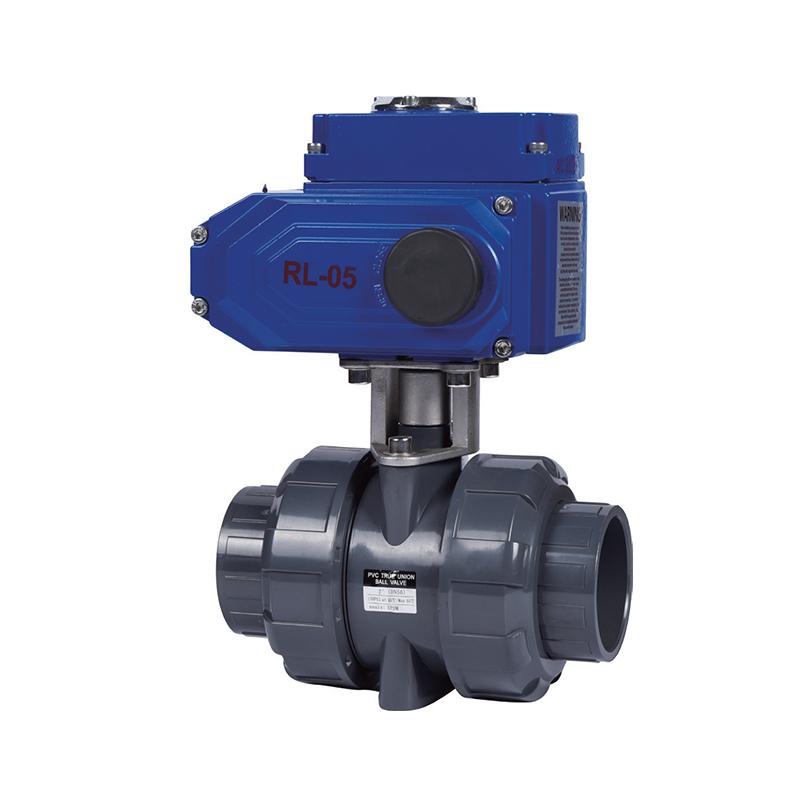
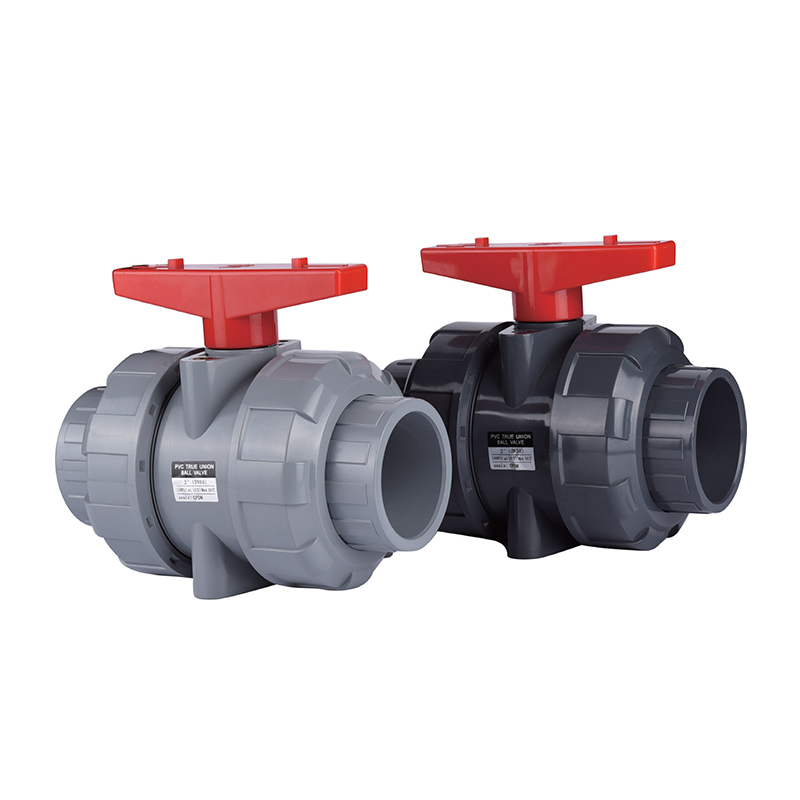
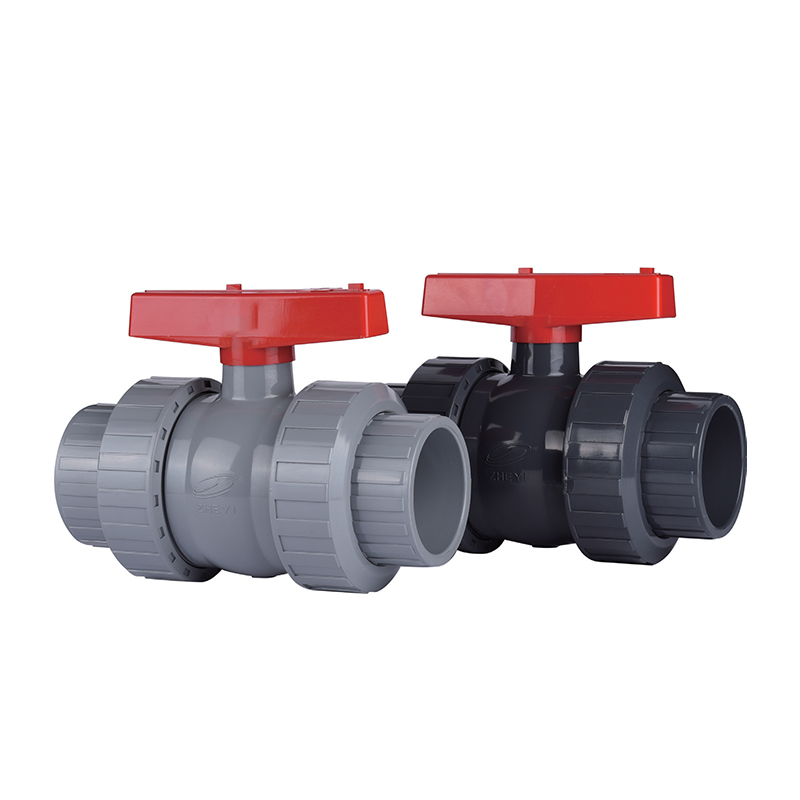 SCH8O/DIN UPVC/CPVC Type I Ball ValveReview this Type I ball valve for clean, low-resistance shutoff; UPVC/CPVC body options and DN15–DN100 sizes let you match media temperature and chemical exposure.View Product →
Where Diaphragm Valves Earn Their Cost
A diaphragm valve is the correct choice when the fluid can settle, crystallize, abrade or attack the elastomer seats of a rotary valve, and when the line can absorb the extra pressure drop.
The design keeps exactly one flexible component in contact with the medium and holds every machined surface away from it:
- Corrosive chemistry such as mineral acids, caustic, sodium hypochlorite and mixed acid streams handled in UPVC or CPVC bodies.
- Slurries and suspensions such as lime, calcium carbonate, filter backwash and metal-hydroxide sludge from wastewater neutralization.
- Viscous and fibrous media, where a ball valve would smear product onto the seats.
- Throttling and sampling points, where a stable partial opening matters more than a short stroke.
- High-purity lines, because there is no packing to leak and no seat crevice to trap residue.
Selection rule
If the fluid can settle, crystallize, abrade or attack an elastomer seat, specify a diaphragm valve. If the line needs a clean full bore, fast isolation and frequent cycling of a clean fluid, specify a ball valve. When both conditions exist on the same line, split the duty: a ball valve for isolation, a diaphragm valve for control.
The limitation deserves a line in the datasheet. The diaphragm is the pressure boundary, so the valve's pressure and temperature ceiling is the diaphragm's ceiling, not the body's.
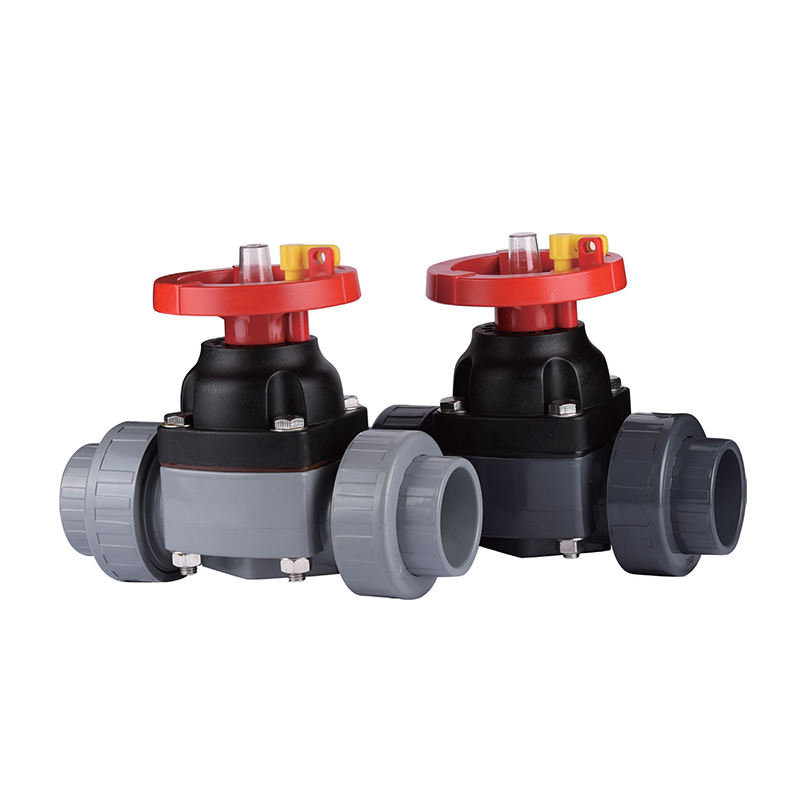
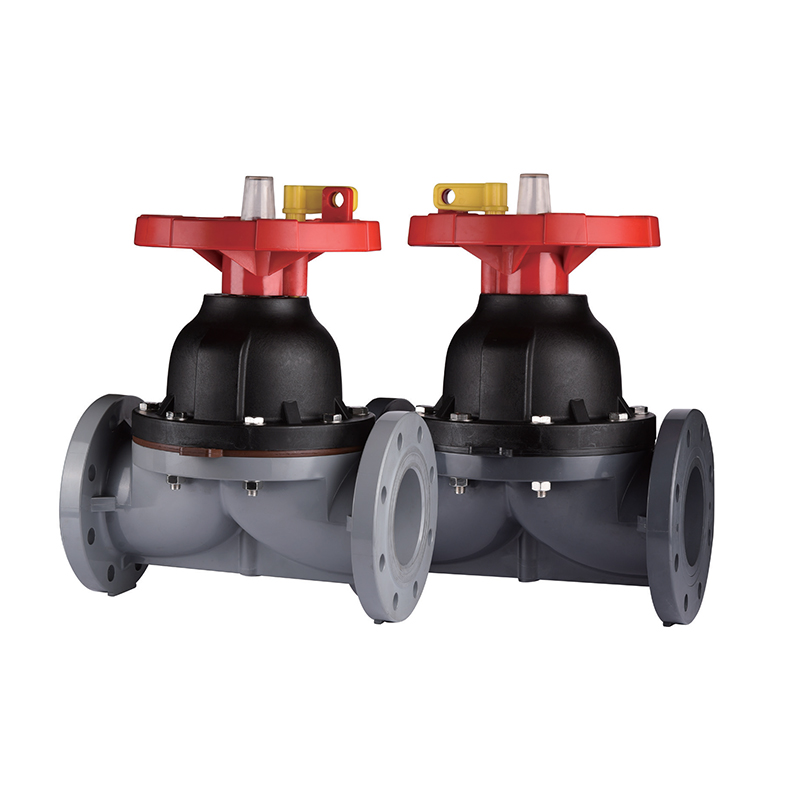 SCH8O/DIN UPVC/CPVC Flanged Diaphragm ValveFor corrosive fluid lines, compare diaphragm material, flange standard, and pressure-temperature derating; this flanged UPVC/CPVC valve covers DN25–DN125 with manual or pneumatic operation.View Product →
Matching the Valve to a Non-Metallic Piping System
In UPVC and CPVC systems the body material is rarely the limiting factor; the elastomer, the flange standard and the pressure-temperature derating usually are.
Thermoplastic valves are specified by body compound and by the standard they bolt to. A CPVC valve body handles the same chemistry as the CPVC pressure pipe it sits on, and the connection detail matters as much as the valve itself: solvent-cement sockets for smaller lines, flanged bodies where the valve must come out for diaphragm replacement, and DIN or ANSI facing that has to match the mating flange drilling.
ISO 15493 provides the framework for PVC-C industrial piping components, and the pressure-temperature derating that follows from it is the most common source of over-specification errors. Published CPVC curves reduce the allowable pressure to roughly half of the 23 C rating by 60 C, and to roughly a quarter near the material's upper limit. That reduction applies to the valve as much as to the pipe, and it applies again to the diaphragm, which is a softer material than the body.
Specify a ball valve when
- The fluid is clean and free of solids
- The duty is isolation, not regulation
- A bore close to pipe size is required
- Cycling is frequent and fast
- Quarter-turn actuation is preferred
Specify a diaphragm valve when
- Solids, slurries or crystallizing media are present
- Seat exposure to aggressive chemistry is a risk
- Throttling or sampling is part of the duty
- No crevice or packing leak is acceptable
- Diaphragm replacement access can be planned
Automation, Cycle Life and Total Cost of Ownership
Actuation cost is driven by torque and stroke, and a diaphragm valve's linear stroke with predictable torque is often simpler to automate than a ball valve whose seat friction climbs with pressure and contamination.
Actuator torque and stroke
A ball valve needs enough torque to break seat contact, and that torque rises with differential pressure, seat material and any product lodged on the seat. Pneumatic and electric actuators therefore carry a safety margin that grows as the valve ages. A diaphragm valve needs a linear force that is largely a function of line pressure and diaphragm area, which makes the actuator sizing more predictable, but its stroke is longer and the actuator has to travel further for the same result.
What actually drives lifecycle cost
Over a five-year window the purchase price is a small share of the total. Three items dominate: replacement parts, the downtime required to fit them, and the cost of a leak that reaches the environment. A diaphragm valve on slurry duty is expected to consume diaphragms as a wear part, which is why the body should allow replacement without cutting the pipe. A ball valve on clean water may never be opened, but a scored seat on an abrasive line turns a low-cost valve into a recurring maintenance item.
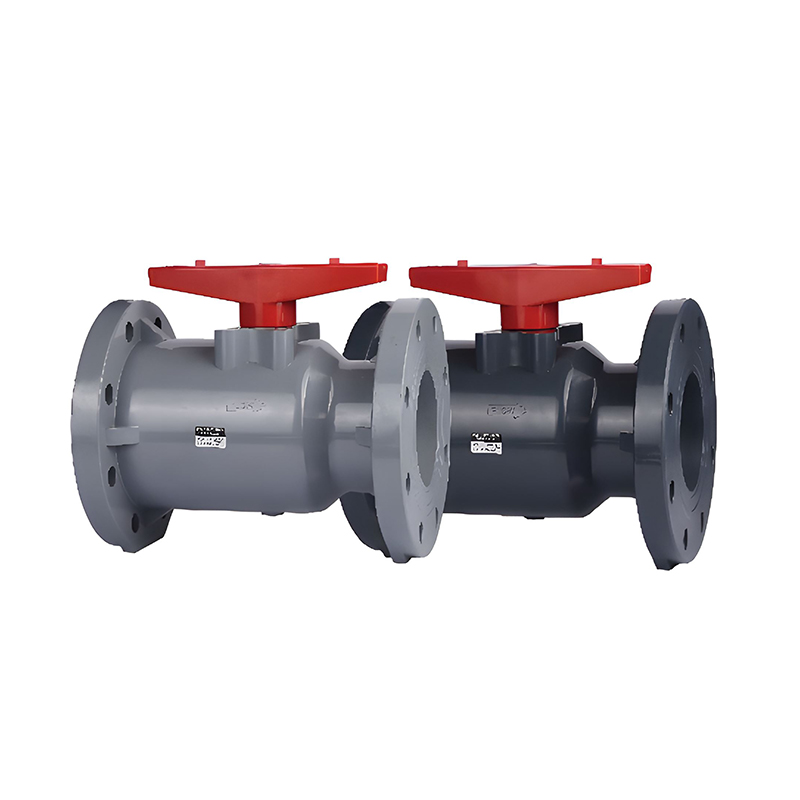
Sealing design is where the two designs diverge most in service life. Seat geometry, ball surface finish and preload determine whether a ball valve still holds a bubble-tight seal after thousands of cycles, and those details are worth reviewing before any purchase order; the sealing performance design of CPVC flanged ball valves explains which features matter.
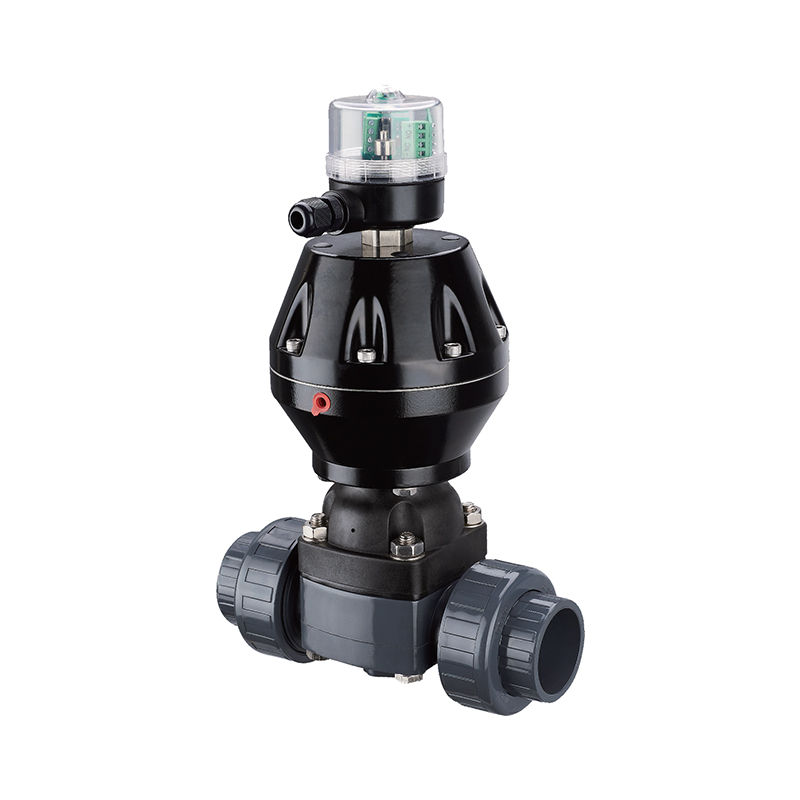 SCH8O/DIN Pneumatic UPVC Double Driven Diaphragm ValveUse this pneumatic UPVC diaphragm valve for corrosive media where a packing-free, soft-sealed design and DN15–DN50 sizes suit chemical, pharmaceutical, or food processing lines.View Product →
Five Steps to Specify the Right Valve
Five checks, run in this order, resolve the choice before a quotation is requested.
Define the fluid, not just the line
Record solids content, particle size, viscosity, crystallization behavior, chemical concentration and operating temperature. A line carrying 15% lime slurry and a line carrying filtered water need different valves at the same diameter and the same pressure class.
Fix the duty
Decide between isolation, throttling and frequent cycling. A valve that is throttled for 20% of its operating time is a control valve and should be specified as one.
Set the pressure-temperature window
Apply the body compound's derating curve at the maximum operating temperature, then apply the elastomer's own temperature limit. The lower of the two governs the valve.
Choose the variant and the actuation
Full port or standard port for a ball valve; weir or straight-through for a diaphragm valve; manual, pneumatic or electric operation. Confirm DIN or ANSI flange drilling before the order is released.
Plan wear parts and documents
Order diaphragm or seat kits alongside the valves, and request material certificates, pressure test records and the manufacturer's derating table. A valve without a published curve cannot be verified against the design condition.
Practical Questions Buyers Ask
Can a ball valve and a diaphragm valve be swapped one for one on the same line?
Mechanically, only if face-to-face length and flange drilling match, and they often do not. Operationally the duty changes: a diaphragm valve installed where a full-port ball valve was removed adds pressure drop and reduces maximum flow, while a ball valve on a slurry line will seize. A spool piece is usually required for a swap.
Which valve handles solids better?
The diaphragm valve, without qualification. A ball valve traps particles between the ball and the seat and inside the body cavity; a diaphragm valve has no seat cavity and closes by pinching the flow path. The practical limit for a diaphragm valve is particle size relative to the weir opening, not the presence of solids.
At what temperature does the elastomer become the limit?
For EPDM in continuous aqueous service the practical ceiling sits near 90 C to 100 C, which is usually reached before the CPVC body limit. PTFE-faced diaphragms extend chemical resistance more than temperature range. Because the diaphragm is the pressure boundary, its rating must be checked separately from the pipe rating.
Which valve is cheaper to own over five years?
The answer depends on the fluid, and the crossover is sharp. On clean water isolation duty the ball valve wins on purchase price and rarely needs parts. On slurry or aggressive chemical duty, ball valve replacement frequency usually exceeds the diaphragm valve's parts cost, because the diaphragm is an inexpensive wear item while the seat and ball are not.
Neither valve is a universal answer. A well-designed non-metallic system uses both, placed where their geometry actually suits the fluid.
 +86-15258772971
 dinys009@163.com

 English
 한국어
 Español
 عربى